Nissan VQ35DE (283 hp): Ownership impressions, issues, fuel consumption and used-buying tips
Key points in short (TL;DR)
- Legendary V6 engine: Famous for its fantastic sound, great throttle response and long-lasting mechanicals, but with certain weaknesses that require attention.
- Timing chain drive: The engine uses a timing chain which is generally reliable, but after high mileage the tensioners and guides need to be checked.
- Oil consumption: One of its biggest issues. Burning oil through piston rings or leaking from valve covers is extremely common.
- No emissions headaches: As a proper old-school petrol engine, it has no DPF, no EGR (it uses a specific variable valve timing system that does that job), and no AdBlue system.
- High fuel consumption: Expect double‑digit consumption, especially in heavy bodies such as the Infiniti FX35.
- Transmissions: Early manual gearboxes suffer from weak synchros, while the later CD009 is almost indestructible. The automatic is reliable if serviced regularly.
Contents
- Introduction: A legend from Japan
- Technical specifications
- Reliability and maintenance: Chain, oil and spark plugs
- Specific parts and systems
- Fuel consumption, performance and LPG conversion
- Transmissions: Manual vs Automatic
- Buying used and conclusion
Introduction: A legend from Japan
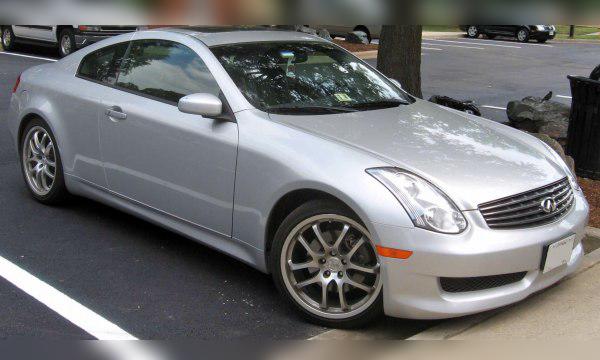
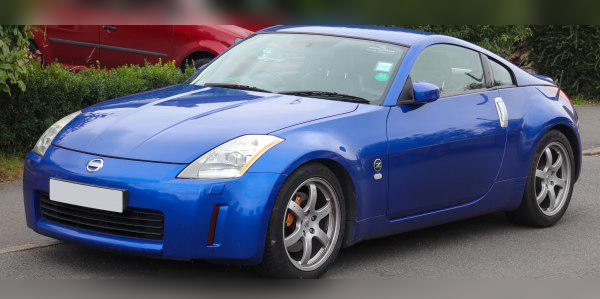
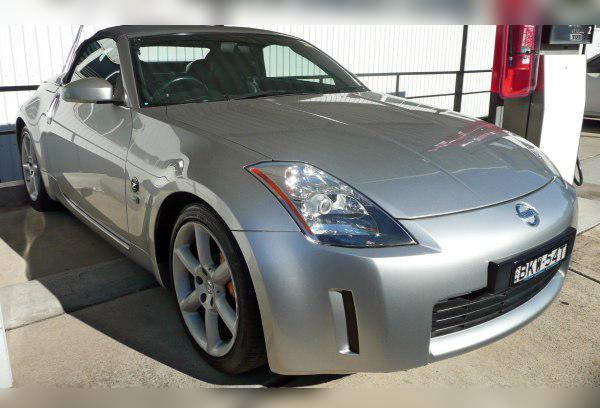
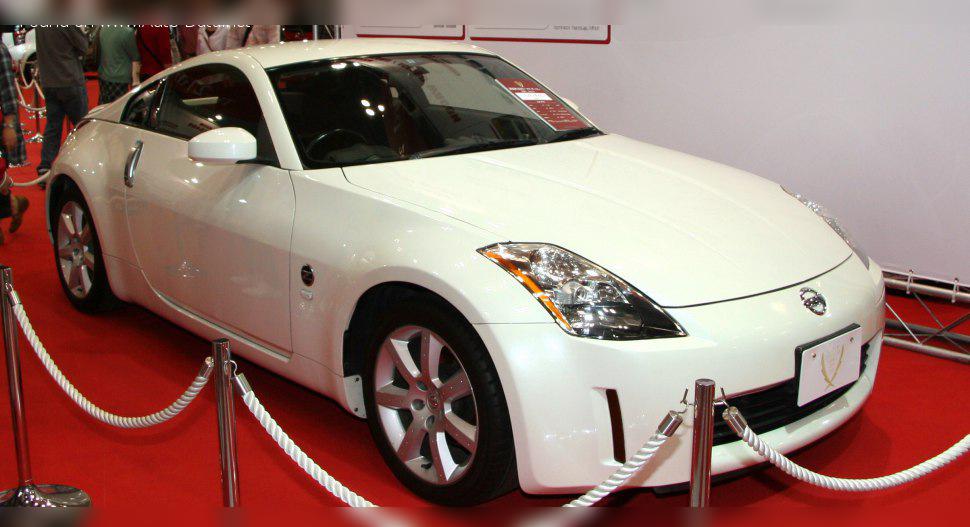
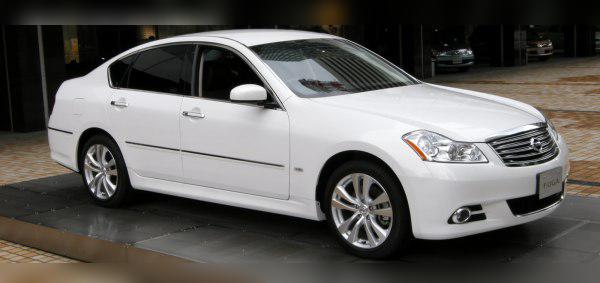
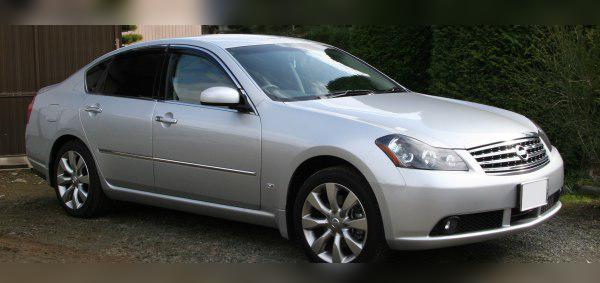
If you’ve ever heard the sharp, metallic roar of a Nissan 350Z or a luxurious Infiniti FX35/G35 on the street, you were listening to the VQ35DE. This engine from the VQ family dominated “best engines in the world” lists for years. With a displacement of 3.5 litres, V6 configuration and 208 kW (283 hp), it was designed to deliver linear power and impressive torque in all driving conditions. It was fitted to sports coupés (Nissan 350Z, Fairlady, Infiniti G35) as well as luxury SUVs and sedans (Infiniti FX35, Nissan Fuga). Although extremely durable, age is catching up with it, and neglecting maintenance can become very expensive.
Technical specifications
| Parameter | Value |
|---|---|
| Engine displacement | 3498 cc |
| Power | 208 kW (283 hp) |
| Torque | 352 Nm |
| Engine code | VQ35DE |
| Injection type | MPI (Port fuel injection) |
| Induction type | Naturally aspirated engine |
Reliability and maintenance: Chain, oil and spark plugs
Timing system and major service
This engine uses a timing chain instead of a belt, which in theory means “lifetime” durability. In practice, it’s different. The chain guides (plastic) and hydraulic tensioners wear out over time. The major service (chain replacement) is not done at a fixed mileage, but only when the chain starts rattling, usually on cold start. This typically happens after around 200,000 to 250,000 km. If the engine runs quietly, leave it alone.
Burning issue: Oil consumption and leaks
The most notorious problem of the VQ35DE is its oil consumption. Due to piston ring design, the engine tends to burn oil. For older examples, consumption of about 0.5 to 1 litre per 1000 km is considered normal, but if it exceeds that, it’s a sign of badly stuck rings. An additional issue comes from the valve covers. The seals around the spark plug wells fail, so oil leaks directly into the spark plug (coil) area, causing misfires and jerking while driving.
The engine takes about 4.7 to 5.0 litres of oil (depending on the filter and sump design in the specific model). The recommended viscosity is 5W‑30, but due to age and increased clearances, many mechanics recommend switching to a quality 5W‑40 oil which offers better protection at high temperatures.
Spark plugs and sensors
Spark plugs (iridium or platinum only) should be replaced every 90,000 to 100,000 km. The replacement isn’t cheap, as it requires removing the upper intake manifold (“plenum”), which adds labour hours. Among common electronic failures, pay attention to the camshaft and crankshaft position sensors. When they fail, the engine stalls while driving, is hard to start, or goes into limp mode. Replacing them is relatively simple and not too expensive.
Specific parts and systems
Since this is a raw, large petrol engine, you’re spared modern diesel nightmares. There is no turbocharger (unless one has been added via an aftermarket kit), no DPF filter and no AdBlue system. The fuel system is classic MPI (port injection), and the injectors are very robust and rarely cause issues, provided the car isn’t run on questionable‑quality fuel.
Fuel consumption, performance and LPG conversion
How much does it really use?
This engine is definitely not for those with a light wallet at the fuel station. Real‑world city consumption is between 15 and 18 l/100 km. In a heavy SUV such as the Infiniti FX35 AWD (weighing over 2 tonnes), winter city consumption easily reaches 20 litres. On the motorway, at 130 km/h (where it usually spins around 2800–3000 rpm, depending on gearing), consumption drops to a more tolerable 9 to 11 l/100 km.
On‑road performance
Is it “lazy”? Absolutely not. With 352 Nm of torque, the engine pulls very well even from low revs. In a Nissan 350Z or Infiniti G35 Coupé, this is a serious sports machine. In the large FX35 it manages to mask the car’s weight and offers impressive acceleration, although aerodynamics and mass take their toll above 150 km/h.
LPG (autogas) and remapping (Stage 1)
Installing an LPG system is possible, but it requires a top‑notch installer and a quality kit. The VQ35DE does not have hydraulic lifters (it uses solid buckets), which means valve clearance is not self‑adjusting. Running on a lean LPG mixture will quickly burn the exhaust valves. If LPG is installed, the mapping must be perfect.
As for remapping (Stage 1), since the engine is naturally aspirated, software tuning brings minimal gains, barely 10 to 15 hp. For real performance, owners usually fit plenum spacers, performance exhaust manifolds and high‑flow catalytic converters. Only then can tuning (with UpRev software) yield a meaningful power increase.
Transmissions: Manual vs Automatic
This engine was paired with 6‑speed manual gearboxes (mainly in the 350Z and G35) and 5‑speed automatics (in SUVs and luxury sedans).
Manual gearbox (Synchro issues and dual‑mass flywheel)
Early versions of the manual gearbox (codes CD001 to CD008) are known for weak 3rd and 5th gear synchros. You can hear grinding when shifting quickly. The later revision, the legendary CD009 gearbox (fitted from 2005 on these models), is one of the most robust manual transmissions ever made. Models with a manual gearbox use a dual‑mass flywheel. Replacing it together with the clutch kit is very expensive (varies by market). Because of this, many owners install a solid flywheel (single‑mass conversion), but that leads to more noise and vibration (chatter) at idle.
Automatic gearbox
The automatic is the 5‑speed RE5R05A made by Jatco. It is very durable and shifts smoothly, but it’s not quick by modern standards. Its weak point is the transmission control module (TCM), which is integrated into the valve body inside the gearbox, and the transmission cooler which, on some models, can leak and mix coolant with transmission fluid (the so‑called “strawberry milkshake of death”), completely destroying the transmission. Regular ATF changes every 60,000 km are recommended.
Buying used and conclusion
What to check before buying?
- Oil level on the dipstick: If it’s at minimum, the seller probably doesn’t care about the car at all.
- Cold start: Listen carefully during the first few seconds after starting. A sharp, scraping metallic noise points to a stretched chain.
- Exhaust smoke: If, when revving or flooring the throttle after idling for a while, you see bluish smoke, the valve stem seals or rings are done.
- Throttle body: Hesitation at low revs and unstable idle often mean the throttle body is dirty or a throttle relearn procedure via diagnostics is needed.
- Check the spark plugs: Pull out the first coil you can easily reach. If there is engine oil inside, prepare money for new valve covers.
Who is this engine for?
Nissan’s VQ35DE (283 hp) is a fantastic engine for enthusiasts. It comes from an era when displacement mattered more than emissions. The sound of a V6, the reliable, raw mechanics and the driving feel are priceless. However, this is not an engine for someone driving on a tight budget. High fuel consumption, registration costs (where displacement matters) and potentially topping up expensive synthetic oil every thousand kilometres can frustrate an average driver. Buy it only if you’re ready to invest in maintenance and if driving pleasure is your top priority.