Nissan and Infiniti VQ37VHR (3.7 V6) – Experiences, problems, fuel consumption and used-car buying tips
Key points (TL;DR)
- Excellent naturally aspirated engine: The VQ37VHR is one of the most awarded V6 engines, known for its linear power delivery and fantastic sound.
- Timing chain: The engine uses a very durable timing chain, which eliminates classic timing belt replacement intervals.
- Main weakness (Gallery Gasket): On models produced before 2012, the paper gaskets of the oil galleries crack, which leads to a drop in oil pressure and potential engine failure. The replacement is expensive (Depends on the market).
- Fuel consumption: Expect high fuel consumption in city driving (14–18 l/100 km); this is not an economical engine for stop‑and‑go traffic.
- Manual gearbox (CSC issue): The hydraulic concentric slave cylinder in manual gearboxes is poorly designed from the factory and often fails.
- No direct injection: It uses classic MPI (Multi-Point Injection), which means there are no issues with carbon buildup on intake valves and it easily accepts LPG.
Contents
- Introduction: A legend from the Land of the Rising Sun
- Technical specifications
- Reliability and maintenance
- Specific parts and costs
- Fuel consumption and performance
- Additional options and modifications
- Gearbox and drivetrain
- Buying used and conclusion
Introduction: A legend from the Land of the Rising Sun
The VQ37VHR engine represents the crown of Nissan’s famous VQ engine family. It was introduced as an evolution of the previous 3.5‑liter unit, bringing VVEL (Variable Valve Event and Lift) technology that allows the engine to “breathe” better at high RPM, while still maintaining refined operation at low revs. The “VHR” designation stands for Very High Rev, clearly implying that this engine loves to rev – the redline is at a lofty 7,500 rpm.
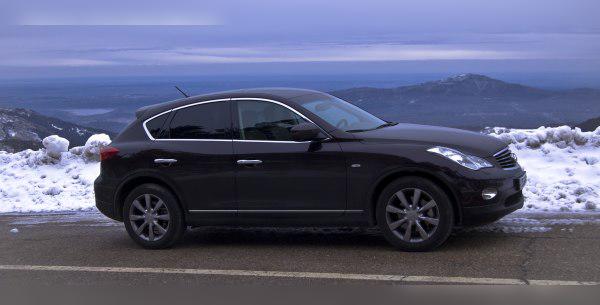
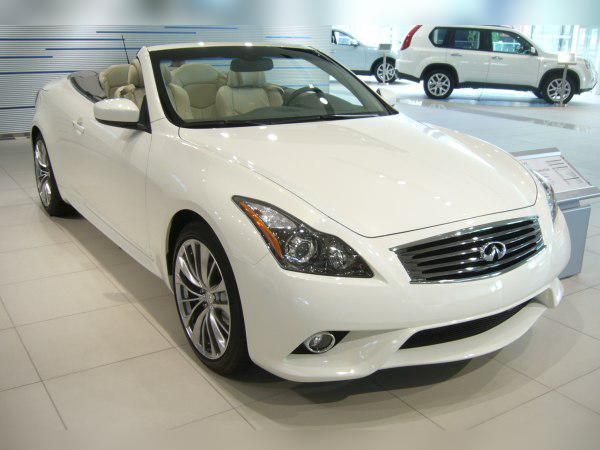
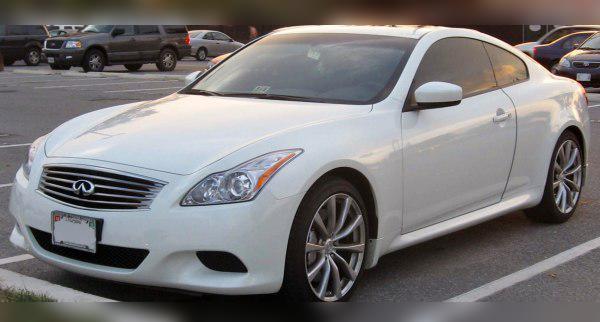
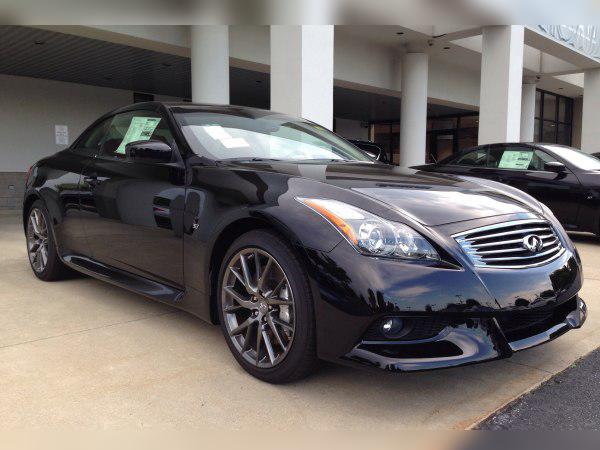
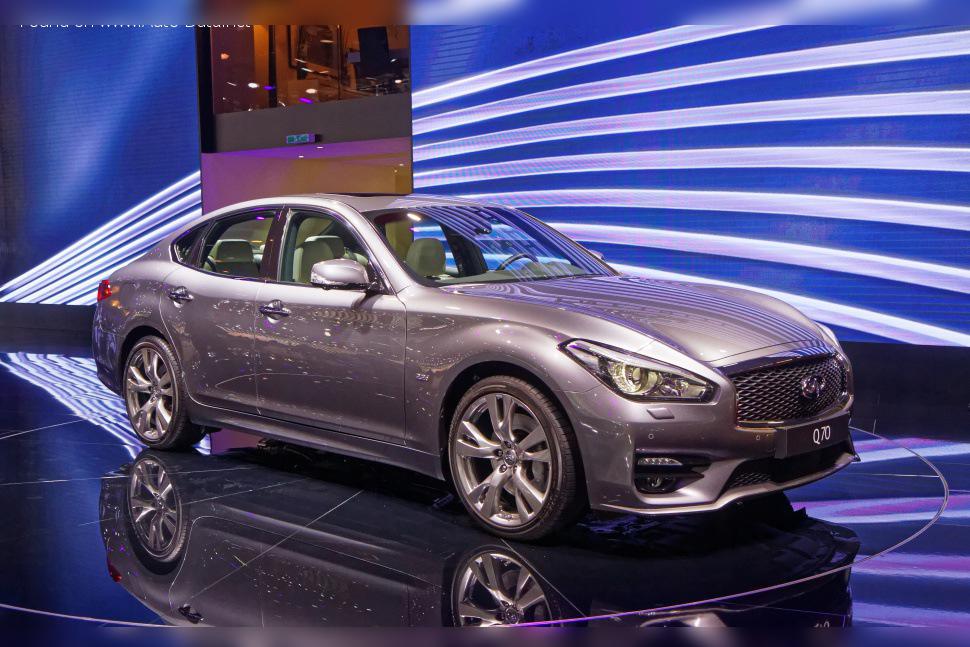
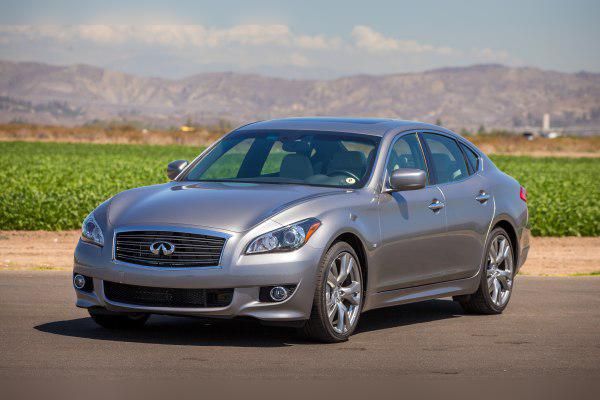
We most often see it in the premium Infiniti lineup, including models such as Infiniti EX37, G37 (Coupe and Convertible), Q60, Q70, QX50 and QX70. These models offer a fantastic blend of luxury and sports DNA borrowed directly from the Nissan 370Z, with which they share the same heart. Thanks to its performance, the VQ37VHR is highly regarded among enthusiasts, but its complexity demands respect and specific maintenance.
Technical specifications
| Specification | Data |
|---|---|
| Engine code | VQ37VHR |
| Displacement | 3696 cc (3.7 L) |
| Power | 235 kW (320 hp) at 7,000 rpm |
| Torque | 360 Nm at 5,200 rpm |
| Injection type | MPI (Multi-Point Injection) – Indirect |
| Aspiration | Naturally aspirated engine |
| Fuel | Petrol (98 or 100 RON recommended) |
Reliability and maintenance
Timing belt or chain?
This unit uses a massive timing chain. Unlike engines with a timing belt, the VQ37VHR does not have a strictly defined “major service” interval. The chain, sprockets and tensioners are extremely durable and rarely require replacement before 250,000–300,000 km, provided the engine has regularly received quality oil. If you hear a rattling noise from the front of the engine for a few seconds on cold start, that is a sign that the chain tensioners are struggling with oil pressure and it may be time for an inspection.
Most common failures and the “Gallery Gasket” issue
By far the most serious and most expensive problem on engines produced up to 2012 is the so‑called “Gallery Gasket”. These are paper gaskets on the internal oil pressure galleries under the timing cover. Over time, due to heat and pressure, these paper gaskets crack, causing internal oil leakage. Symptoms? Often there are no early symptoms until the oil pressure drops critically low, which triggers the oil warning light or activates limp mode. If the warning light is ignored, the crankshaft bearings suffer permanent damage (the engine seizes). The repair is labor‑intensive and very expensive (Depends on the market) because it requires removal of the entire front of the engine and timing components, even though the metal replacement gaskets (which solve the issue permanently) are not expensive themselves.
Another characteristic noise on this engine is a slight ticking (VVEL tick). The variable valve control mechanism is very sensitive to oil quality.
Service intervals, oil and spark plugs
The engine oil capacity is about 4.9 to 5.2 liters for a regular oil change (with filter). The recommended viscosity is 5W‑30 fully synthetic oil. Many experienced mechanics and enthusiasts strongly recommend using ester‑based oils, as they leave a protective film on VVEL components and significantly quieten the engine.
As for oil consumption, aggressive driving and high RPM will take their toll. Consumption of around 0.2 to 0.5 liters per 1,000 km is considered normal. If the engine consumes more than 1 liter, the PCV valve (crankcase ventilation valve) should be checked first; it is cheap to replace and is often the main culprit before you suspect worn piston rings.
This is a petrol engine and uses durable iridium spark plugs. The factory‑recommended replacement interval is 90,000 to 100,000 km. Due to the engine layout and dual intake manifolds, replacing the spark plugs can be a bit more labor‑intensive and expensive compared to classic inline engines.
Specific parts and costs
Injection and exhaust system
The good news is that the VQ37VHR uses standard MPI (Multi-Point Injection) indirect injection. There is no direct injection, which automatically means no carbon buildup issues on the intake valves – a common problem on many modern engines. The petrol injectors are incredibly reliable and rarely cause problems throughout the life of the engine.
Since this is a petrol unit, the engine does not have turbochargers, a DPF filter, or a complex AdBlue system. In that respect, maintenance is much simpler than on modern diesels with DPF and EGR systems. However, catalytic converters can be problematic. Due to poor‑quality fuel or misfires (if spark plugs are not replaced on time), the catalytic converters can overheat and disintegrate, which triggers the Check Engine light. Replacing the OEM catalytic converters is very expensive (Depends on the market).
Fuel consumption and performance
Real‑world fuel consumption
When you buy a 3.7 V6 with 320 hp in a heavy body (such as the QX70 or even the G37), forget about fuel economy. In pure city driving, real‑world consumption ranges between 14 and 18 liters per 100 km, depending on how heavy your right foot is and how bad the traffic is. On the open road things improve dramatically: on secondary roads it can drop to around 8 l/100 km, while on the motorway at 130 km/h the engine uses about 9.5 to 10.5 liters per 100 km.
Is the engine “lazy”?
With 360 Nm of torque, the engine is definitely not lazy, but it behaves like a classic high‑revving naturally aspirated unit. Peak power is delivered high up, only at 7,000 rpm. This means that for maximum performance the engine needs revs. In normal city driving it feels incredibly smooth, but real acceleration only starts after 4,000 rpm. Bodies such as the QX70 SUV weigh over 2 tons, so the engine has to rev higher to move that mass, which directly affects the aforementioned fuel consumption.
On the motorway, this unit is in its element. At 130 km/h, depending on whether you have the 7‑speed automatic or the manual gearbox, the revs sit at a relaxed 2,600 to 3,000 rpm, allowing quiet and comfortable cruising with a huge power reserve for overtaking at any moment.
Additional options and modifications
Is it suitable for LPG conversion?
Since it uses indirect (MPI) injection, installing a sequential LPG system is absolutely possible and cost‑effective. The intake manifold accepts standard LPG injectors without issues. However, due to the sophisticated VVEL system and high operating temperatures, it is crucial to install a top‑quality system (high‑capacity vaporizer and fast injectors) and to have the map properly tuned on a dyno so that the engine does not run lean, which could damage the valves. Because of the high fuel consumption, many owners choose this route, and engines on LPG cover very high mileages without problems.
Chiptuning (Stage 1)
As a classic naturally aspirated engine, the VQ37VHR is very “stubborn” when it comes to extracting more power through software alone. Stage 1 tuning yields only about 10 to 15 hp (7–11 kW) and a minimal torque increase. However, remapping is usually done to improve throttle response and to optimize the mixture if you have installed higher‑flow intake pipes and a sports exhaust. If you are looking for a dramatic power increase, the only real – but extremely expensive – solution is a supercharger kit.
Gearbox and drivetrain
Types of gearboxes and common issues
This engine is most commonly paired with a 7‑speed automatic gearbox (Jatco RE7R01A), while the sportier models (such as the G37 Coupe) can also be found with a 6‑speed manual gearbox (FS6R31A).
Manual gearbox: Although the gearbox itself is extremely robust, it has one major and well‑known issue – failure of the hydraulic concentric slave cylinder (CSC – Concentric Slave Cylinder). This bearing is mounted inside the bellhousing and made of poor‑quality plastic that eventually fails, causing the clutch pedal to sink to the floor. Fixing it requires removal of the entire gearbox, which significantly increases labor costs. Many owners install aftermarket reinforced systems or relocation kits (expensive, depends on the market). In addition, manual versions have a dual‑mass flywheel that reduces vibrations, but replacing it together with the clutch kit is very expensive (Depends on the market).
Automatic gearbox (7AT): The automatic offers smoother and more carefree driving. There is no dual‑mass flywheel, but a classic torque converter instead. The most common issues with the automatic include failure of the transmission control module (TCM) or clogging of the valve body, which manifests as harsh jolts when shifting down (for example from third to second gear). That is why it is extremely important to perform a gearbox service (oil and filter change) every 60,000 km. If regularly maintained, the Jatco automatic can easily exceed 300,000 km without a rebuild.
Buying used and conclusion
What to look out for when buying?
- Year of manufacture: If you are buying a pre‑2012 model, be sure to ask the seller whether the “Gallery Gasket” has been replaced. If the seller does not know, prepare a serious budget for preventive replacement or request that the oil pressure be measured with a mechanical gauge before purchase. At idle, at operating temperature (around 80°C), pressure must not be below 14 psi (about 1 bar).
- Cold start: Ask for the car to be completely cold when you come to see it. Listen to the front of the engine and the timing cover. Any grinding or prolonged rattling indicates problematic chain tensioners.
- Clutch (manual): Pay attention to the clutch pedal feel. If it bites right at the floor or the return spring feels weak, the CSC bearing is probably on its last legs.
- Diagnostics: Check the operation of the camshaft position sensors and oxygen sensors, as they are prone to failure at higher mileages due to the high temperatures under the bonnet.
Who is this engine for?
The Nissan/Infiniti VQ37VHR is an “old‑school” engine with modern technology. It is intended for drivers who love the refined operation of a V6, the kind of sound that puts a smile on your face, and who are willing to accept frequent visits to the petrol station in exchange for fantastic mechanical reliability. If you avoid the oil gallery gasket issue and regularly change high‑quality synthetic oil, this Japanese engineering gem will provide you with hundreds of thousands of carefree – and extremely enjoyable – kilometers.