VQ37VHR Engine (3.7 V6 328 HP): Ownership Impressions, Issues, Fuel Consumption and Used-Buying Guide
Key points in short (TL;DR)
- Performance and sound: One of the best naturally aspirated V6 engines ever made. Loves high revs (rev limiter at 7500 rpm) and delivers a fantastic sound.
- Base reliability: The bottom end is virtually indestructible and uses a timing chain drive that rarely causes issues before 300,000 km.
- Main engine weakness (Critical): Failure of the paper oil gallery gasket (Gallery Gasket) on pre-2012 models, which leads to oil pressure loss and potential engine failure.
- Manual gearbox weakness: The central hydraulic concentric slave cylinder (CSC) regularly fails, causing the clutch pedal to drop to the floor.
- Fuel consumption: High. In city driving expect 15 to 18 l/100 km, while on the open road it’s around 9 to 10 l/100 km.
- Maintenance: Requires high-quality ester-based oil and regular level checks, as VQ engines naturally consume some oil under spirited driving.
Contents
- Introduction: A Legend from Yokohama
- Technical Specifications
- Reliability and Maintenance
- Specific Components (Costs)
- Fuel Consumption and Performance
- Upgrades and Modifications
- Transmission and Drivetrain
- Buying Used and Conclusion
Introduction: A Legend from Yokohama
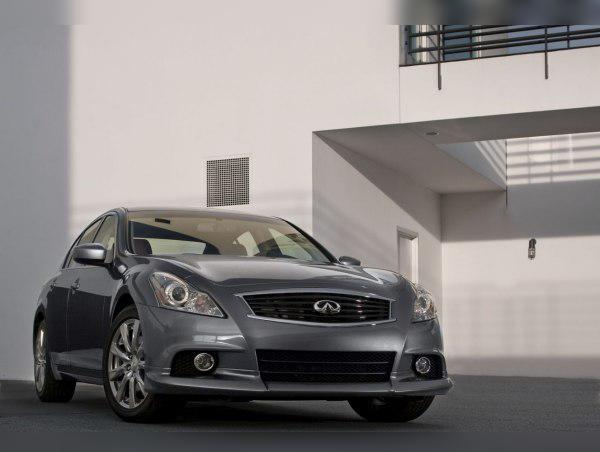
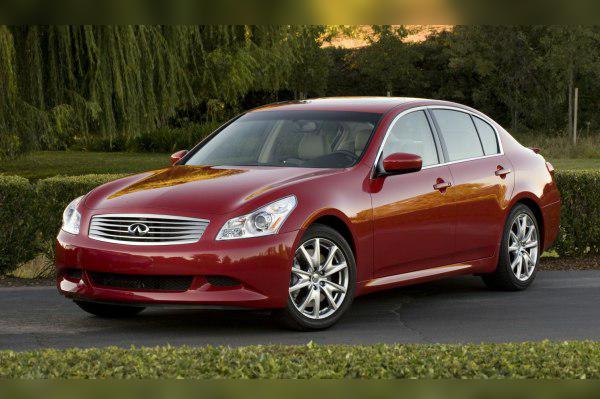
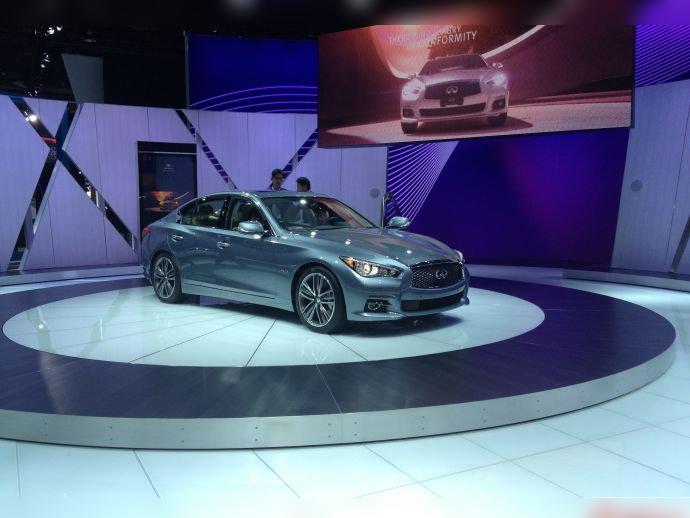
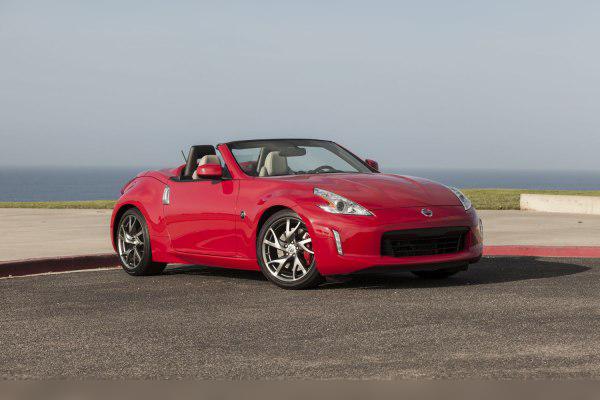
The VQ37VHR engine represents the pinnacle of Nissan’s famous VQ engine family. It was mainly installed in sports cars and luxury sedans such as the Nissan 370Z, Infiniti G37 and later Infiniti Q50. The "VHR" designation stands for Very High Rev, which perfectly describes the character of this engine – it delivers its maximum output of 328 HP (depending on market and exhaust system, sometimes rated at 332 HP) only at 7000 rpm. The biggest innovation this engine brought is the VVEL system (Variable Valve Event and Lift), which continuously varies the timing and lift of the intake valves, eliminating the need for a traditional throttle body in many operating conditions.
Technical Specifications
| Displacement | 3696 cc |
| Power | 241 kW (328 HP) at 7000 rpm |
| Torque | 363 Nm at 5200 rpm |
| Engine code | VQ37VHR |
| Injection type | Port fuel injection (MPI / Port Injection) |
| Induction type | Naturally aspirated |
| Cylinder layout | V6 (60 degrees) |
Reliability and Maintenance
Timing drive and “Major service”
This engine uses a robust timing chain setup (one main chain and two smaller ones for the camshafts), which means there is no classic “major service” with a timing belt replacement. The chain is extremely durable and, if oil is changed on time, rarely needs replacement before 250,000 to 300,000 km. A rattling noise from the chain on cold start is the first sign that the guides or tensioners are worn.
Most common failure: The notorious “Gallery Gasket”
By far the biggest weakness of the VQ37VHR, especially on engines produced before the facelift (pre-2012), is the paper gasket of the internal oil gallery (the so‑called Gallery Gasket) located under the front timing cover. Over time, this paper gasket cracks, causing an internal loss of oil pressure. Symptoms: The car goes into limp mode, the Check Engine light comes on with codes P0011 or P0021 (VVT system faults, which require proper oil pressure), and in the worst case the oil pressure warning light illuminates. If ignored, the engine will seize. The repair requires removing the entire front of the engine and the timing chain assembly; the replacement gaskets are metal and permanently solve the issue. The cost of this repair is expensive to very expensive (depends on market), mainly due to the large number of labor hours.
Engine oil and oil consumption
The engine takes about 4.9 to 5.2 liters of oil (with filter change). Nissan specifically requires 5W-30 oil, and due to the complex VVEL system, an ester-based oil is strongly recommended (e.g. Motul 300V, Red Line or genuine Nissan Ester oil). The VVEL system can produce a characteristic “ticking” noise if low-quality oil is used.
As for oil consumption, unlike the older VQ35DE, this engine does not have a dramatic issue with piston rings, but it is normal to consume 0.5 to 1 liter per 1000 km under very aggressive driving or track use. In normal operation, it should not consume more than 0.2–0.3 liters between oil changes. The oil change interval should be strictly kept at 8,000 to 10,000 km.
Spark plug replacement
Since this is a pure gasoline engine, the replacement interval for iridium spark plugs (NGK or Denso recommended) is around 100,000 km. However, replacement is not simple because you need to remove the upper intake manifold (plenum) and both throttle bodies to access the coils. While you’re there, the throttle bodies should be cleaned and then adapted via diagnostic tools.
Specific Components (Costs)
Fuel injection system
Good news for longevity: the VQ37VHR uses conventional port fuel injection (Port Fuel Injection – MPI). Because of this, the engine does not suffer from carbon buildup on the intake valves, which is a nightmare on many modern direct-injection engines. The injectors are extremely reliable and rarely cause problems, unless the car is run for a long time on poor-quality fuel or with a poorly installed LPG system.
Emissions equipment and peripherals
This engine has no turbocharger, no DPF filter, no EGR valve (in the classic sense – VVEL mimics the EGR effect) and of course no AdBlue. As such, it is free from most of the expensive issues that plague modern diesels and turbocharged petrol engines. However, the components that can fail are the catalytic converters (located in the exhaust manifolds). Due to high temperatures and age, they can break up, causing a rattling noise under the car and a Check Engine light. Replacement is expensive (depends on market), so many owners opt for “test pipes” (straight pipes without cats) or high-flow sports cats, which requires a remap.
Fuel Consumption and Performance
Real-world fuel consumption
Buying a 3.7 V6 means forgetting about fuel economy. In heavy city traffic, consumption ranges between 15 and 18 l/100 km. If you start pushing the throttle, it easily exceeds 20 liters. On country roads, with gentle driving, it can drop to around 8 l/100 km.
On-road performance
On the motorway this engine shines. At 130 km/h in 7th gear with the automatic (or 6th with the manual), the engine spins at a relaxed 2700 to 3000 rpm. Highway consumption is between 9 and 10.5 l/100 km.
Is the engine “lazy” for the weight of the car? No, it isn’t lazy, but it requires a different driving style if you’re used to modern turbo engines that deliver 400 Nm already at 1500 rpm. The VQ37VHR reaches its peak torque only at 5200 rpm. At low revs it is very smooth and refined, but the real punch and aggressive V6 howl only arrive once you pass 4500 rpm.
Upgrades and Modifications
LPG conversion
Is it suitable for LPG? Technically yes, but in practice it is rarely recommended. The problem lies in the high rev limit (up to 7500 rpm) and the complex VVEL system. If you decide to install LPG, it must be a premium system (e.g. Prins, BRC) with fast electronics and a dedicated map that adds extra petrol at high rpm to cool the valves. A poorly tuned LPG setup will quickly destroy the valves on this engine. Installation is very expensive (depends on market).
Remapping (Stage 1)
As a classic naturally aspirated engine, the VQ37VHR is not worth remapping in the sense of a simple Stage 1 tune without mechanical changes. With software alone you will gain at most 10 to 15 HP. Real gains require fitting a cold air intake (e.g. Stillen or Z1), a freer-flowing exhaust, and then a proper remap (EcuTek or UpRev). Only then does the engine become noticeably sharper on throttle and unlock its full potential.
Transmission: Drivetrain, Flywheel and Clutch
Two types of transmissions were offered with this engine: a 6-speed manual (FS6R31A) and a 7-speed automatic (Jatco JR710E). Both send power to the rear wheels (or all four wheels on AWD models). An interesting feature of the manual in the 370Z is the SynchroRev Match system, which automatically blips the throttle on downshifts.
Manual gearbox issues
Manual models use a dual-mass flywheel. Replacing the clutch kit and dual-mass flywheel is very expensive (depends on market). However, the biggest problem with the manual is the Concentric Slave Cylinder (CSC – Central Slave Cylinder). This hydraulic part is made of plastic and sits inside the bellhousing. Because it is close to the catalytic converters, the fluid overheats, the plastic cracks and the clutch pedal suddenly drops to the floor while driving. The solution is to install upgraded metal heavy-duty CSCs or convert to an external slave cylinder.
Automatic gearbox issues (7AT)
The automatic is a conventional torque-converter unit (no dual-mass flywheel). It is very robust, but its electronics (valve body / TCM module) can sometimes cause trouble. Symptoms include harsh “jerks” when shifting from second to first gear while coming to a stop. This is often resolved with a software update at a dealer.
Maintenance: The automatic transmission fluid must be changed every 60,000 km to protect the valve body. On the manual, change the gearbox oil every 40,000 km and replace the clutch hydraulic fluid every 2 years to extend CSC life.
Buying Used and Conclusion
What to check before buying?
- Oil pressure: The most important thing. Ask a mechanic to screw in a mechanical gauge instead of the oil pressure sensor and measure pressure on a fully warmed-up engine at idle. If pressure is below 14 PSI at about 80°C oil temperature, suspect a failed Gallery Gasket. Do not buy pre-2012 models blindly without this check.
- Engine noise (VVEL tick): Listen to the engine at idle. A slight “hissing” from the injectors is normal, but sharp metallic ticking from the cylinder heads points to a VVEL mechanism issue or irregular oil changes.
- Clutch pedal (manual only): Press the clutch several times quickly. If it doesn’t return evenly, bites very low, or the fluid in the reservoir looks black, expect the cost of removing the gearbox to deal with the CSC.
- LSD differential (VLSD): If you’re buying a sportier version (370Z or G37S), check the condition of the rear viscous limited-slip differential (VLSD). Its oil should be changed every 30,000 to 40,000 km; otherwise, it loses its locking function and behaves like an open diff.
Who is this engine for?
The VQ37VHR is definitely not an engine for drivers looking for low registration costs, low city fuel consumption or instant shove from low rpm. This is an “old-school” engine in a modern package, designed for car enthusiasts. It is aimed at drivers who appreciate linear power delivery, the howl of a six-cylinder near the redline and mechanical robustness. If you provide it with top-quality synthetic oil and address the known factory weak points (such as the oil gallery gasket and hydraulic clutch bearing), you will get a powerplant that, with regular maintenance, will serve you for hundreds of thousands of kilometers without opening the “heart” of the engine.