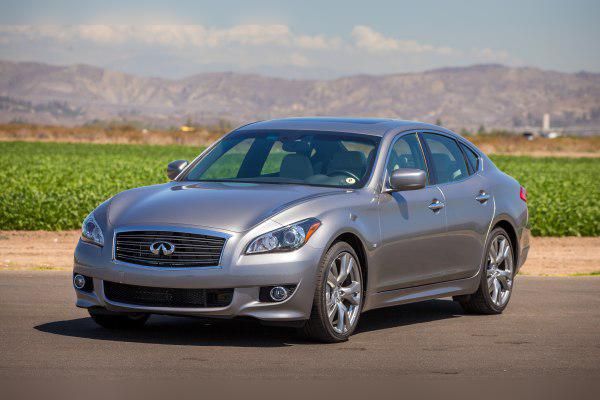
VQ37VHR 3.7 V6 Engine: Ownership Impressions, Issues, Fuel Consumption and Used-Buying Guide
- Excellent reliability: One of the most durable naturally aspirated V6 engines on the market.
- Timing system: Uses a heavy-duty timing chain, which eliminates the need for the classic major timing-belt service.
- Specific issue: On models produced before 2012, a known problem is the oil gallery gaskets located under the timing chain cover.
- Fuel consumption: Quite high in city driving, which is expected from an engine with almost 3.7 liters of displacement.
- Maintenance: Indirect fuel injection and the absence of a turbocharger make it significantly cheaper to maintain in the long run than its European competitors.
- Gearbox: Automatic transmissions are reliable with regular oil changes, while on manuals the hydraulic concentric slave cylinder can fail.
Contents
- Introduction and basic information
- Technical specifications
- Reliability and maintenance
- Specific parts and costs
- Fuel consumption and performance
- Additional options and modifications (LPG and chiptuning)
- Transmissions and drivetrain
- Buying used and conclusion
Introduction and basic information
The VQ37VHR engine represents the crown of the famous VQ engine family and is considered one of the best V6 engines ever made. With an impressive 330 hp, this unit offers a fantastic sound, linear power delivery and engineering focused on reliability. The abbreviation VHR stands for Very High Rev, indicating that this engine performs best at high RPM.
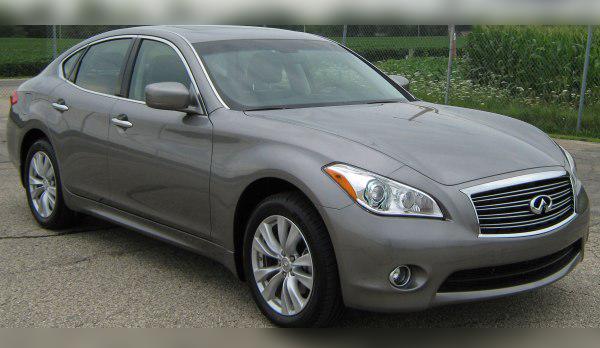
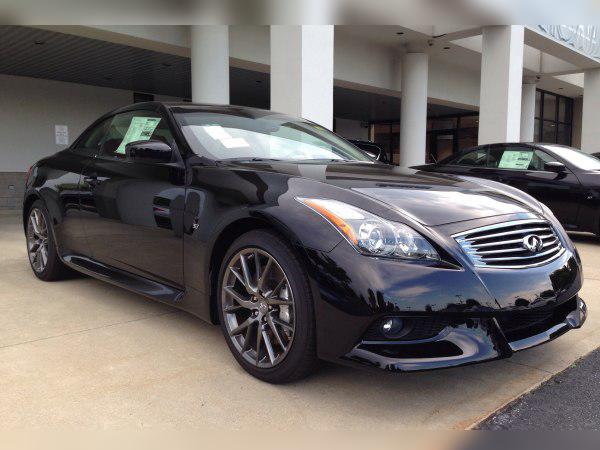
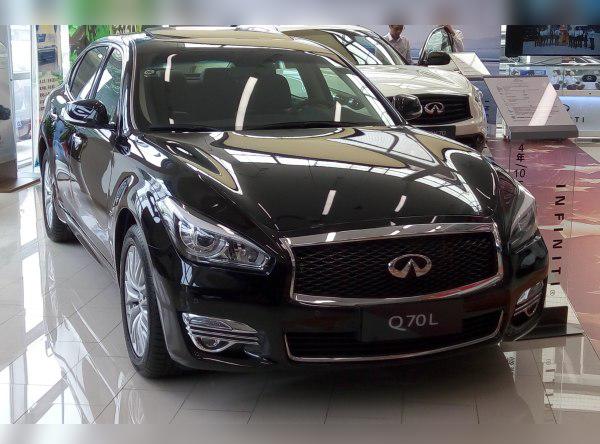
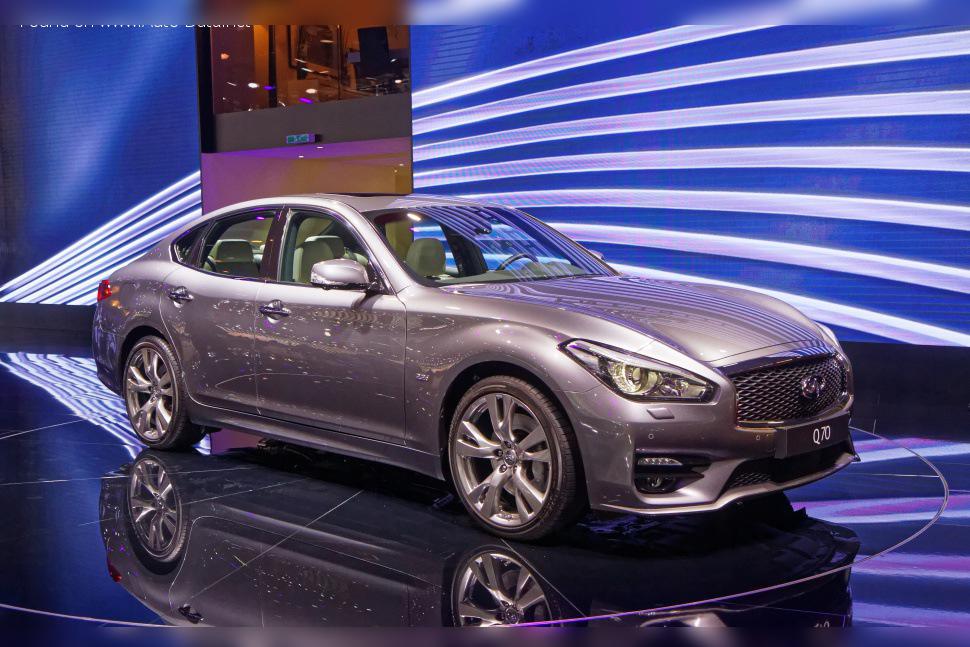
It was installed in a wide range of premium models, primarily under the Infiniti brand. On the used market you will most often find it in sedans such as the Infiniti M37, Q70, Q70L, but also in sporty coupes and convertibles like the Infiniti Q60, as well as in the crossover QX50. Due to its architecture, it is most commonly paired with rear-wheel drive or the intelligent AWD (All-Wheel Drive) system.
Technical specifications
| Specification | Data |
|---|---|
| Engine displacement | 3696 cc |
| Engine power | 243 kW (330 hp) |
| Torque | 361 Nm |
| Engine code | VQ37VHR |
| Injection type | Multi-point (indirect injection) |
| Aspiration | Naturally aspirated |
Reliability and maintenance
When you open the hood of a model powered by the VQ37VHR, you are looking at an engine designed to last. Instead of a sensitive timing belt, it uses a heavy-duty timing chain to synchronize the crankshaft and camshafts. This chain is designed to last as long as the engine itself, so there is no “major timing service” in the traditional sense. In practice, the chain and tensioners are usually inspected only after 250,000 to 300,000 km, and are replaced only if they start rattling on a cold start.
Most common failures and symptoms
Although extremely reliable, this engine has one Achilles’ heel, especially in versions produced before 2012. The issue concerns the paper oil gallery gaskets that sit behind the timing chain cover. Over time these gaskets crack, which leads to a drop in oil pressure in the engine. The driver may notice this through the oil pressure warning light, fault codes on diagnostics (P0011 or P0021 related to the variable valve timing system), and in extreme cases the engine will enter limp mode (safety mode). Replacing these gaskets requires removing the entire front of the engine and the timing chain, so this repair is expensive (depending on the market) solely because of the large number of labor hours. Later models have revised metal gaskets, which do not suffer from this problem.
Engine oil and spark plugs
For a regular oil service you will need about 4.9 to 5.2 liters of engine oil. The recommended viscosity is high-quality 5W-30 (oils with ester base are often recommended due to the specific VVEL valve control system). As for oil consumption between services, it is completely normal for this engine to use between 0.5 and 1 liter every 5,000 to 8,000 km, especially if it is often driven at high RPM. This is not an engine that suffers from worn piston rings like some older generations; it is structurally designed with minimal combustion tolerance.
Since this is a pure-bred gasoline engine, spark plugs are replaced every 100,000 km. Only iridium spark plugs should be used. Replacement can be a bit more demanding because the intake manifold and throttle bodies need to be partially removed, which makes labor somewhat more expensive.
Specific parts and costs
Thanks to its indirect fuel injection (multi-point), the VQ37VHR does not suffer from carbon buildup on the intake valves, which is a nightmare for modern direct-injection engines. The injectors are very durable and rarely fail, and cleaning is recommended only as preventive maintenance at higher mileage.
This engine is fully naturally aspirated, which means there is no turbocharger (or twin-turbo setup). As a result, you are spared the huge potential costs of turbocharger overhaul or replacement. There are no complicated and extremely expensive systems commonly found on modern diesels and turbo-petrol engines – in other words, there is no DPF filter, no AdBlue system, and no traditional EGR valve that clogs up with soot (exhaust gas recirculation is handled by the VVEL system itself through valve overlap).
Fuel consumption and performance
If you are considering buying a car with this engine, you must be prepared for frequent visits to the gas station. Real-world city fuel consumption, depending on vehicle weight (for example, a heavy Infiniti Q70 or M37 with AWD), ranges between 13 and 16 l/100 km. If you have a heavy right foot, that number easily goes higher.
Although 330 hp and 361 Nm of torque sound very strong, this engine does not deliver its power aggressively from zero like modern turbo engines do. Because of this, drivers used to turbo diesels may feel that the engine in a heavy sedan is somewhat “lazy” at low RPM. However, this is only an illusion. As soon as the tachometer needle passes 4,000 rpm, the engine shows its true, race-bred character and pulls hard all the way to the redline (7,500 rpm).
On the highway, it is a fantastic cruiser. At a speed of 130 km/h in top gear (seventh gear on the automatic), the engine spins at a relaxed 2,500 to 2,600 rpm, while fuel consumption stabilizes at a very acceptable 8 to 10 l/100 km.
Additional options and modifications (LPG and chiptuning)
Many owners, due to the high fuel consumption, consider installing an LPG system. Although indirect injection makes installation easier, the VQ37VHR is not the happiest candidate for LPG. The reason lies in the fact that Nissan/Infiniti V6 engines have relatively soft valve seats which, at the higher combustion temperatures of LPG, can wear out quickly (leading to loss of compression). If LPG is installed anyway, the system must be of top quality, with high-flow injectors, a vaporizer rated for high power, and a mandatory valve lubrication system (so-called “flashlube”). Even so, our recommendation is to run this engine on gasoline.
When it comes to Stage 1 chiptuning, since the engine has no turbo, extracting additional power through software alone is minimal. You can expect at most 10 to 15 hp and a slightly improved throttle response. To achieve a serious power gain, substantial mechanical upgrades to the intake and exhaust system are required, which is often very expensive (depending on the market).
Transmissions and drivetrain
Most sedans and SUVs (M37, Q70, QX50) with this engine come exclusively with the reliable Jatco 7-speed automatic transmission (RE7R01A). This gearbox is extremely durable, but may suffer from harsher shifts if the software is not updated. The biggest problem with the automatic arises if maintenance is neglected. The transmission fluid (along with the filter) should definitely be changed every 60,000 to 80,000 km to preserve the valve body.
Manual gearboxes are rare and are mostly found in sporty coupes and convertibles such as the Infiniti Q60. This 6-speed manual is mechanically notchy but robust. Its weak point is the clutch – the hydraulic concentric slave cylinder (CSC) located inside the bellhousing often fails, leaving the clutch pedal stuck to the floor. Replacement requires removing the gearbox. Models with a manual transmission have a dual-mass flywheel, and the clutch kit and flywheel are large and designed for high power, so their replacement is expensive (depending on the market). Models with an automatic transmission do not have a dual-mass flywheel; instead, they use a hydraulic torque converter.
Buying used and conclusion
When buying a used car with the 3.7 V6 engine, it is crucial to carry out a detailed inspection, mainly due to the age and sporty nature of the cars it is installed in. It is MANDATORY to insist that the car be completely cold when you arrive. Start the engine and listen to the front of the engine. If you hear a sharp metallic chain rattle that lasts longer than a second or two, the chain tensioners are at the end of their life.
If you are buying a model older than 2012, it is highly recommended that a mechanic connects a mechanical gauge and checks the actual oil pressure at hot idle. If the pressure is low, you can be sure that the oil gallery gaskets have failed, which automatically means an expensive timing-related repair.
Who is this engine for? The VQ37VHR is intended for drivers who appreciate “old-school” engineering, enjoy the sharp sound of a straight-six-like V6 that happily revs beyond 7,000 rpm, and want premium performance without the fear of failing turbos, DPF filters and EGR valves. Its biggest downside is frequent visits to the gas station, but if high registration costs and fuel consumption are not a decisive factor for you, you get one of the most reliable and characterful engines available in the modern automotive industry.