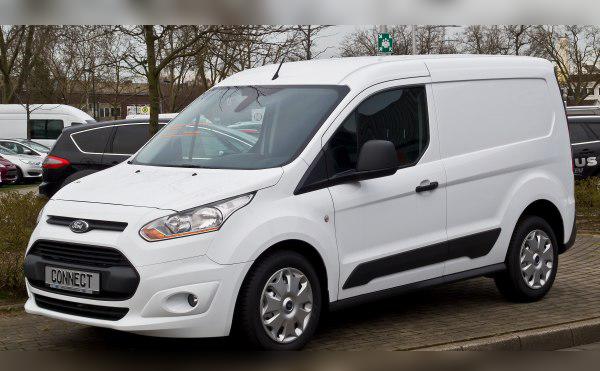
Ford 1.6 TDCi (TZGA, TZGB) 95 HP: Experiences, problems, fuel consumption and used-buying tips
Key points (TL;DR)
- Improved reliability: This is the newer 8-valve generation (DV6C base) that fixed many flaws of the older 16-valve 1.6 TDCi/HDi engine.
- Timing system: The engine uses a timing belt; a major service is recommended at around 150,000 km.
- Most common issues: Injector washer leaks, EGR valve clogging and DPF filter clogging with exclusively city driving.
- Fuel consumption: Very economical; in the city it consumes around 6.5 to 7.5 l/100 km, depending on van load.
- Maintenance: Requires strict adherence to oil change intervals (maximum every 10,000–15,000 km) to protect the turbocharger.
- Dual-mass flywheel: Presence of a dual-mass flywheel depends on version and Start-Stop system, so checking by VIN is mandatory.
Contents
- Introduction: A workhorse for tradespeople
- Technical specifications
- Reliability and maintenance
- Specific parts and costs
- Fuel consumption and performance
- Additional options and modifications
- Gearbox and clutch
- Buying used and conclusion
Introduction: A workhorse for tradespeople
The engines coded TZGA and TZGB (better known under the commercial name 1.6 TDCi Duratorq) are the heart of many light commercial vehicles, most notably the Ford Transit Connect II models. This power unit is the result of cooperation between PSA and Ford and represents the so‑called 8‑valve (DV6C) evolution. Unlike the notorious 16‑valve predecessor, this engine underwent serious revisions to the lubrication system, cylinder head design and turbocharger, making it a much more durable and reliable choice for fleet buyers and tradespeople. With its 95 HP, it is designed primarily for economy and durability rather than sporty performance.
Technical specifications
| Parameter | Value |
|---|---|
| Engine displacement | 1560 cc |
| Power | 70 kW (95 HP) |
| Torque | 230 Nm |
| Engine codes | TZGA, TZGB |
| Injection type | Common Rail (direct injection) |
| Charging | Turbocharger, intercooler |
| Fuel type | Diesel |
Reliability and maintenance
Timing system and major service
This engine uses a timing belt to synchronize the crankshaft and camshaft. The manufacturer specifies rather optimistic intervals for the major service, often up to 200,000 km, but workshop experience says otherwise. Every seasoned mechanic will recommend doing the major service (replacement of timing belt, tensioner, idler pulleys and water pump) at 140,000 to 160,000 km or every 7 years. If the vehicle is used under heavy load in city conditions, this interval should be shortened to avoid belt failure, which leads to catastrophic engine damage.
Lubrication and oil consumption
The oil sump capacity is around 3.8 liters of oil. Due to the presence of a DPF filter, it is absolutely mandatory to use oil that meets the Ford WSS-M2C913-D specification (most commonly 5W-30 grade), which produces less ash when burning. Always perform the minor service every 10,000 to 15,000 km. This engine generally does not consume much oil. A loss of 0.2 to 0.5 liters between services is considered normal. If consumption exceeds 1 liter, the cause is most often a worn turbocharger letting oil into the intake, or, less commonly, worn piston rings.
Injectors and fuel injection system
The injection system is sensitive to poor fuel quality. However, the Common Rail injectors themselves have proven to be quite durable and can easily exceed 250,000 km without major issues. The most common fault in this part of the engine is not the injectors themselves, but the copper injector washers (seals). Over time they start to leak, which the driver can notice by a specific “hissing” (tapping) sound under the bonnet and a strong exhaust smell in the cabin. If this is not resolved in time, soot will harden around the injector and removing it becomes a nightmare for mechanics.
Specific parts and costs
Dual-mass flywheel
One of the most common questions is: Does this engine have a dual-mass flywheel? The answer is: It depends / You can’t be 100% sure without the engine code and VIN. Lower-spec commercial versions (panel van without Start-Stop system) often come with a solid flywheel to keep maintenance costs down. However, versions equipped with a Start-Stop system or those intended for passenger transport (Wagon) very often have a dual-mass flywheel to reduce vibrations during frequent engine restarts. The cost of replacing a clutch kit with a dual-mass flywheel is high to very high (depending on the market), while a solid flywheel is significantly cheaper.
Turbocharger and emissions systems (DPF, EGR, AdBlue)
The engine is equipped with a single turbocharger (mostly with fixed geometry at this power level, which makes it more durable). Its service life is excellent provided the oil is kept clean. If sludge builds up in the sump, the fine mesh on the oil feed pipe to the turbo can clog, leading to turbo seizure due to lack of lubrication.
In terms of emissions systems, the engine has an EGR valve and a DPF filter. On delivery vehicles that never leave the city, the EGR valve quickly clogs with soot, resulting in jerking under acceleration and loss of power. The DPF filter also requires regular trips on open roads to perform passive regeneration at higher temperatures. If the DPF starts to clog, you will notice the radiator fan running more often and a slight rise in oil level (due to fuel dilution during failed regeneration attempts). The AdBlue (SCR) system is generally NOT fitted to this generation of engines (TZGA/TZGB, Euro 5); it only became standard later on 1.5 TDCi Euro 6 engines.
Fuel consumption and performance
Real-world fuel consumption
The Ford Transit Connect II with this engine is extremely frugal. In city driving you can expect consumption between 6.5 and 7.5 l/100 km. If the vehicle is constantly loaded and used in stop‑and‑go traffic, the figure can go up to 8 l/100 km. On country roads, consumption drops dramatically to around 4.5 to 5.5 l/100 km.
Dynamics and motorway driving
With 95 HP and 230 Nm of torque, the engine is not “lazy” if the van is empty or only partially loaded. The diesel delivers good low-end torque. However, when the vehicle is loaded to its maximum payload, the lack of power during overtaking becomes noticeable.
On the motorway, the situation is somewhat of a compromise. Due to the commonly fitted 5‑speed manual gearbox with short ratios (geared for hauling loads), at a speed of 130 km/h the engine spins at higher revs (around 2600–2800 rpm). This means it becomes significantly noisier in the cabin and fuel consumption noticeably increases at those speeds.
Additional options and modifications
Because this is a work vehicle, many owners consider increasing the power. This engine can be remapped (Stage 1) quite safely. With software optimization, power is usually raised from 95 HP to around 115 to 120 HP, while torque increases from 230 Nm to about 280 to 290 Nm. This is very noticeable when the vehicle is loaded. However, a mechanic’s advice: only do the modification after confirming that the clutch, (any dual-mass flywheel) and turbo are in perfect condition, because the higher torque puts more stress on the drivetrain and suspension.
Gearbox and clutch
Types of gearboxes and maintenance
This engine is most commonly paired with a 5‑speed manual gearbox (MTX75 or iB5 type, depending on the exact chassis specification). The manual gearbox is very robust. The most common issues are difficult engagement of 2nd or 3rd gear due to worn synchros at high mileage and heavy city‑delivery use.
Automatic gearboxes (such as the Powershift dual‑clutch transmission) are very rare in commercial variants of this model, but if you come across one, be cautious. Powershift requires expensive mechatronic repairs if it fails.
Gearbox oil service intervals
For the manual gearbox, the manufacturer often states “lifetime oil”, but in practice that means a guaranteed path to bearing wear. It is recommended to change the oil in the manual gearbox every 80,000 to 100,000 km. The cost of 2–3 liters of gearbox oil is negligible compared to a gearbox overhaul. If the vehicle is equipped with an automatic transmission, oil and filter changes must be done strictly every 60,000 km.
Buying used and conclusion
What to check before buying?
When buying a used Ford Transit Connect with the 1.6 TDCi (95 HP) engine, focus on the following points:
- Smell in the cabin: Start the engine and turn on the ventilation. If you smell diesel or exhaust fumes, the injector washers are due for replacement.
- Turbo noise: Blip the throttle sharply at idle and listen for the turbo whistling excessively like a siren. Also inspect the hoses around the intercooler – oily deposits indicate that the turbo is slowly on its way out.
- Smoke: Pull out the dipstick while the engine is running (when warm). If a large amount of white “steam-like” smoke is pulsing out under pressure, the engine is losing compression (it’s “blowing by”).
- Diagnostics: Always hook up a diagnostic tool to check DPF saturation (ash mass in grams) as well as injector correction values in milliseconds.
- Clutch: Press the clutch pedal halfway; if you feel strong vibrations in the pedal and hear knocking, the dual-mass flywheel (if fitted) is at the end of its life.
Conclusion
The 1.6 TDCi engine in the 95 HP version (TZGA/TZGB) is one of the most sensible choices for tradespeople and delivery vehicles. It has been cured of the “childhood diseases” that plagued the older 1.6 diesels. If you provide it with regular, timely changes of quality oil and occasionally “stretch its legs” on the open road to keep the EGR and DPF healthy, this engine can easily cover hundreds of thousands of kilometers. It is not a motorway speed champion, but at the end of the year it will save you serious money thanks to its fuel efficiency.