Peugeot and Citroen 1.6 16V NFU (TU5JP4) engine: Experiences, problems, fuel consumption and used car buying guide
- Excellent reliability: Old-school naturally aspirated petrol engine without complicated and expensive systems.
- Low maintenance costs: No dual-mass flywheel, no turbo, no EGR valve. Parts are affordable (depends on the market).
- Ideal for LPG: The multipoint injection system accepts LPG systems perfectly and safely.
- Specific weaknesses: Sensitive ignition coil pack, throttle body contamination and occasional oil seepage at the valve cover or cylinder head gasket.
- Gearboxes can be an issue: Automatic gearboxes (AL4) and robotised ones (2-Tronic) require great caution when buying, while manuals suffer from noisy bearings and imprecise linkage.
- Performance and fuel consumption: Extremely lively in smaller models (Peugeot 206), but in heavier bodies (Berlingo, Partner) it consumes more fuel and lacks torque on uphill sections.
Contents
- Introduction: What you need to know about the TU5JP4 engine
- Technical specifications
- Reliability, maintenance and common failures
- Specific parts and costs
- Fuel consumption, performance and driving feel
- LPG and chiptuning
- Gearboxes: Which to choose and which to avoid
- Buying used and final verdict
Introduction: What you need to know about the TU5JP4 engine
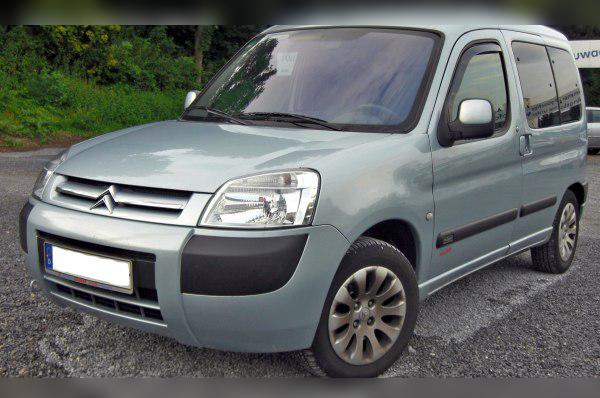
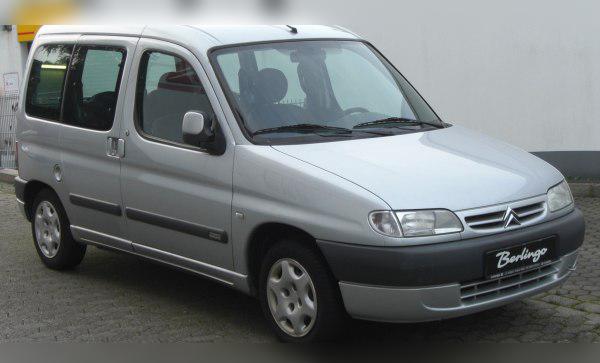
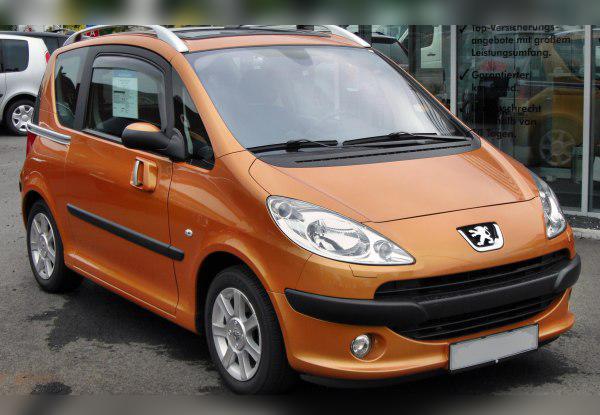
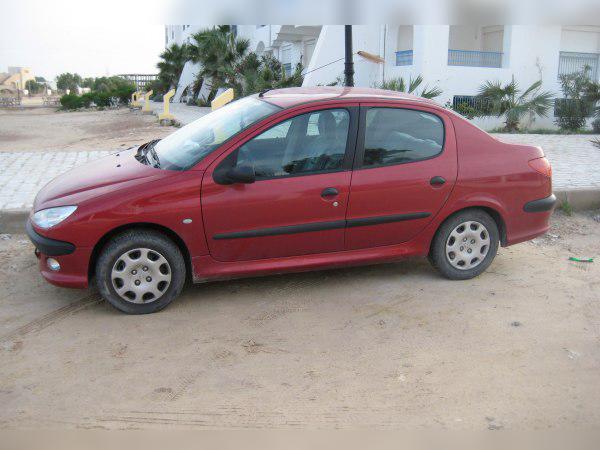
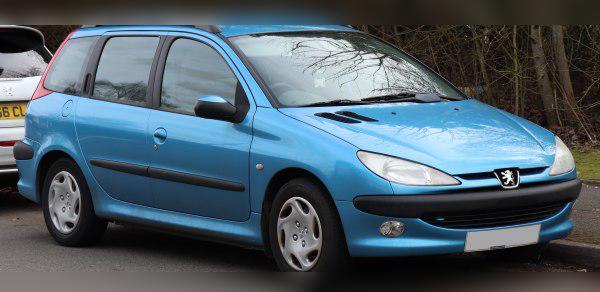
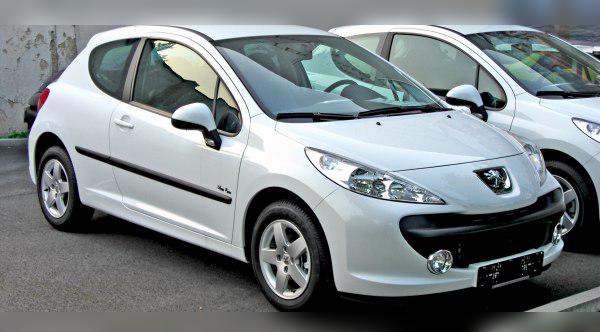
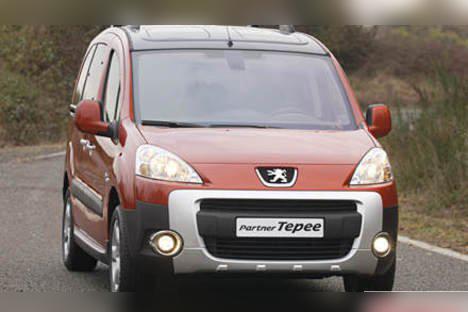
When it comes to French petrol engines from the late nineties and early 2000s, the engine with the code NFU (TU5JP4) is probably the most sensible choice. This is a classic inline four-cylinder with a displacement of 1.6 litres, 16 valves and 110 horsepower. It was installed in a huge number of PSA group vehicles, covering city runabouts such as the Peugeot 206 and 207, the quirky Peugeot 1007, as well as multi-purpose workhorses like the Citroen Berlingo and Peugeot Partner.
Thanks to its simple design and the absence of modern emission restrictions, this engine has earned the status of a “workhorse”. However, like any unit that is more than two decades old, it has its characteristic issues that every owner or potential buyer needs to be familiar with.
Technical specifications
| Parameter | Data |
|---|---|
| Engine displacement | 1587 cc |
| Engine power | 80 kW (110 hp) at 5750 rpm |
| Torque | 147 Nm at 4000 rpm |
| Engine code | NFU (Family: TU5JP4) |
| Fuel type | Petrol (Gasoline) |
| Injection type | MPI (Multipoint Indirect Injection) |
| Induction | Naturally aspirated – no turbo |
Reliability, maintenance and common failures
Timing: Belt or chain?
This engine uses a timing belt to drive the camshafts. The timing system is quite robust, but it does not tolerate exceeding the recommended intervals. A snapped belt on this engine leads to valve-to-piston contact, which means catastrophic engine failure.
At what mileage should the major service be done?
Although the factory recommendations in some manuals went up to 120,000 km, any experienced mechanic will tell you that the major service (replacement of timing belt, tensioner, idler pulleys and water pump) must be done at 80,000 to 90,000 km or every 5 to 6 years at most. Parts for the major service are quite affordable, so postponing it is an unnecessary risk.
Engine oil: Capacity and consumption
The amount of oil this engine takes is a modest 3.25 litres (including the oil filter). The most commonly recommended grade is 5W-40, although on older, high-mileage examples owners often switch to 10W-40 (semi-synthetic). The minor service is done every 10,000 to a maximum of 15,000 km.
As for oil consumption, the TU5JP4 is not a heavy consumer by design. It is considered normal to use about 0.3 to 0.5 litres per 10,000 km. However, if the engine consumes significantly more (over 1 litre per 1000 km), the cause is almost certainly aged and hardened valve stem seals, which is a classic weakness of PSA engines of this generation. Worn piston rings are less common, unless the engine has been overheated.
Spark plug replacement
As a classic petrol engine, it requires regular spark plug replacement to protect the ignition module. The recommended replacement interval is every 40,000 to 60,000 km. If you install LPG, it is advisable to shorten this interval to around 30,000 km.
Most common failures
Although the engine block itself can cover huge mileages, the ancillary components can cause trouble:
- Ignition coil pack: It can fail due to engine heat or worn spark plugs. Symptoms include rough running, jerking under acceleration and running on three cylinders, accompanied by the “Check Engine” light. Sagem coil packs caused the most problems, while replacements (e.g. Valeo, Beru) have proven much better.
- Throttle body: Over time it gets dirty from oil vapours. Symptoms include fluctuating idle speed, stalling when you press the clutch, or sluggish throttle response. Cleaning solves the problem, after which calibration (adaptation) via diagnostics is necessary.
- Oil leaks: Due to age, valve cover gaskets tend to fail, making the engine look dirty and oily. Also, older TU generations had an issue with slight “weeping” at the head gasket (near the alternator), which can also appear on this model.
Specific parts and costs
What makes this engine extremely attractive in terms of maintenance is the absence of modern, outrageously expensive components.
- Dual-mass flywheel: NONE. The TU5JP4 uses only a conventional solid flywheel. Clutch replacement (pressure plate, disc, release bearing) is a routine job and not expensive (depends on the market).
- Injectors: The multipoint (MPI) system is very reliable. Petrol injectors rarely fail. If a problem does occur (clogging due to poor-quality fuel or constant driving “on reserve”), they can be cleaned very effectively and cheaply in an ultrasonic bath.
- Turbocharger: NONE. This is a naturally aspirated engine. Your wallet is safe from turbocharger overhauls.
- DPF filter and EGR valve: NONE. This is a pure old-school petrol engine. (Note: Some late Euro 4 versions have an electric secondary air pump for faster catalyst warm-up, which can start buzzing when it fails, but this does not critically affect operation.)
- AdBlue system: NONE. Not applicable to petrol engines.
Fuel consumption, performance and driving feel
Performance relative to body style
The driving feel varies drastically depending on the car in which the engine is installed. In the Peugeot 206 (Hatchback/Sedan), 110 hp offers serious liveliness. The car accelerates very well and feels dynamic. However, in heavier models with poor aerodynamics such as the Citroen Berlingo, Peugeot Partner or the tall Peugeot 1007, this engine “struggles” on climbs and during overtaking with a full load. Due to the modest torque (147 Nm), the engine has to be kept at high revs (over 3500 rpm) to pull the heavy body properly.
Real-world fuel consumption and motorway driving
Unfortunately, the TU5JP4 is not particularly economical in city driving. In stop-and-go urban traffic, real consumption ranges from 8.5 to 10 l/100 km in lighter models, and up to 11 l/100 km in the Berlingo or in versions with an automatic gearbox. On open roads (speeds of 80–90 km/h), it can bring consumption down to a respectable 6.0 to 6.5 l/100 km.
Behaviour on the motorway: The five-speed manual gearbox has very short ratios. At a cruising speed of 130 km/h, the engine spins at a rather high 3800 to 4000 rpm (depending on the model and gearbox). This results in increased cabin noise and fuel consumption that at that speed usually exceeds 8 l/100 km.
Additional options: LPG and chiptuning
LPG conversion
This is one of the best characteristics of the NFU engine – it handles LPG perfectly. Thanks to indirect injection, installing a sequential LPG system is not expensive (depends on the market), and it provides huge savings given the slightly higher urban petrol consumption. These engines rarely suffer from valve damage (no need for valve lubricators), provided that the LPG map is professionally tuned so that the engine does not run on a lean mixture.
Chiptuning (Stage 1)
Unlike modern turbo engines, chipping a naturally aspirated petrol engine is generally a waste of money. On the TU5JP4, a Stage 1 map brings at most 5 to 8 hp and maybe 10 Nm of torque, which in practice the driver cannot really feel. It is better to invest that money in a major service and quality tyres.
Gearboxes: Which to choose and which to avoid?
Manual gearboxes (MA / BE family)
Depending on the car model, they were most often paired with five-speed manual gearboxes. The biggest complaint is about the gear linkage, which over time develops a lot of play, making the shift feel imprecise and “rubbery”. Also, noisy gearbox shaft bearings are quite common. If during driving (especially in lower gears) you hear a whining noise that disappears when you press the clutch, the problem is in the gearbox bearings. The oil in the manual gearbox is often neglected, and experts recommend changing it at around 60,000 to 80,000 km (it takes about 2 litres of 75W-80 oil).
Automatic gearboxes (AL4 / Tiptronic and 2-Tronic)
This is an area where the buyer needs to be extremely cautious:
- AL4 (Tiptronic): This is a conventional hydraulic automatic with only 4 gears. Although it offers comfort, it is very problematic and slow. The most common failures are electro-hydraulic valves (solenoids) in the valve body. Symptoms include a harsh jolt when shifting from first to second gear, and going into limp mode with the “Gearbox Fault” warning light on. To survive, it requires an oil change every 40,000 to 50,000 km. Due to the high revs caused by having only 4 gears, it increases fuel consumption by up to 1.5 l/100 km in the city.
- 2-Tronic (robotised manual gearbox): Most commonly found in the Peugeot 1007. This is actually a manual gearbox with electric motors (actuators) that change gears and operate the clutch instead of you. In real-world driving it is very jerky and unrefined. The most common failures are related to the actuators themselves or clutch calibration. Electronic repairs are quite expensive (depends on the market).
The clutch on manual gearboxes is, as mentioned, very affordable and there is no dual-mass flywheel. The price of a clutch kit is low (depends on the market).
Buying used and final verdict
What exactly should you check before buying?
- Noise on cold start: Make sure the seller does not start the car before you arrive. Start the engine and listen to whether it is running on all four cylinders. Any jerking, misfiring or “Check Engine” light indicates a problem with the coil pack or a dirty throttle body.
- Checking for oil leaks: Carefully inspect the right side of the cylinder head (around the timing belt and alternator). If it is very oily, you will likely have to deal with the head gasket or valve cover gasket.
- Diagnostics (PSA DiagBox): Be sure to connect the original diagnostic tool to check whether fault codes have been recently cleared and to see the condition of the lambda sensor readings.
- Clutch and gearbox test: The clutch must not be heavy (this means the disc is worn out, and the stiffness damages the clutch cable). For automatics: under gentle acceleration, the shift into second gear must be without any mechanical jolt!
Final verdict
The 1.6 16V NFU (TU5JP4) engine is an absolute recommendation for anyone looking for a cheap and reliable solution for getting from point A to point B. Who is it for? It is intended for drivers who do not want the risks associated with diesel engines (expensive turbo, injector and DPF repairs), and who cover average annual mileages.
The best way to get the most out of this engine is to buy an example paired with a manual gearbox, install a quality sequential LPG system, do a full major service and change the oil regularly. You will get a car whose maintenance costs are on the level of much smaller classes, and you will cover hundreds of thousands of kilometres without major headaches.