Renault 2.0 16V F4R (140 hp): Experiences, issues, fuel consumption and used-car buying tips
- Extremely durable and long-lasting mechanical unit, capable of very high mileage.
- Important: There are two injection versions. The classic (MPI) is virtually indestructible, while the IDE (direct injection) is a maintenance nightmare.
- The engine uses a timing belt, and the most common specific failure is the variable camshaft pulley.
- City fuel consumption is high, especially in heavy vehicles such as the Renault Espace (often over 12 l/100 km).
- The classic MPI version is perfect for LPG installation, which drastically reduces running costs.
- Beware of the 4-speed DP0 automatic gearbox – it is prone to overheating and valve body failures.
Contents
- Introduction: Get to know the Renault F4R
- Technical specifications
- Reliability and maintenance
- Specific parts (costs)
- Fuel consumption and performance
- Additional options and modifications
- Gearbox and drivetrain
- Buying used and conclusion
Introduction: Get to know the Renault F4R
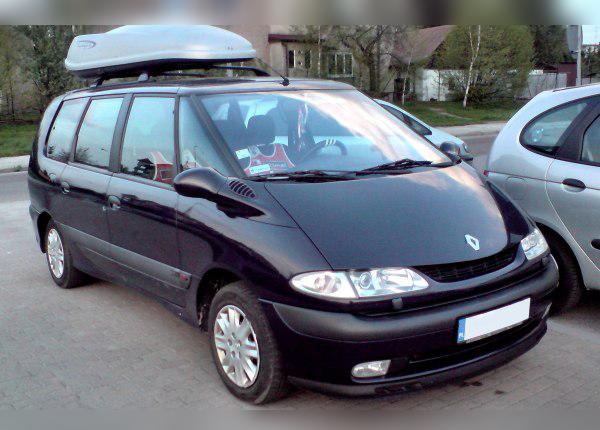
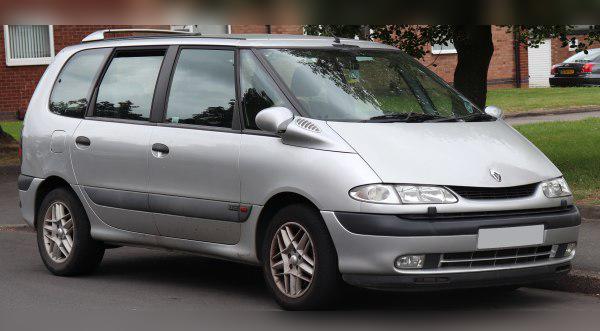
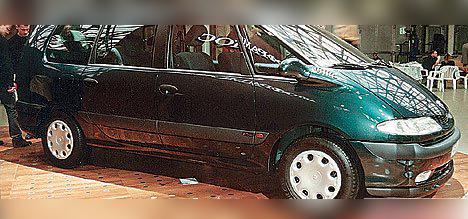
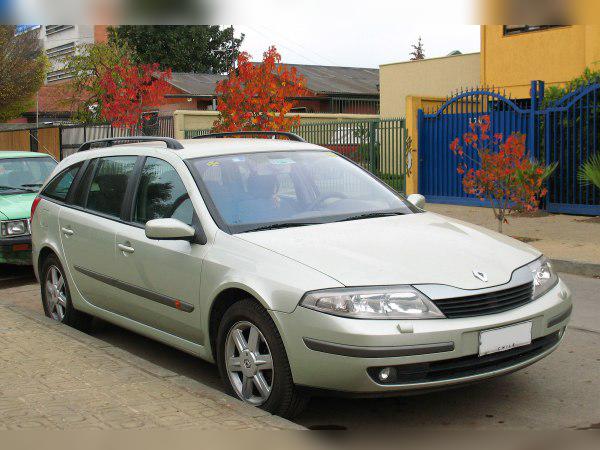
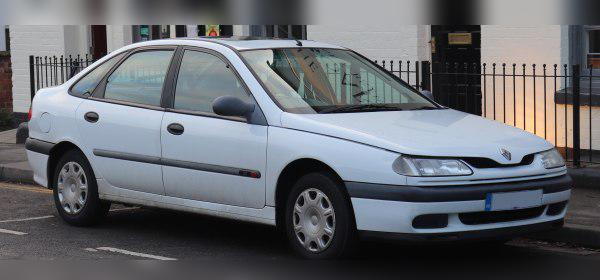
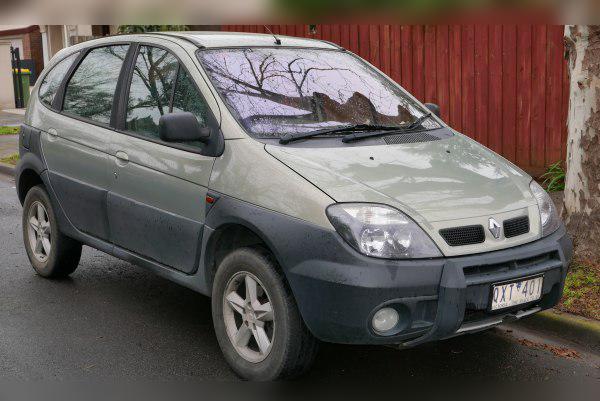
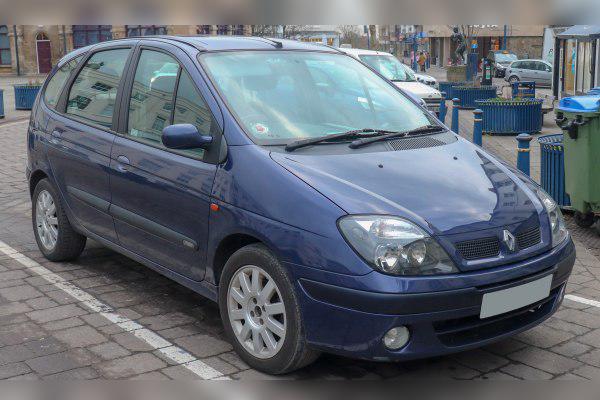
The two-liter naturally aspirated petrol engine designated F4R is one of the best-known and most common Renault engines from the late nineties and early 2000s. With its 140 hp it proved to be a universal solution – it was installed in heavy family cruisers such as the Renault Grand Espace III, saloons and estates like the Laguna II, as well as the off-road-oriented Scenic I RX4. Although on paper it looks like a simple and robust unit, its reputation depends entirely on one thing: the type of fuel injection. Because of that, this is an engine that requires careful checking before purchase.
Technical specifications
| Parameter | Data |
|---|---|
| Displacement | 1998 cc |
| Power | 103 kW (140 hp) |
| Torque | 188 Nm |
| Engine codes | F4R (F4R 700 / 701 for IDE versions, F4R 780, F4R 746 etc.) |
| Injection type | MPI (Multi-Point) / IDE (Direct cylinder injection) |
| Induction | Naturally aspirated (no turbo) |
Reliability and maintenance
Timing belt or chain?
This engine uses a timing belt. The system is quite reliable, but it does not tolerate skipped intervals. A snapped belt leads to serious damage in the cylinder head (bent valves).
Major and minor service
According to factory recommendations, the major service is done every 60,000 to 90,000 km (or every 5 years, whichever comes first). During the major service it is mandatory to replace all idler pulleys, tensioners and the water pump. The cost of the major service is not high (depends on the market).
Oil and oil consumption
The engine takes approximately 5.0 to 5.4 liters of oil. The recommended grade is 5W-40, although on higher-mileage engines people often switch to 10W-40. As for oil consumption, a completely healthy F4R will not require topping up between services (at 10,000 - 15,000 km). However, the manufacturer tolerates consumption of up to 0.5 l/1000 km. Over time the valve stem seals harden and the piston rings wear, so the engine can start to "drink" oil and emit bluish smoke from the exhaust on cold start.
Spark plugs and ignition
As a classic petrol engine, the F4R requires regular spark plug replacement, usually every 60,000 km. However, what causes more headaches for drivers are the ignition coils. The Sagem series in particular was problematic. When a coil fails, the engine starts to misfire, runs on three cylinders, loses power and turns on the "Check Engine" light.
Most common failures
Besides the coils, the most common issue is the variable camshaft pulley (VVT dephaser). When it fails, the engine sounds like a diesel on cold start (a loud "trrrrrr"), and it can even stall immediately after starting. Replacement of this pulley is usually done together with the major service and adds a noticeable amount to the final bill.
The crankshaft position sensor (TDC sensor) is also a frequent weak point. The symptom is clear: the starter turns, but the car will not start until the sensor cools down or is cleaned.
Specific parts (costs)
Injection system: MPI vs IDE
This is where we get to the key point. The classic F4R has MPI (multipoint) injection which is robust, and injectors rarely fail. However, the Renault Laguna II and Scenic I often came with the IDE (Injection Directe Essence) version of this engine. IDE engines have a high-pressure pump and a fuel pressure regulator that are extremely unreliable. Symptoms of IDE system failure are stalling while driving, "limp mode" and rough running. IDE injection parts are very expensive (depends on the market) and it is hard to find used ones that are still good.
Flywheel and emissions equipment
As a two-liter naturally aspirated petrol engine, in the vast majority of cases it has a solid flywheel, which saves you from expensive failures when replacing the clutch. The clutch is generally long-lasting and not expensive (depends on the market). The engine has no turbocharger, so there is no "turbo lag" and no worries about turbocharger overhaul.
Since it is a petrol engine, it does not have a DPF filter or AdBlue system. An EGR valve is present on some versions and can occasionally get clogged with carbon deposits (especially on IDE engines), which leads to engine choking and loss of performance at lower revs.
Fuel consumption and performance
City driving
Do not expect fuel efficiency. In models such as the Laguna II, city consumption is around 10-12 l/100 km. However, in the aerodynamic yet heavy "brick" that is the Espace III, city consumption easily goes to 13 to 14 l/100 km in winter or heavy traffic.
Is the engine "lazy"?
It depends on the body style. With 140 hp and 188 Nm of torque, which is only available at higher revs (around 3750 rpm), the engine is quite lively in the Laguna, but in the Espace III or Scenic RX4 it feels rather "lazy". To pull a heavy body uphill or when overtaking, you have to shift down and rev it high, which further increases noise and fuel consumption.
Behaviour on the motorway
Due to the relatively short gear ratios of the 5-speed gearbox, at 130 km/h the engine spins at a fairly high 3500 to 4000 rpm. This results in increased cabin noise and fuel consumption of around 8-9 l/100 km on the open road.
Additional options and modifications
LPG installation
If you have the standard (MPI) version of the F4R engine, the answer is: Yes, absolutely. The engine handles LPG very well, there are no issues with valve seat wear, and installing LPG is the smartest way to beat the high city fuel consumption.
Warning: If the engine has IDE (direct) injection, installation of a classic sequential LPG system is not possible, and special systems for direct injection are economically completely unjustifiable for cars of this value.
Chiptuning (Stage 1)
Given that this is a naturally aspirated engine without a turbo, chiptuning (remap) is a waste of money. At best, by optimising the maps you can gain between 5 and 8 hp, which is completely imperceptible in real driving. Do not fall for stories about 20 hp gains on a naturally aspirated petrol engine.
Gearbox
Manual and automatic gearboxes
This engine was most often paired with 5-speed manual gearboxes (JC5 and JR5 series). These gearboxes are reliable, but known for minor oil leaks at the gear selector seal. Clutch replacement is cheap because a classic solid flywheel is used.
The automatic option is the infamous 4-speed DP0 gearbox. This is a gearbox you should avoid if possible. It is terrible in terms of performance (it strangles the engine), and most often fails due to overheating and solenoid failure in the valve body. Symptoms are harsh jerks when shifting while cold, or being locked in 3rd gear (limp mode). Automatic gearbox repair is expensive (depends on the market).
Gearbox maintenance
For manual gearboxes, it is recommended to change the oil every 80,000 km, which makes engaging gears in winter much easier. For the DP0 automatic gearbox, the oil should be changed at the latest every 60,000 km to extend the life of the solenoids, even though Renault once claimed the oil was "lifetime".
Buying used and conclusion
What to check before buying?
- Golden rule – cold start: Insist that the engine be completely cold when you come to see the car. Listen to it in the first three seconds after starting. If you hear a metallic rattling sound, the variable cam pulley needs replacing.
- Idle: Warm up the car and pay attention to the rev counter needle. If it fluctuates or the car shakes, the problem is a dirty throttle body, bad coils or false air at the intake manifold.
- Engine designation: The most important check! Open the bonnet and look at the engine cover. If it says 2.0 IDE (most often on Laguna II estate), walk away from that car unless you have solid proof that the pump and regulator were recently replaced with new parts.
- Gearbox (if automatic): On the test drive, with cold oil, accelerate gently. Any strong jolt when shifting from 1st to 2nd gear is a sign of imminent valve body failure.
Who is this engine for?
The Renault 2.0 16V F4R (in MPI form) is one of the last "good old" naturally aspirated petrol engines. It is intended for drivers who want cheap basic maintenance, do not want headaches with DPFs, injectors, dual-mass flywheels and turbos, and who cover decent mileage with an LPG system fitted. In the Espace it will be loud and thirsty, but it will serve you faithfully. However, if you come across an IDE version without service history or a car with a neglected DP0 automatic, it is better to continue your search elsewhere.