Renault 1.9 dCi 130 hp (F9Q): Experiences, problems, fuel consumption and used car buying tips
Key points (TL;DR)
- Significantly more reliable than the notorious 120 hp version, many early design flaws have been fixed.
- The engine offers excellent performance thanks to its 300 Nm of torque and is not “lazy” even in the heaviest body styles.
- Power is transmitted via a dual-mass flywheel, whose replacement is an expensive item.
- It uses a timing belt, and the major service is done every 80,000 to 100,000 km.
- It is equipped with a FAP (DPF) filter and an EGR valve – it does not like exclusively short city driving.
- It does not have an AdBlue system, which saves you from one big worry and potentially costly failures.
Contents
- Introduction: Restoring trust in dCi
- Technical specifications
- Reliability, maintenance and failures
- Specific parts and costs
- Fuel consumption and performance
- Additional options and modifications
- Gearbox and clutch
- Buying used and conclusion
Introduction: Restoring trust in dCi
When Renault’s 1.9 dCi engine (code F9Q) is mentioned, many mechanics first think of the earlier 120 hp versions, which had serious issues with turbochargers and crankshaft lubrication. However, the 130 hp version, fitted in the facelifted Renault Megane II (Phase II) from 2006 onwards, tells a completely different story. Renault put serious effort into revising this unit, improving the lubrication, injection and cooling systems, thus creating an engine that is far more reliable.
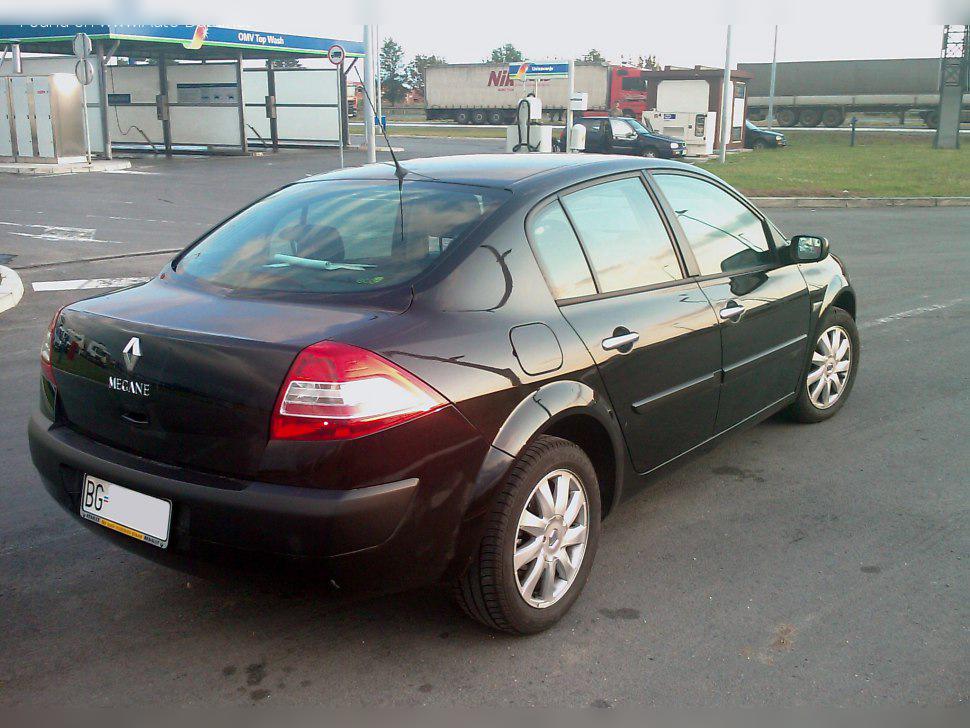
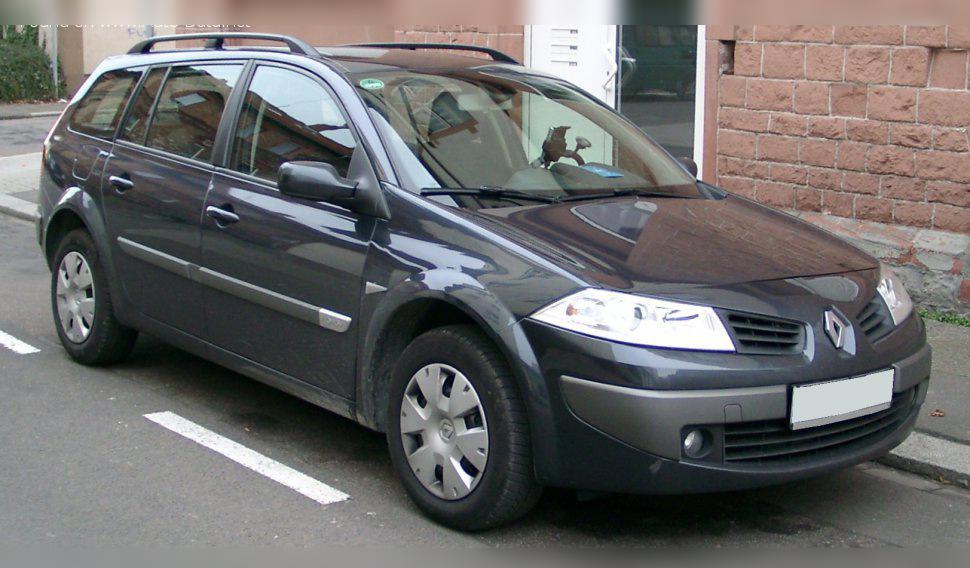
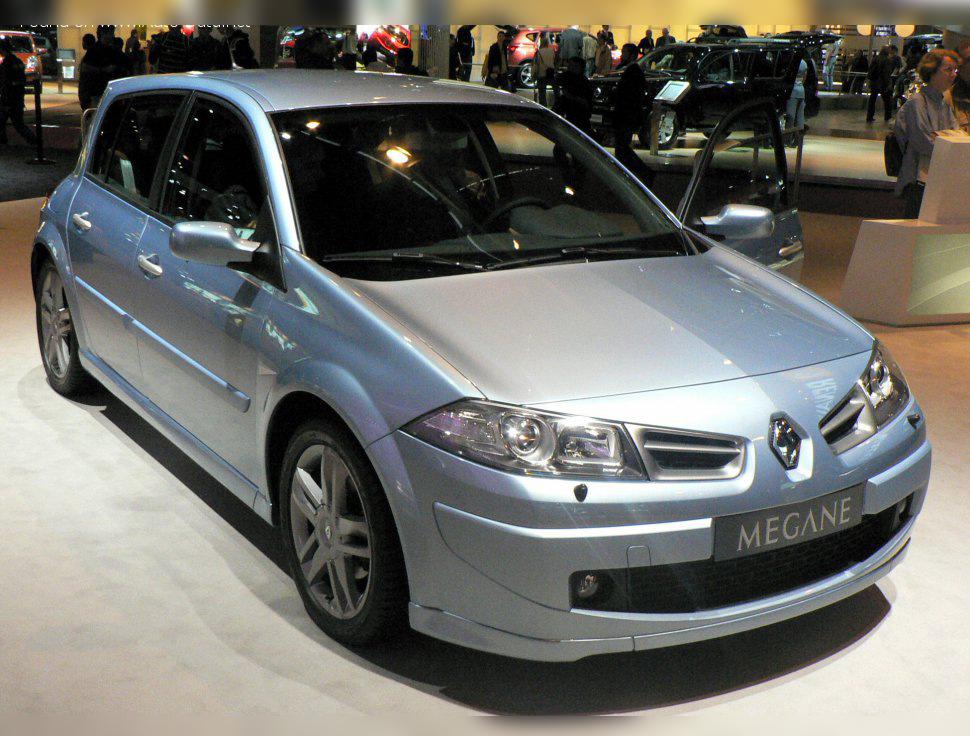
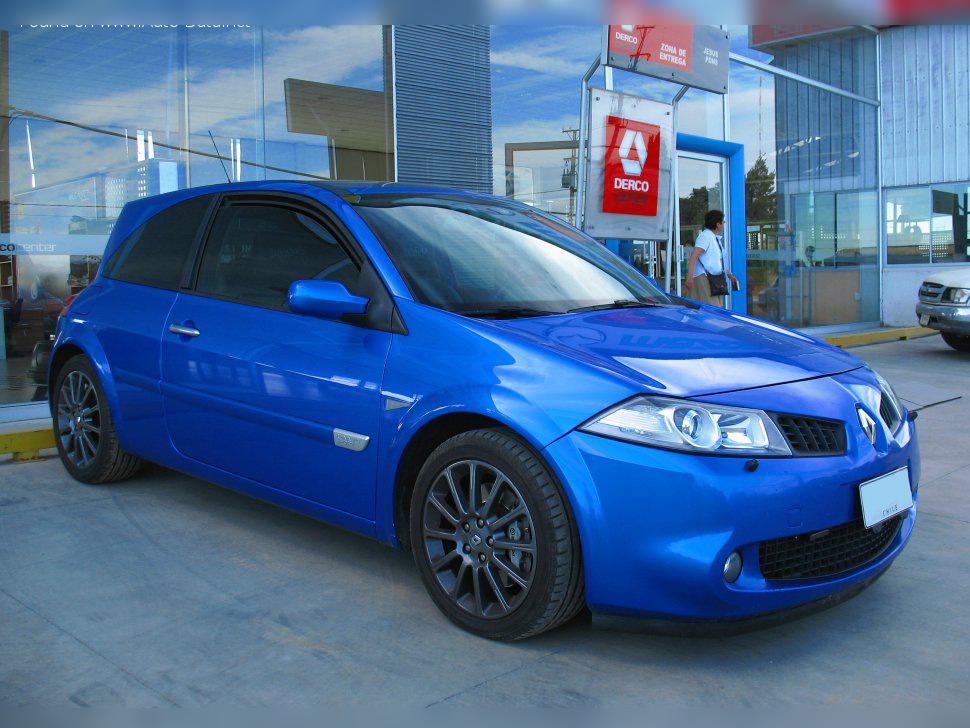
This engine was installed in a wide range of Megane II models: from the classic sedan, the practical estate (Grandtour), the stylish convertible (CC), all the way to the dynamic GT hatchback and coupe versions. Regardless of body style, the 1.9 dCi with 130 hp offers a serious compromise between performance and economy, but with a few specific maintenance requirements that every owner must respect.
Technical specifications
| Specification | Data |
|---|---|
| Displacement | 1870 cc |
| Power | 96 kW (130 hp) |
| Torque | 300 Nm |
| Engine codes | F9Q (most often 803, 804, 816, 818) |
| Injection type | Common Rail (Bosch) |
| Charging system | Turbocharger (VNT) with intercooler |
Reliability, maintenance and failures
Timing belt and major service
The 1.9 dCi F9Q uses a classic timing belt for cam drive, not a chain. The major service, which includes replacement of the timing belt, tensioner, idler pulleys and water pump, is recommended every 80,000 to 100,000 km or every 5 years, whichever comes first. Skipping this interval can lead to belt failure, which causes catastrophic engine damage (pistons hitting valves), and repairs are extremely expensive.
Oil: quantity, grade and consumption
This engine takes about 4.6 to 4.8 liters of oil. Due to the presence of a FAP (DPF) filter, it is mandatory to use oil that meets the ACEA C3 and Renault RN0720 standards (most often 5W-30 grades). These “Low SAPS” oils leave less ash when burning, thus protecting the DPF filter from permanent clogging.
As for oil consumption, it is completely normal for this engine to use around 0.3 to 0.5 liters of oil per 10,000 km. However, if you notice that the engine consumes more than a liter of oil between services, this is a clear symptom of worn piston rings, bad valve stem seals or, most commonly, a turbocharger that is leaking oil into the intake.
Injectors and fuel injection
Unlike the smaller 1.5 dCi engine from that period, which suffered from Delphi pumps and injectors (metal shavings), the 1.9 dCi F9Q uses a proven Bosch Common Rail injection system. The injectors are robust and rarely fail before 250,000 to 300,000 km. When the injectors start to wear out, the driver will notice harder cold starts, rough idle, increased fuel consumption and black smoke under hard acceleration. Injector repair usually involves refurbishment, which is reasonably priced compared to buying new ones.
Most common failures
Although better than its predecessor, this engine is not flawless. The most serious potential issue is wear of the crankshaft big-end bearings. The cause is overly long factory oil change intervals (often specified at 30,000 km). To avoid this, oil and filter must be changed at a maximum of 10,000 to 15,000 km. The symptom of bad bearings is a sharp, metallic knocking from the lower part of the engine when you press the accelerator. If ignored, the crankshaft can seize. Preventive replacement of the bearings at around 150,000 km is strongly recommended by experienced mechanics.
Specific parts and costs
Dual-mass flywheel
Yes, the 1.9 dCi 130 hp comes with a dual-mass flywheel (DMF). Thanks to it, driving is smooth and free of vibrations, but it is a wear item. Symptoms of a worn flywheel include shuddering of the whole car when moving off, rattling at idle and a dull thump when switching the engine off. A clutch kit with a dual-mass flywheel is expensive (depends on the market), but once replaced it will usually last a comfortable 150,000+ km.
Turbocharger
The engine has a single variable-geometry turbocharger (VNT). Its service life is significantly longer than on older versions and it can easily exceed 200,000 km with regular oil changes. However, it is sensitive to hard driving on a cold engine. If you hear a pronounced whistle under load or notice bluish smoke from the exhaust, the turbo is due for a rebuild. Turbocharger overhaul is nowadays routine and a moderately expensive job (depends on the market).
EGR and FAP (DPF) filter
Models from 2006 (Phase II) come as standard with a FAP soot particle filter (known as DPF with other manufacturers). The FAP filter often clogs if the car is driven exclusively in city traffic at low revs. Symptoms are the “Check Injection” or “Anti-pollution fault” warning lights on the dashboard and loss of power (the engine goes into limp mode). The EGR valve also accumulates soot and can get stuck in the open position, causing the engine to choke and produce black smoke. The EGR valve should be cleaned preventively every other year.
AdBlue system
Good news: this engine does not have an AdBlue system. As a Euro 4 unit, it relies solely on the FAP filter, so you have no costs for topping up urea and no risk of failure of the AdBlue injector, pump or tank heaters, which is a huge plus for a used car of this age.
Fuel consumption and performance
Real-world fuel consumption
The combination of body weight (especially on Grandtour and CC versions, which weigh close to 1.4 tons) and 1.9 liters of displacement results in real-world city fuel consumption of 7.5 to 8.5 l/100 km. On open roads, consumption drops to around 5.0 to 5.5 l/100 km. The average in mixed driving is usually around 6.5 l/100 km.
Performance and driving characteristics
With 130 hp and a hefty 300 Nm of torque, this engine is anything but sluggish. Even fully loaded with passengers and luggage (estate), the engine pulls confidently. Strong traction is available from about 1,800 rpm, when the turbo starts to boost fully.
Motorway driving
On the motorway, combined with the six-speed manual gearbox, the F9Q cruises at 130 km/h at a relaxed and quiet ~2300 to 2400 rpm. This keeps cabin noise low and fuel consumption at about 6 to 6.5 l/100 km. If you have a version with an automatic gearbox, revs are slightly higher and fuel consumption increases by about 0.5 to 1 liter.
Additional options and modifications
Chiptuning (Stage 1)
This engine has excellent potential for software power upgrades. A safe Stage 1 remap raises power to around 160 hp and torque to 350 to 360 Nm. The engine tolerates this modification very well, becoming noticeably more responsive to throttle input. However, a warning: before remapping, you must check the condition of the clutch, dual-mass flywheel and turbocharger. The increased torque will quickly destroy a flywheel that is already on its way out.
Gearbox and clutch
Manual and automatic gearboxes
The most common choice with this engine is the durable 6-speed manual gearbox (ND0). This gearbox is precise, but over time the bearings inside the gear cluster can fail if the car is driven aggressively on a regular basis or if oil level is neglected. The symptom is a whining noise similar to a bad wheel bearing, which changes depending on throttle input.
The other option is a 4-speed automatic gearbox (DP0/AL4 system). This automatic is outdated, noticeably slows the car down and increases fuel consumption. The most common failures are related to the solenoid valves in the hydraulic block. Symptoms are harsh shifts from 1st to 2nd gear when cold, or the gearbox going into “safe mode” (stuck in 3rd gear).
Gearbox servicing
To make the manual gearbox last, it is recommended to change the oil in it every 80,000 km (the cost is negligible compared to repairs). For the automatic gearbox, regular partial oil changes (so-called refreshing) are absolutely necessary every 60,000 km to flush out metal particles that can clog the valves.
As already mentioned, manual models have a dual-mass flywheel, whose replacement together with the clutch kit and hydraulic release bearing is very expensive (depends on the market).
Buying used and conclusion
What exactly to check before buying?
When buying a Megane II 1.9 dCi 130 hp, pay attention to the following:
- Noises when cold: Ask the seller to keep the engine completely cold before you arrive. Let it idle. If you hear a dull metallic knocking from the bottom end, this may indicate worn crankshaft bearings.
- Clutch and flywheel test: Feel whether the clutch pedal is “notchy” when pressed. At idle, listen for any light rattling, then switch the engine off without pressing the clutch – a dull thump is a sign of a bad dual-mass flywheel.
- Exhaust smoke: Black smoke under full throttle indicates a clogged EGR valve or injector problems. White smoke after the engine has warmed up (and not just condensation) indicates water in the combustion chamber, while blue smoke means engine oil is burning (turbo or piston rings).
- Diagnostics (OBD): It is MANDATORY to read the FAP (DPF) filter parameters with diagnostics. Check when the last regeneration took place and what the saturation level is. DPF replacement is extremely expensive.
Final conclusion
All in all, the Renault 1.9 dCi 130 hp (F9Q) is a very capable and comfortable engine for long journeys and motorway driving. It has corrected the fatal flaws of earlier generations and offers the driver great flexibility and serious performance for its class. Who is it for? Drivers who cover more than 15,000 km per year, with frequent trips on open roads and outside the city. Who is it not for? People who use the car exclusively for short trips from one traffic light to the next – in that type of use, the FAP filter, EGR and dual-mass flywheel will very quickly punish you with high repair bills.