Renault 2.3 dCi M9T (125 HP): Experiences, problems, fuel consumption and used-buying tips
- Timing chain drive: The engine uses a timing chain instead of a belt, which lowers regular maintenance costs but requires attention at higher mileage.
- Workhorse durability: The engine block itself and the basic mechanicals are extremely robust, designed for heavy commercial loads.
- Sensitive peripherals: The EGR valve, DPF filter and (on newer versions) the AdBlue system can cause headaches if the vehicle is used exclusively for short city trips.
- Gearboxes need attention: Manual gearboxes suffer from bearing issues, while robotized automatics are known for rough operation and expensive actuator failures.
- Compromise performance: With 125 HP, the engine is reliable for city driving and medium loads, but quite sluggish when a high-roof, long-wheelbase van is fully loaded.
- Oil consumption: It generally does not consume oil, but any noticeable loss points to a worn turbocharger or piston rings.
Contents
- Introduction: The heart of light commercial vehicles
- Technical specifications
- Reliability and maintenance
- Specific components and most common failures
- Fuel consumption and performance
- Additional options and modifications
- Gearbox and drivetrain
- Buying used and conclusion
Introduction: The heart of light commercial vehicles
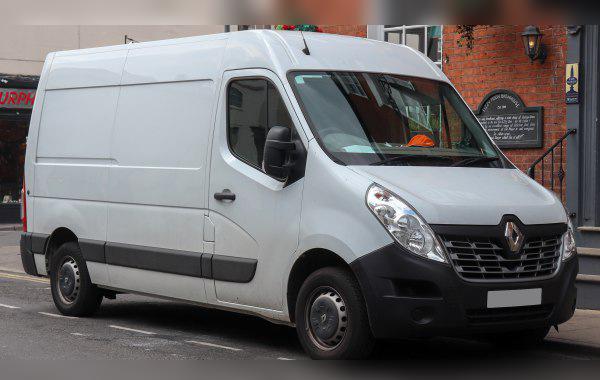
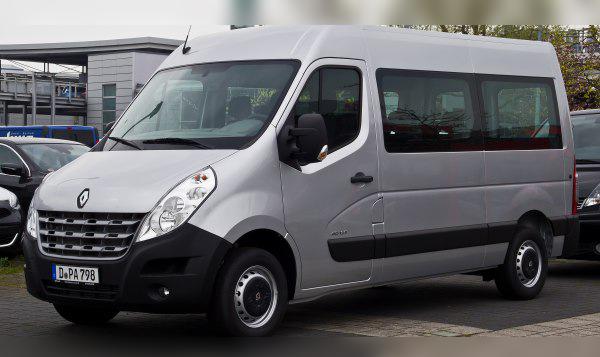
The engine designated as M9T, commercially known as the 2.3 dCi, is the core power unit for light commercial vehicles from the Renault group. Specifically, the 125 HP (92 kW) version was widely installed in the Renault Master III (Phase II, from 2014). Whether it’s a classic panel van, a passenger version (Bus/Combi with 9 seats) or a crew cab vehicle, this engine had to cope with body variants ranging from the shortest L1H1 to massive L3H3 versions. As an editor who has seen countless of these vans on a lift, I can tell you this is essentially an excellent engine, but it was designed to work, not to be neglected.
Technical specifications
| Parameter | Value |
|---|---|
| Displacement | 2298 cc |
| Power | 92 kW (125 HP) |
| Torque | 310 Nm |
| Engine code | M9T (Exact sub-code depends on emission standard/drivetrain) |
| Injection type | Common Rail (Direct injection) |
| Induction type | Turbocharger + intercooler (Single turbo on this version) |
Reliability and maintenance
Unlike older generations, the M9T uses a timing chain, not a timing belt. This means that the classic “major service” in the sense of changing the belt every 100,000 km does not exist here. However, the chain is not eternal. In practice it tends to stretch at mileages above 250,000 to 300,000 km. The symptom of a stretched chain is a specific metallic rattling noise during the first cold start of the day, before the tensioner gets oil pressure. Once that noise appears, replacement of the timing system is mandatory to avoid the timing jumping and total engine failure.
This engine requires a serious amount of oil for proper lubrication and cooling, usually around 8 liters of engine oil (depending on sump shape and drivetrain). Only fully synthetic oil of grade 5W-30 with ACEA C4 specification is recommended, which is crucial for preserving the DPF filter. The factory oil change interval is often unrealistically long (sometimes up to 40,000 km), but any serious mechanic will tell you that you must change the oil at a maximum of 15,000 to 20,000 km if you want to preserve the crankshaft and turbocharger. As for oil consumption, a healthy M9T practically does not consume oil between services. A drop of a few millimeters on the dipstick is normal, but if you are topping up more than 1 liter per 10,000 km, that is a clear sign of worn piston rings, leaking seals or a weakened turbocharger letting oil into the intake.
The injection system relies on Common Rail technology with fairly reliable injectors (often piezoelectric). On average, they last around 250,000 to 350,000 km. They are not particularly problematic by themselves, but they are extremely sensitive to poor diesel quality or metal shavings if the high-pressure pump starts to wear. Symptoms of bad injectors are difficult starting, rough idle, increased black smoke from the exhaust and higher fuel consumption.
Specific components and most common failures
One of the most common and at the same time more expensive wear items is the dual-mass flywheel. Yes, the M9T has one. Since this engine is installed in heavy commercial vehicles that often carry loads and suffer “stop-and-go” torture, the dual-mass flywheel wears out. The driver will notice this as strong vibrations in the clutch pedal, a dull thump when switching the engine off and jerking when moving off from a standstill.
This 125 HP version is equipped with a single turbocharger with variable geometry (more powerful versions above 135 HP often have Bi-Turbo systems). The turbo’s service life is excellent and easily exceeds 300,000 km, provided that the oil is changed regularly and the engine is not switched off immediately after a hard motorway climb, but is allowed to idle for a minute or two so that the turbo can cool down.
When it comes to emission control systems, things get complicated. The model is equipped with both an EGR valve and a DPF filter. The EGR valve often clogs with soot, especially if the van is used for courier work exclusively in city traffic. The DPF filter also requires longer drives on open roads to complete regeneration. If it gets clogged, the van goes into limp mode (reduced power) and the engine warning light comes on.
Does it have AdBlue? It depends/You can’t say 100% without the engine code. During 2014 the Euro 5 and Euro 6 standards overlapped. Early Phase II 125 HP models were mostly Euro 5 without an AdBlue system. However, later models under the Euro 6 standard come with an AdBlue tank and pump. If the vehicle has it, common issues involve the pump or the heater inside the AdBlue tank, which requires replacement of the entire module, and the price is very high (depends on the market). That’s why checking by VIN is mandatory.
Fuel consumption and performance
The 125 HP and 310 Nm engine offers a solid compromise, but don’t expect sporty acceleration. Is the engine “sluggish”? In the smallest L1H1 body or in the passenger Combi model it feels lively. However, if you put it in an L3H3 panel van and load 1.5 tons of cargo, you will notice a lack of breath on climbs and when overtaking, where you will constantly have to reach for the gear lever.
As for real-world city fuel consumption, expect between 9 and 11 l/100 km, depending on driving style and load weight. On country roads, consumption can drop to a decent 7.5 to 8 l/100 km.
On the motorway, the aerodynamics of these vehicles resemble an apartment block. At a speed of 130 km/h, the engine spins at a relatively high 2600 to 2800 rpm in sixth gear (depending on the final drive ratio, which differs for front- and rear-wheel drive). Because of this, fuel consumption at 130 km/h jumps to 11 to even 12.5 l/100 km, and cabin noise becomes noticeable. Its ideal cruising speed is between 100 and 110 km/h.
Additional options and modifications
Since users who fully load this van often suffer from a lack of power, chiptuning (Stage 1) is a very popular and recommended modification. The 2.3 dCi engine is factory detuned in the 125 HP version. With software optimization, power can safely be raised to around 150 to 160 HP, while torque increases to an impressive 360 to 380 Nm. This modification does not negatively affect the engine’s service life (it can even slightly reduce fuel consumption under load), but keep in mind that the higher torque wears out the dual-mass flywheel and clutch faster.
Gearbox and drivetrain
This engine was paired with six-speed manual gearboxes (PF6) and robotized automatic gearboxes (Quickshift). There is no true, classic automatic with a torque converter here.
The manual gearbox is known for one serious flaw: bearing wear inside the gearbox housing. The first symptom is a whining and humming noise when driving in 5th and 6th gear. If this is not dealt with in time, the gearbox can completely seize. That’s why it is imperative to change the oil in the manual gearbox preventively every 60,000 km, even though the manufacturer does not list this as a strict requirement.
The automatic (robotized) gearbox is actually a mechanical gearbox with an electro-hydraulic robot (actuator) bolted on, which operates the clutch and shifts gears instead of you. The most common failures are related precisely to that actuator (loss of pressure, hydraulic fluid leaks, electronics failure). Symptoms include jerking when moving off, popping out of gear or the gearbox refusing to engage reverse. Maintaining the robot requires specific know-how and diagnostic calibration, and actuator replacement is expensive (depends on the market).
Both the manual and robotized gearboxes use a dual-mass flywheel and clutch kit. Replacement of the complete kit (flywheel, disc, pressure plate, concentric slave cylinder) is a major expense that is considered high (depends on the market), and the average service life of the kit is between 150,000 and 200,000 km.
Buying used and conclusion
When looking at a used Renault Master with this 2.3 dCi (125 HP) engine, a thorough on-site inspection is mandatory. The first thing is a cold start: let the van sit overnight, start it yourself and carefully listen for chain rattle in the first few seconds. After that, listen to the idle – there should be no vibrations in the floor or steering wheel (a symptom of a worn dual-mass flywheel or broken engine mounts).
On the test drive, make sure you get out on an open road, shift into 5th and 6th gear at about 80 km/h and apply throttle. If you hear a whining noise from the middle of the vehicle, the gearbox is due for an overhaul. Also, be sure to hook up a diagnostic tool and check the injector correction values and the DPF filter saturation level. Inspect the entire suspension as well, because these vans carry heavy loads, so tie rods, ball joints and bushings are the first to fail.
Who is this engine for? The Renault 2.3 dCi M9T with 125 HP is an ideal workhorse for tradespeople, delivery services on medium routes and passenger transport where speed records are not being broken. Its biggest advantage is the durable basic engine block. If you are willing to regularly and properly maintain the peripherals, chain and gearbox, this engine will faithfully serve you for hundreds of thousands of kilometers. Still, avoid robotized automatics if you want peace of mind, and if you plan to haul very heavy loads over long distances, you should probably consider the more powerful Bi-Turbo version.