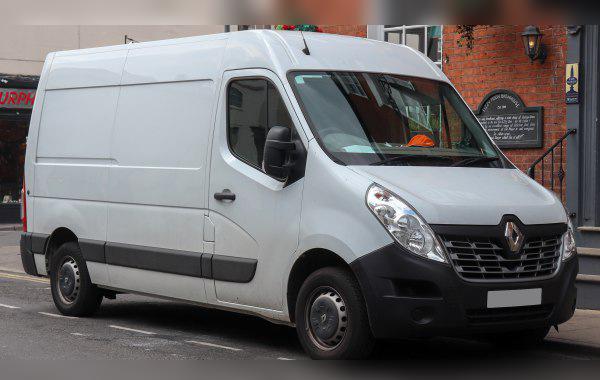
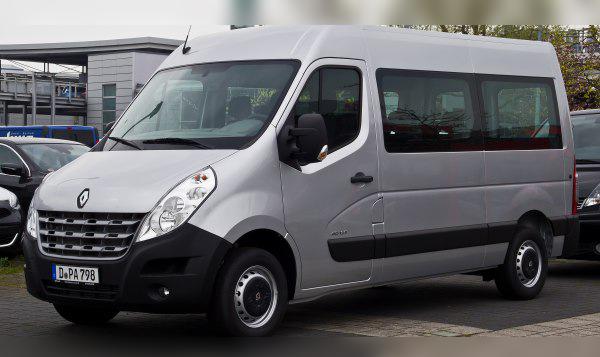
Renault Master 2.3 dCi M9T (130 hp): Experiences, problems, fuel consumption and used-buying tips
Key points (TL;DR)
- Timing drive: Uses a chain, which reduces the cost of regular major services, but it needs replacement around 300,000 km.
- Engine block reliability: The engine itself is extremely durable and can cover huge mileages if the oil is changed on time (definitely not at the factory 40,000 km interval).
- Weak spot – gearbox: The 6-speed manual gearboxes (PF6) suffer from bearing failure if the gearbox oil is never changed.
- Emissions (DPF/EGR/AdBlue): EGR and DPF are sensitive to exclusively city driving. Newer versions from 2019 onwards have a problematic AdBlue system.
- Performance: The 130 hp version is optimal for smaller and mid-size bodies (L1, L2), but can feel sluggish under full load in the largest (L3, L4) versions.
- Dual-mass flywheel: It is fitted and its replacement is one of the higher maintenance costs.
Contents
- Introduction: A workhorse for heavy-duty tasks
- Technical specifications
- Reliability, maintenance and failures
- Specific components and emissions systems
- Fuel consumption and real-world performance
- Gearbox and powertrain
- Additional options and modifications
- Buying used and Conclusion
Introduction: A workhorse for heavy-duty tasks
The M9T 2.3‑liter engine is the result of cooperation within the Renault-Nissan alliance and forms the backbone of their light commercial vehicle range. In the version with 130 hp (96 kW) and 310 Nm of torque, this unit offers a balance between purchase price, fuel consumption and payload. It was most commonly installed in the Renault Master III, covering the full range of body styles – from short and low (L1H1) to the longest and tallest panel vans (L4H3), as well as passenger (Combi and Crew Van) variants across the "Phase II" and "Phase III" generations.
Technical specifications
| Parameter | Specification |
|---|---|
| Displacement | 2298 cc |
| Power | 96 kW (130 hp) |
| Torque | 310 Nm |
| Engine code | M9T (several sub-variants depending on FWD/RWD) |
| Injection type | Common Rail (Bosch/Siemens) |
| Aspiration | Variable-geometry turbocharger + intercooler |
Reliability, maintenance and failures
Timing drive and service intervals
One of the main advantages of the M9T engine is that it doesn’t use a timing belt but a chain. In theory this means there is no classic "major service" every 80,000 to 100,000 km. However, the chain is not eternal. Chain stretch and wear of the guides usually appear around 300,000 to 350,000 km. Symptoms include rattling on cold start and, at a later stage, camshaft/crankshaft sensor errors. Replacing the timing chain kit is moderately expensive (depends on the market) and requires removing the engine or having a lot of room in the engine bay. The auxiliary (serpentine) belt and its tensioners are replaced preventively at around 100,000 km.
Oil: Capacity and consumption
This engine takes a considerable amount of oil – about 8.0 liters for front-wheel-drive versions, while rear-wheel-drive versions can hold up to 8.9 liters in the sump. The strictly recommended grade is 5W-30 that meets Renault’s RN0720 specification, especially because of the DPF filter. The factory 40,000 km oil change interval is the main killer of this engine in fleet use. For the engine to last, the oil must be changed every 15,000 to a maximum of 20,000 km. Between two services (at 15k km), it is normal for it to consume about 0.5 to 1 liter of oil. If it consumes significantly more, the first suspects are the piston rings or a worn turbocharger.
Most common failures
The mechanical internals of the engine (crankshaft, pistons, block) are "bulletproof". Most problems are caused by peripheral components: exhaust gas pressure sensors, intercooler hoses that tend to crack (symptom: hissing under throttle and black smoke), as well as coolant leaks at the thermostat housing. If the vehicle jerks under acceleration, the most common culprit is a clogged EGR valve.
Specific components and emissions systems
Injection system and injectors
The common rail system is extremely durable, but the injectors suffer from poor fuel quality and the presence of water in diesel. Injectors usually last over 250,000 km. When they start to fail, the driver will notice rough idling, hard cold starts, loss of power and increased smoke. Injector refurbishment is possible and the price ranges from acceptable to expensive (depends on the market), depending on whether they are piezo or solenoid type and on their condition.
Turbocharger
The 130 hp version uses a single variable-geometry turbocharger (unlike the more powerful versions with a Bi-Turbo system). Turbo life is directly linked to oil quality and driving style (cooling the turbo after heavy load). On average they last around 250,000 to 300,000 km. Turbocharger overhauls are no longer excessively expensive nowadays (depends on the market).
DPF, EGR and AdBlue system
This model is equipped with a DPF filter and an EGR valve. If the van is used exclusively in city traffic (courier services), the EGR valve quickly clogs up with soot and deposits, which chokes the engine. The DPF filter also fills with ash and requires regeneration on open roads. If the warning lights are ignored, the DPF can become completely blocked.
As for the AdBlue (SCR) system, there is a big difference between versions. "Phase II" models (around 2014, Euro 5) usually do not have AdBlue. However, "Phase III" (Euro 6, from 2019 onwards) have an AdBlue system that is very problematic. The most common failures are pump failure in the AdBlue tank or NOx sensor failure. Replacing the module is very expensive (depends on the market), and the symptom is a countdown of remaining kilometers until the engine will no longer start.
Fuel consumption and real-world performance
Is the engine "sluggish"?
With 130 hp and 310 Nm, the driving feel varies drastically depending on the body style. In the short and low version (L1H1) the engine is very lively and agile. However, if this unit is fitted in an extended and high L4H3 version loaded with 1.5 tons of cargo, it will obviously feel "sluggish" when overtaking and on inclines. For heavy loads, the more powerful versions (150+ hp) are a better choice.
Real fuel consumption and motorway cruising
The physics and aerodynamics of a "brick" do their thing. In stop‑and‑go city driving, real consumption is around 9.5 to 11.5 l/100 km. On country roads it can drop to about 7.5 liters.
On the motorway, at 130 km/h, aerodynamic drag is enormous. In 6th gear, the engine cruises at about 2500 to 2700 rpm (depending on the final drive ratio). At this speed, fuel consumption routinely exceeds 10.5 to 12 l/100 km. If you want better economy, the ideal cruising speed is around 110 km/h.
Gearbox and powertrain
Types of gearboxes and failures
This engine is most commonly paired with a 6‑speed manual gearbox (code PF6). A less common option is the "Quickshift" automated manual. The automated gearbox often tends to jerk, and hydraulic actuator failures are expensive.
With the manual gearbox, the biggest weakness is the bearings. The symptom is a distinct humming or whining noise heard when driving in 5th and 6th gear. If this is ignored, the gearbox can completely seize and disintegrate. The problem is made worse by the manufacturer’s claim that the gearbox oil is "lifetime filled". To preserve the gearbox, the oil must be changed every 60,000 km.
Dual-mass flywheel and clutch
Yes, the M9T engine has a dual-mass flywheel. Its purpose is to dampen the huge vibrations of the diesel engine and protect the gearbox. Signs that the flywheel is at the end of its life include metallic knocking when starting and stopping the engine, as well as vibrations at idle that disappear when the clutch pedal is pressed. The cost of replacing the clutch kit and dual-mass flywheel is quite high (depends on the market) and requires removing the entire gearbox.
Additional options and modifications
Remapping (Stage 1)
Since the engine block shares its architecture with more powerful versions, the 2.3 dCi can be remapped (tuned) very easily and safely. A proper Stage 1 remap can raise power from 130 hp to about 160 to 165 hp, and torque from 310 Nm to around 380 Nm. This modification drastically improves behavior under load and makes overtaking easier. However, keep in mind that the higher torque puts additional stress on the dual-mass flywheel and clutch, so you should avoid flooring the throttle at very low revs.
Buying used and Conclusion
What to check when buying?
When buying a used Master with this engine, focus on the following:
- Cold start: Ask the seller not to start the van before you arrive. On the very first crank, listen carefully for any chain rattle.
- Test drive: Drive on an open road in 5th and 6th gear, apply and release the throttle. If you hear humming/whining, factor in a gearbox overhaul.
- Condition of the DPF and injectors: Always connect a professional diagnostic tool. Check injector corrections (anything over +/- 1.5 mg needs attention) and the ash load in the DPF filter.
- Exhaust smoke: Bluish smoke indicates oil consumption (turbo or piston rings), while black smoke under load points to injection issues or a split intercooler hose.
Conclusion: Who is it for?
The Renault Master 2.3 dCi M9T (130 hp) is a true workhorse. It’s not particularly fast, and its design is purely function‑oriented, but in terms of mechanical longevity, few rivals can match it – provided it has been properly maintained. This engine is ideal for tradespeople, courier services and transport of light to medium‑weight loads. If you are buying a model that followed "long‑life" oil change intervals (where oil was changed every 40,000 km), be very cautious, as internal engine damage has likely already occurred. The best examples are those where a conscientious owner has halved the factory service interval.