Renault 2.3 dCi M9T (150 HP): Experiences, problems, fuel consumption and used-buying tips
- Durable workhorse: An engine designed for heavy-duty use, capable of huge mileage if properly maintained.
- Timing chain drive: Reduces regular maintenance costs, but needs replacement once it starts rattling (most often around 250,000 km).
- Sensitive to oil change intervals: Factory “LongLife” intervals of 40,000 km are engine killers; oil must be changed at a maximum of 15,000 km.
- Emissions systems as a weak point: DPF, EGR valve and (on newer models) the AdBlue system regularly cause problems in urban driving conditions.
- Gearbox needs attention: Manual gearboxes (often PF6 series) suffer from bearing failure if the oil is not changed in time.
- Dual-mass flywheel: Present and prone to wear, especially due to hauling heavy loads; replacement is a serious hit to the budget.
- Fuel consumption: Very reasonable for the size of commercial vehicles, but at speeds over 110 km/h aerodynamics take their toll.
Contents
- Introduction and engine origins
- Technical specifications
- Reliability and maintenance
- Specific parts and costs
- Fuel consumption and performance
- Additional options and modifications
- Gearbox and drivetrain
- Buying used and conclusion
Introduction and engine origins
When talking about modern commercial vehicles in Europe, few engines are as widespread as Renault’s 2.3 dCi with the M9T code. This powerplant, developed in cooperation between Renault and Nissan, was built with one clear goal: to replace the older 2.5 dCi and offer better efficiency, lower fuel consumption and lower emissions, while still being able to pull fully loaded panel vans, minibuses and vans with over a ton of cargo.
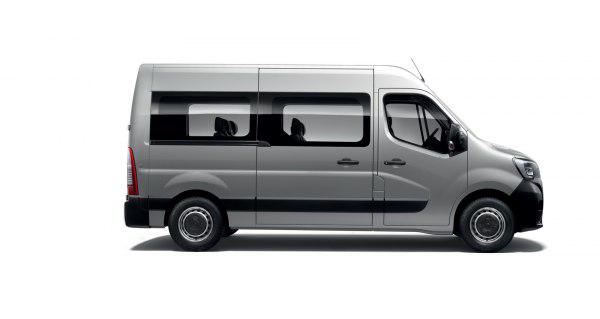
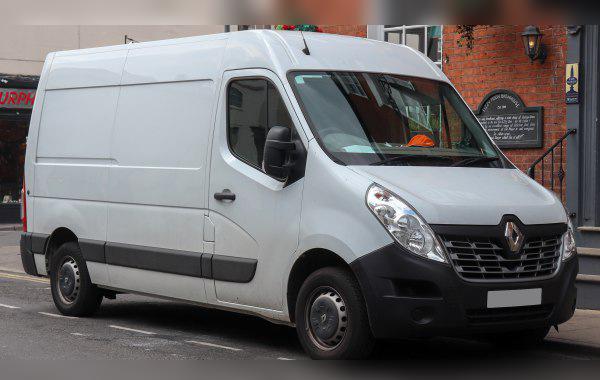
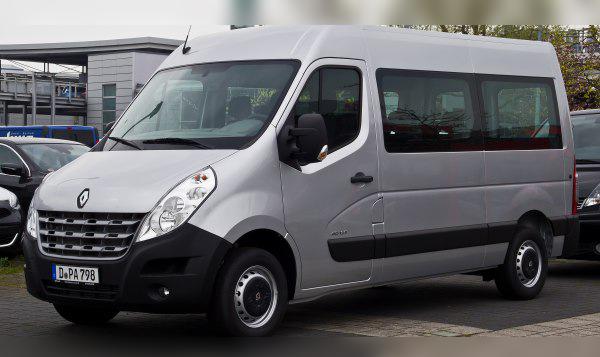
The 150 HP (110 kW) and 350 Nm version is installed in countless variants of the Renault Master III (from the shortest L1H1 to the largest L3H3 versions, as well as passenger Combi/Bus variants). Due to its intended use, this engine usually covers hundreds of thousands of kilometres, so the used market is full of examples with a rich history and, consequently, plenty of hidden issues.
Technical specifications
| Characteristic | Specification |
|---|---|
| Engine displacement | 2298 cc (2.3 L) |
| Power | 110 kW (150 HP) |
| Torque | 350 Nm |
| Engine codes | M9T (several sub-versions depending on Euro standard) |
| Fuel type and injection | Diesel / Common Rail direct injection |
| Aspiration | Turbocharger with intercooler |
Reliability and maintenance
Does this engine have a timing belt or a chain?
This engine uses a timing chain instead of a conventional timing belt. The chain is robust and designed to last a long time, which in theory eliminates the need for regular major timing services every few years. However, in practice, due to heavy loads and frequent postponement of oil changes, the chain tends to stretch. The first symptom is a specific metallic rattling noise from the timing area (especially on cold start). If this sound is ignored, the chain can jump a tooth, which leads to catastrophic engine failure.
What are the most common failures on this engine?
The M9T is mechanically very strong at its core (block and crankshaft withstand huge mileage), but the peripheral systems are what cause headaches:
- EGR valve and DPF system: Stop-and-go city driving and long idling quickly clog the EGR valve with soot deposits. Symptoms are rougher running, loss of power and the “Check Engine” light coming on.
- Oil leaks: Valve cover gaskets and crankshaft seals tend to start leaking after about 150,000 km. A visual inspection of the engine block from underneath is mandatory.
- Failure of crankshaft rod bearings: This is a direct consequence of extended oil change intervals (30,000 to 40,000 km) that fleets often used to save money. Once the oil loses its viscosity, lubrication becomes insufficient.
At what mileage is the major service done?
Since the engine has a chain, a classic “major service” at a fixed mileage is not prescribed. Still, real-world experience shows that the complete timing chain kit with tensioners and guides is replaced around 250,000 to 300,000 km as a preventive measure, or as soon as the first rattling noise appears. At the same time, the auxiliary (serpentine) belt is replaced together with its rollers and tensioners (the water pump is also driven by this system, so it is replaced in the same job).
How many litres of oil does this engine take and which grade is recommended?
Since this is a commercial-duty engine, the oil sump capacity is huge – it holds about 8.0 to 8.9 litres of oil (the exact amount depends on the type of oil pan and whether it is front- or rear-wheel drive – always check by VIN). The recommended grade is generally 5W-30. It is very important to pay attention to the specification: for models with a DPF, the Renault RN0720 standard is mandatory, while the latest “Energy” M9T units (Euro 6d) require the RN17 specification. Never use cheap oils without these specs, as the ash content (SAPS) will permanently damage the DPF filter.
Does it consume oil between services and what amount is normal?
A healthy engine in normal operating conditions should not consume much oil; up to 0.5 to 1 litre over a 15,000 km interval is considered perfectly acceptable given the sump capacity. If you notice higher consumption (over 2 litres between services), this is a sign of worn piston rings (due to soot from the EGR) or, much more often, oil passing through the shaft of a worn turbocharger and burning in the intake (which manifests as bluish smoke from the exhaust under load).
How long do the injectors last and how reliable are they?
The Common Rail injectors on this engine are of solid quality, but their lifespan depends mostly on fuel quality and regular fuel filter changes (recommended: replace it at every oil service). In practice they last between 200,000 and 300,000 km. When they start to fail, the first symptoms are harder cold starts, rough idle, increased fuel consumption and more black smoke under hard acceleration. Injector refurbishment is often possible, but not cheap, so prevention is key.
Specific parts and costs
Does this engine have a dual-mass flywheel?
Yes, this engine has a dual-mass flywheel. Given the high torque of 350 Nm and its purpose of carrying heavy loads, its role is to absorb shocks and vibrations from the crankshaft before they reach the gearbox. Due to frequent starts from standstill under load (first gear), its lifespan is usually around 200,000 km. Symptoms of wear include judder when pulling away, strong vibrations in the cabin at idle and rattling/knocking when switching the engine off.
What kind of injection system does it have and are the injectors problematic?
The M9T relies on high-pressure direct Common Rail injection. Generations of this engine most often use components from Bosch or Siemens/VDO. The high-pressure pump rarely fails on its own, but it is extremely sensitive to “dry running” (lack of fuel in the system) or the presence of water at the bottom of the fuel filter. Dirty fuel irreversibly damages the precise mechanisms inside the injectors.
Does the engine have a turbocharger and what is its lifespan?
The 150 HP version generally uses a single variable-geometry turbocharger (VGT), while more powerful versions use a twin-turbo system. Its lifespan largely depends on driving style and oil quality. If the van is driven flat-out on the motorway and then switched off immediately at the fuel station (without letting it idle for a couple of minutes to cool down), the turbo will quickly fail due to oil coking on the hot bearings. With proper use and regular oil services, it will easily last over 250,000 km. Rebuilding is possible and the costs fall into the “expensive” category (depends on the market).
Does this model have a DPF filter or an EGR valve that often clogs?
Unfortunately, the answer is yes. Vans and panel vans are often used for city courier deliveries (stop-and-go), which is the worst possible operating mode for DPF and EGR. The exhaust does not reach a high enough temperature to trigger passive regeneration, so the DPF clogs up. DPF differential pressure sensors also tend to fail due to moisture and dirt, after which the ECU puts the vehicle into limp mode (reduced power mode) until the fault is resolved.
Does this engine have AdBlue, does it cause problems and how is it maintained?
All newer versions (especially from the Phase III facelift in 2019 onwards, which meet strict Euro 6 standards) have an AdBlue (SCR) system. And here lies a potential “landmine”. The system injects urea fluid into the exhaust to neutralise NOx gases. However, AdBlue fluid tends to crystallise, especially at lower temperatures or if the vehicle sits unused for longer periods. The most common failures are the AdBlue pump (integrated into the tank) and the SCR injector. Replacing the entire tank with the pump is very expensive (depends on the market). It is recommended to regularly top up fresh fluid at reputable fuel stations and not to stockpile it in the boot (AdBlue has a limited shelf life).
Fuel consumption and performance
What is the real fuel consumption in city driving?
Do not expect the economy of a small city car. Considering the “brick-like” aerodynamics and an unladen weight of over 2 tonnes, real-world city consumption ranges from 9 to 11 l/100 km. If the vehicle is at maximum load and operates on hilly urban routes, this figure easily exceeds 12 litres.
Is this engine “lazy” for the weight of the body?
With 150 HP and 350 Nm, this engine is something of a “golden middle ground”. It is not as highly stressed as the 170+ HP versions, yet it is noticeably livelier under load than the basic 110 or 130 HP models. For the largest and tallest bodies (L3H3, long panel vans and Combi versions with 9 passengers and their luggage), performance is adequate, but on steep climbs you may find yourself short of power reserves if you want brisk overtaking.
How does the engine behave on the motorway and at what revs does it cruise at 130 km/h?
On the motorway the engine behaves smoothly, but fuel consumption rises sharply with every kilometre per hour over 110 km/h. This has nothing to do with the efficiency of the engine itself, but with the frontal air resistance (the large front area of the van). At 130 km/h in sixth gear, the engine usually spins between 2,500 and 2,800 rpm (the exact figure depends heavily on the chosen final drive ratio, as some vans are geared specifically for towing and have shorter gearing). Cabin noise at these speeds is noticeable.
Additional options and modifications
How far can this engine be safely tuned (Stage 1)?
This 150 HP version has a good hardware reserve (block, crankshaft and injection system are quite robust). With a standard Stage 1 ECU remap, power can be safely and easily raised to around 180–185 HP, while torque goes beyond 400 Nm. The vehicle will become dramatically more agile when loaded. Warning: A significant increase in torque directly and negatively affects the lifespan of the clutch and dual-mass flywheel. Also, only carry out the modification if the turbo, DPF and EGR systems are in perfect working order.
Gearbox
Which manual and automatic gearboxes are fitted to this engine?
In the vast majority of cases you will find a 6-speed manual gearbox (PF6 series). As for automatics, things get a bit more complicated: older series up to the facelift used “Quickshift” – which is actually a robotised manual gearbox (a conventional gearbox with a clutch operated by hydraulics instead of the driver). Newer generations (Phase III and specific passenger models) offered more sophisticated true automatic transmissions with more gears.
What are the most common failures of the manual and the automatic gearboxes?
Manual gearbox (PF6): A well-known weak point are the bearings inside the gearbox itself. Due to excessive load and lack of lubrication, they start to whine and “whistle”, especially in 5th and 6th gear. If this is ignored, the bearings can disintegrate and punch a hole in the gearbox casing. The solution lies in strict and regular gearbox oil changes.
Automatic (robotised) gearbox: These gearboxes can be quite “jerky” when changing gears, especially under heavy load, which many drivers dislike. The problematic part is the hydraulic actuator (robot) that controls the clutch. It often leaks on the hydraulic lines or fails due to a faulty pump. Failures here are usually complex to diagnose and parts are very expensive (depends on the market).
How much does it cost to replace the clutch and dual-mass flywheel?
When doing this job on a van, the entire set is always replaced: dual-mass flywheel, clutch disc, pressure plate and hydraulic release bearing. In addition to the already high price of the parts themselves, labour is expensive because removing the massive gearbox on a commercial vehicle requires equipment and time. Expect this cost to fall into the “very expensive” category (depends on the market).
At what mileage should the gearbox be serviced and the oil changed?
Although the manual often says “lifetime” oil, workshop reality is completely different. On manual gearboxes you should always drain the old oil and fill with new recommended oil every 60,000 to a maximum of 80,000 km. The same interval (60,000 km) is recommended for automatic/robotised transmissions, along with regular clutch parameter calibration using the manufacturer’s diagnostic tool.
Buying used and conclusion
What exactly should be checked before buying?
When buying a used vehicle with the 2.3 dCi (150 HP) M9T engine, forget about cosmetics and focus solely on the drivetrain:
- Cold start: Ask the seller not to start the engine before you arrive. Listen for a few seconds after turning the key. Chain rattling means a major service job is coming soon.
- Diagnostics (mandatory!): Check DPF saturation level, regeneration history, as well as injector correction values in real time (at idle and under load). Fault codes cleared just before your arrival are a huge red flag.
- Oil traces and visual inspection: Look for oil around the turbocharger, intercooler pipe joints and, of course, under the engine block itself (oil pan, gearbox seals).
- Service history (intervals): Avoid examples where the service book shows oil changes strictly at 40,000 km, especially if the vehicle was used for short courier routes. Look for vehicles used mainly on motorways.
Final verdict: Who is this engine for?
The Renault 2.3 dCi M9T with 150 HP is an engine designed to cover huge distances while hauling heavy loads. It is ideal for transport companies and hauliers on longer routes where the advantages of an efficient diesel under load really shine (minimal soot build-up in the EGR/DPF, kinder to the gearbox). Its strong power and torque turn heavy Renault Master vans from “slow obstacles” into very fast transport vehicles on the road. On the other hand, if you need a vehicle mainly for local parcel delivery or bread distribution within a few streets, this engine will quickly punish you with failures of the emissions systems (DPF, EGR, AdBlue) and accelerated wear of the dual-mass flywheel. If you find a well-maintained example with a clear service history every 15,000 km, you will have a reliable and robust work machine.