Renault 2.3 dCi M9T (165 hp) Bi-Turbo: Experiences, problems, fuel consumption and used van buying tips
- Designed for heavy commercial vehicles, it offers excellent torque thanks to the Twin-Turbo system.
- The engine uses a timing chain which is durable, but requires replacement at higher mileages under load.
- The presence of two turbochargers and a complex injection system means more potential failure points and more expensive repairs.
- An infamous flaw of the Renault Master is water leaking from the windshield onto the engine, which leads to the injectors “welding” themselves to the cylinder head.
- Manual gearboxes (PF6) require regular oil changes to prevent bearing failure.
- DPF, EGR and AdBlue (on newer versions) cause headaches if the van is driven exclusively in city conditions.
- The dual-mass flywheel is prone to faster wear if the vehicle is regularly overloaded.
Contents
- Introduction to the M9T engine
- Technical specifications
- Reliability and maintenance
- Specific parts and costs
- Fuel consumption and performance
- Additional options and modifications
- Gearbox and drivetrain
- Buying used and conclusion
Introduction to the M9T engine
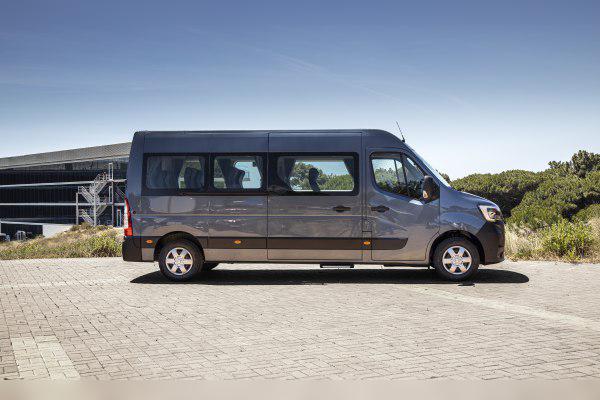
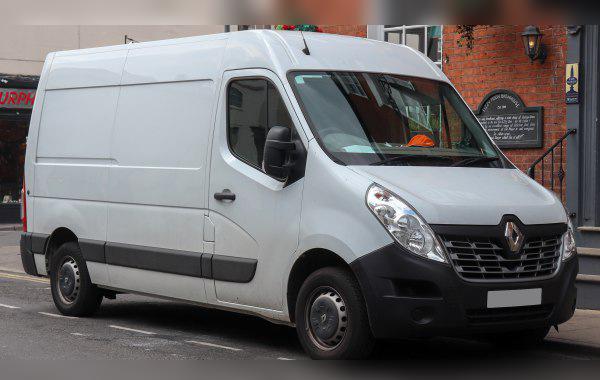
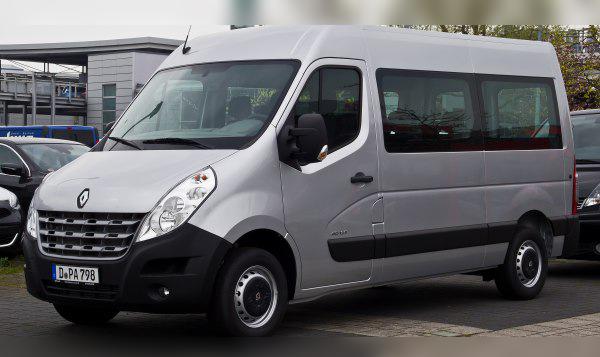
When the Renault-Nissan alliance decided to retire the old 2.5 dCi engine, the 2.3 dCi designated M9T saw the light of day. The 165 hp (121 kW) version is the more powerful variant equipped with Twin-Turbo technology. This engine is the heart of modern freight transport across Europe, installed in numerous versions of the Renault Master III (Phases II and III, from 2014 and 2019), regardless of whether it is a panel van (L1H1 to L4H3), minibus, or chassis cab with double cabin. It is available with both front-wheel drive (FWD) and rear-wheel drive (RWD), which significantly changes dynamics, payload and drivetrain components. As a workhorse, the M9T is built to cover hundreds of thousands of kilometers, but modern emission standards and complex technology require strict adherence to service intervals.
Technical specifications
| Parameter | Value |
|---|---|
| Engine displacement | 2298 cc |
| Power | 121 kW (165 hp) |
| Torque | 360 Nm |
| Engine codes | M9T (with various suffixes, depending on Euro standard and drivetrain) |
| Injection type | Common Rail direct injection |
| Turbo/Naturally aspirated | Twin-Turbo (Bi-Turbo) with intercooler |
Reliability and maintenance
Timing system: chain or belt?
The M9T engine uses a timing chain for valve timing. In theory, a chain does not require maintenance like a timing belt. However, in practice, since these vans are often driven fully loaded, the chain is subjected to enormous stress. Over time it stretches. Symptoms of chain stretch are metallic rattling or “hissing” on cold start, and in more severe cases, rough engine operation. The major service, i.e. replacement of the chain set with tensioners and guides, is usually done preventively between 250,000 and 300,000 km. The auxiliary (serpentine) belt (which drives the alternator and A/C) is replaced at around 100,000 to 120,000 km.
Most common failures
This engine is basically robust (strong crankshaft and block), but it suffers from several specific issues. One of the biggest factory flaws of the Renault Master is poor water drainage under the wipers. Water from the windshield drips directly onto the top of the engine, where the injectors are located. This causes severe corrosion, so the injectors literally “weld” themselves to the cylinder head. When the time comes to replace them, mechanics often cannot remove them without damage or special hydraulic pullers. There are also frequent problems with oil leaks on intercooler hoses and around the turbochargers themselves.
Oil and service intervals
The oil sump of this engine holds about 8.0 to 8.9 liters of oil (the amount varies depending on the shape of the sump on FWD or RWD versions, so checking by VIN and dipstick is mandatory). It is strongly recommended to use fully synthetic oil of grade 5W-30 with RN0720 specification (because of the DPF filter). Although the manufacturer sometimes states service intervals of 30,000 km or even 40,000 km, any experienced mechanic will tell you that this is murder for the engine. The oil should be changed at a maximum of 15,000 km. Some oil consumption between services is present, and up to 0.5 liters per 1,000 km is considered normal when the van is constantly loaded on the motorway. If it is losing oil drastically, the cause is most often worn piston rings or turbocharger seals.
Injection system: injectors
Very precise but sensitive piezo injectors are used. Their lifespan largely depends on fuel quality and regular replacement of the fuel filter. In practice they last between 200,000 and 250,000 km. Symptoms of bad injectors include uneven idle (so-called “misfiring”), increased fuel consumption, black smoke under hard acceleration and loss of power. Due to the aforementioned corrosion problem, injector replacement can be an extremely complicated and expensive procedure.
Specific parts and costs
Dual-mass flywheel
Yes, the 165 hp M9T comes paired with a dual-mass flywheel. Its role is to dampen the vibrations of the strong 360 Nm diesel engine and protect the gearbox. Due to the nature of commercial vehicles (frequent starts under a load of 3.5 tons or more, if towing a trailer), the dual-mass flywheel is prone to wear. Replacing the complete clutch and dual-mass flywheel set is: very expensive (depends on the market).
Twin-Turbo system
Instead of one large turbo, which would have a big “turbo lag” (delay in power delivery), Renault used a Twin-Turbo system here. The small turbo works at low revs, providing excellent response when setting off, while the larger turbo kicks in at higher revs. Their lifespan is around 250,000 km, but this depends drastically on oil quality. Failures manifest as whistling, loss of power and white/blue smoke (when the turbo “blows” oil into the intake). Overhaul or replacement of both turbos is: very expensive (depends on the market).
DPF, EGR and AdBlue systems
As a modern diesel, the M9T is equipped with an EGR valve and a DPF filter. These systems are known for clogging quickly with soot if the van is driven exclusively in stop-and-go city traffic. A clogged EGR manifests as smoke and engine choking, while a clogged DPF triggers a warning light on the dashboard and puts the vehicle into limp mode (safety mode with reduced power). Newer versions (mainly from 2016/2019 due to stricter Euro 6 standards) are also equipped with an AdBlue system (SCR catalyst). The AdBlue system on Renault/Nissan vehicles often causes problems: pumps in the tank and NOx sensors fail. Maintenance involves regularly topping up AdBlue fluid and avoiding running the tank dry, as the fluid crystallizes and destroys the pump. Repairing the AdBlue system is: expensive (depends on the market).
Fuel consumption and performance
On-road behavior
Is 165 hp “lazy” for such a big van? Not at all. Thanks to Twin-Turbo technology and the 360 Nm of torque available from around 1,500 rpm, a Master with this engine pulls very well even when fully loaded. Of course, L4H3 versions (the longest and tallest) have huge aerodynamic drag, but the engine copes with it without much trouble.
Fuel consumption and cruising
In pure city driving with load, real fuel consumption is between 10 and 12 l/100 km. On the motorway, the situation depends heavily on the body’s aerodynamics and the differential ratio (RWD versions often have a “shorter” ratio for higher payloads). At 130 km/h the engine usually cruises at around 2,500 to 2,800 rpm (depending on gearbox). At these speeds, due to the shape of the van, consumption can easily exceed 11 l/100 km. If you drop the speed to an optimal 100–110 km/h, consumption falls to a reasonable 8 to 9 l/100 km.
Additional options and modifications
Since this is a diesel engine, LPG conversion is not an option.
Chiptuning (Stage 1)
The M9T engine has great potential for a Stage 1 remap. Power can safely be raised to around 190 to 200 hp, and torque to over 420 Nm. However, before you decide to take this step, you must be aware of one thing: more power and torque will drastically shorten the lifespan of the dual-mass flywheel and clutch disc, especially if the vehicle constantly carries heavy loads. If the van is used for lighter loads and long motorway runs, chiptuning can even slightly reduce fuel consumption, but for construction vans that haul 3 tons, remapping is a direct path to gearbox destruction.
Gearbox
Types of gearboxes and failures
This engine is most commonly paired with a 6-speed manual gearbox (known as PF6 on front-wheel drive versions), or a 6-speed robotized automatic gearbox (Quickshift).
Manual gearbox (PF6): The main weakness of this gearbox is the gear cluster bearings. The factory stated that the oil in the gearbox is “lifetime”, which is a big misconception. Due to oil degradation, the bearings lose lubrication, start to whine/hum while driving, and if ignored, the gearbox can completely fail. The gearbox oil (usually 75W-80) must be changed every 60,000 to 80,000 km.
Robotized automatic: This is essentially a manual gearbox with a hydraulic robot (actuator) bolted on, which shifts gears instead of you. They are known for slow and “jerky” shifting. Failures of hydraulic actuators and pumps are common at higher mileages, and repairs are: expensive (depends on the market). A used commercial van with this type of gearbox is not recommended unless it has a complete service history.
Buying used and conclusion
What to check before buying?
Buying a used work van carries huge risks. When inspecting a Master with the 2.3 dCi 165 hp engine, pay attention to the following:
- Water on the engine: Open the bonnet and remove the plastic engine cover. If you see pools of rusty water or thick rust around the injectors, be aware that the injectors are seized and any intervention on them will be a nightmare.
- Chain noise: Let the engine cool down completely. When starting, listen carefully during the first 3 to 5 seconds. Any metal rattling indicates a stretched timing chain that must be replaced immediately.
- Dual-mass flywheel and clutch: Press the clutch pedal halfway while the engine is idling. If you feel strong knocks on the pedal or hear hammering under the vehicle, the dual-mass flywheel is at the end of its life.
- Suspension and leaf springs: Many drivers overload these vans. Check the condition of the rear leaf springs (on RWD models) and the front suspension. If the vehicle “sits on the ground” even when empty, the chassis has been seriously abused.
- DPF/AdBlue diagnostics: Be sure to connect the vehicle to the original diagnostic tool and check the DPF saturation level and the condition of the AdBlue system (if present). Faults here can cost hundreds or even thousands of euros.
Who is this engine for?
The Renault 2.3 dCi M9T Bi-Turbo with 165 hp is a marathon runner designed for motorways and serious loads. It excels when cruising across the continent, hauling heavy cargo on fast roads where both turbos can breathe freely and the DPF regenerates efficiently. If you need a vehicle for flower delivery in a tight city center where you drive in first and second gear, this engine will punish you with clogged emission systems and premature clutch failure. Buy a used one only if it has a reliable service history and if the oil has been changed much more frequently than the factory prescribed.