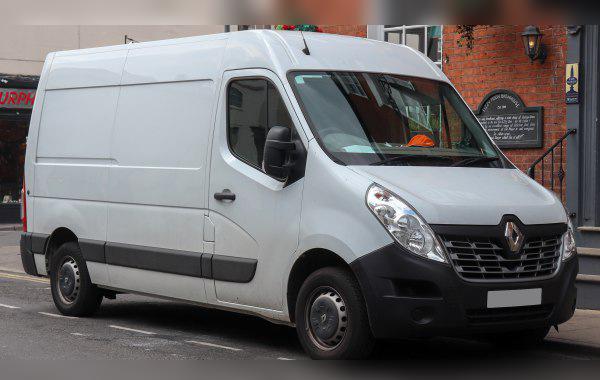
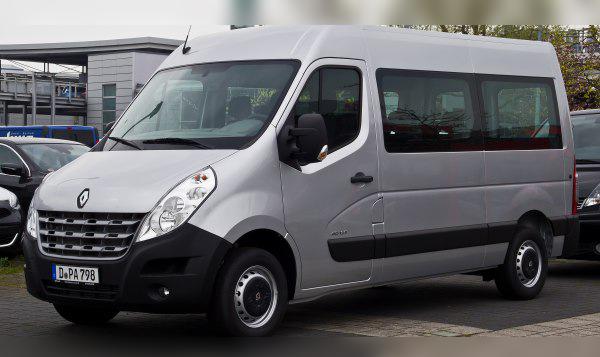
Renault Master 2.3 dCi (M9T 170 hp): Experiences, problems, fuel consumption and used-buying tips
Key points (TL;DR)
- Strong and flexible: Thanks to the Twin-Turbo system, 170 hp and 380 Nm provide excellent acceleration even under full load.
- Timing chain drive: The M9T engine uses a timing chain which is generally reliable, but it requires regular oil changes to avoid stretching.
- Eco-systems as a weak spot: The DPF filter, EGR valve and AdBlue system cause headaches if the van is driven exclusively in city conditions.
- Gearboxes need attention: Manual gearboxes are durable but require oil changes, while the robotized automatic (Quickshift) carries the risk of expensive actuator failures.
- Complex architecture: Two turbos mean double the chance of failures and more expensive maintenance, although service life is quite decent with good oil.
- Fuel consumption: Varies greatly depending on body shape (from low L1H1 to huge L3H3) and ranges from 8 to over 12 l/100 km.
Contents
- Introduction: Evolution of a workhorse
- Technical specifications
- Reliability and maintenance
- Specific parts and costs
- Fuel consumption and performance
- Additional options and modifications
- Gearbox and powertrain
- Buying used and conclusion
Introduction: Evolution of a workhorse
In the light commercial vehicle segment, the Renault Master has for decades been one of the most common sights on highways and city streets around the world. The Master III (Phase II) generation from 2014 brought significant modernization, and at the heart of that change was the updated 2.3 dCi engine with the M9T code. Developing 170 hp with the help of Twin-Turbo technology, this unit was designed to cope with massive aerodynamic drag and heavy loads, from compact L1H1 panel vans to massive L3H3 versions, passenger Combi variants and Crew Van models. This text is written for all entrepreneurs, drivers and mechanics who want to know exactly what to expect when there is an M9T beating under the bonnet.
Technical specifications
| Feature | Data |
|---|---|
| Engine code | M9T |
| Engine displacement | 2298 cc |
| Power | 125 kW (170 hp) |
| Torque | 380 Nm |
| Fuel / Injection type | Diesel / Common Rail Direct Injection |
| Charging | Twin-Turbo with intercooler |
| Timing system | Chain |
Reliability and maintenance
Chain, servicing and oil
The M9T engine uses a timing chain, not a timing belt. This is great news for owners because it reduces regular maintenance costs. Still, the chain is not indestructible. There is no strictly defined replacement interval, but in practice, if the vehicle is overloaded and pushed hard when cold, the chain can stretch after around 250,000 km. That’s why listening to the engine at cold start is crucial. A major service, in the sense of replacing the chain, guides and tensioner, is usually done when the first symptoms appear (rattling). On the other hand, replacement of the auxiliary (serpentine) belt, rollers, tensioner and water pump is recommended at around 150,000 km.
As for lubrication, this engine takes about 8 to 8.9 litres of oil (depending on the exact type of sump and filter). The recommended grade is 5W-30 that meets the strict Renault standard RN0720 (or newer, depending on the Euro standard), which is necessary to protect the DPF filter. Factory oil change intervals of 40,000 km are disastrous for this engine. Any experienced mechanic will tell you to change the oil every 15,000 to a maximum of 20,000 km. Oil loss between services of up to 0.5 litres per 10,000 km is considered completely normal, especially if the van is driven long distances on the motorway at full throttle. If consumption exceeds 1 litre, the first suspicion falls on the Twin-Turbo system, and then on the piston rings.
Injectors and the most common failures
The injection system on this engine is a modern common rail. The injectors are piezo-electric and have generally proven to be quite reliable, with an expected service life of 250,000 to 300,000 km, provided that quality Euro diesel is used and the fuel filter is changed regularly. Symptoms of tired injectors are rough idle, increased black smoke when you press the accelerator and difficult cold starts in the morning. The most common failures on this engine are rarely related to the “mechanical” part of the block, crankshaft or pistons; problems mostly occur on the periphery: exhaust gas pressure sensors, intercooler hoses that crack over time (you hear air hissing and power drops) and the EGR system.
Specific parts and costs
Twin-Turbo system
The 170 hp version comes with a Twin-Turbo architecture. This means the engine has two turbochargers: a smaller one that provides quick response and torque at low revs, and a larger one that takes over at higher revs. This solves the “turbo lag” problem but makes maintenance more complex. Turbo lifespan depends entirely on the quality and regularity of oil changes, as well as on cooling the turbo after a hard drive (letting the engine idle for a minute or two). On average they last around 250,000 km. Overhauling both turbos at once falls into the “expensive to very expensive” category (depending on the market).
Eco-systems: DPF, EGR and AdBlue
This model, especially in later production years adapted to Euro 6 standards, is equipped with an EGR valve and a DPF filter. The EGR valve tends to clog up with soot, which causes the valve to stick, jerking while driving and the “Check Engine” light to come on. The DPF filter fails if the Master is used exclusively for short urban deliveries where it cannot reach the temperature (around 600 °C) required for passive regeneration. The symptom of a clogged DPF is entering “limp mode”, where the engine loses power and won’t rev past 2500 rpm.
The AdBlue system (on models that have it) is a story of its own. It serves to reduce NOx emissions, but it is very often the first to cause problems. The most common issue is failure of the pump and heater module located inside the AdBlue tank itself. In winter the fluid can crystallize, and repair often requires replacing the entire tank, which is very expensive (depending on the market). Because of this, the system requires attention and refilling with quality urea fluid, without letting the tank sit on minimum.
Fuel consumption and performance
With 170 horsepower and 380 Nm of torque, this engine is anything but sluggish. Whether it’s fitted in a small L1H1 or a massive L3H3 (whose payload and volume demand serious pulling power), the Master gains speed very easily. Thanks to the small turbo, torque is available already below 1500 rpm, which makes it great for city stop-and-go driving under load.
Real-world fuel consumption: In city driving, depending on load and body style, consumption ranges from 9.5 to over 12 l/100 km. On the motorway, aerodynamics take centre stage. If you drive an L3H3 (high roof) on the motorway at 130 km/h, be prepared for a lot of wind noise and fuel consumption that easily goes over 11 to 12 litres. At 130 km/h in sixth gear, the engine spins at around 2500–2700 rpm. The best balance of consumption on open roads is achieved at cruising speeds of 100 to 110 km/h, where consumption drops to a reasonable 8 to 9 l/100 km.
Additional options and modifications
When it comes to increasing power (chiptuning), the 170 hp M9T has excellent potential thanks to its robust block and Twin-Turbo charging. A safe Stage 1 remap can raise power to about 195 to 200 hp and torque to an impressive 440–450 Nm. Drivers who perform this modification often report that the vehicle copes more easily with uphill sections under load and has slightly lower fuel consumption on open roads. However, the higher torque puts enormous stress on the dual-mass flywheel and clutch, so if you have an aggressive driving style, these components will wear out significantly faster than with the stock map.
Gearbox and powertrain
This engine is paired with a 6-speed manual gearbox or a 6-speed automatic gearbox (often known as Quickshift – a robotized manual gearbox).
Manual gearbox
Very durable, but suffers from the old “lifetime oil” myth. Many drivers never change the oil in the gearbox. If the gearbox is heavily loaded and the oil degrades, the bearings are the first to fail (symptom: distinct humming or whining in third and sixth gear). To prevent this, make sure to change the gearbox oil every 60,000 to 80,000 km. The engine has a dual-mass flywheel to absorb the strong vibrations produced by the diesel. Replacing the clutch kit and dual-mass flywheel is a regular part of use at around 200,000 km, and the job itself is considered expensive (depending on the market).
Automatic gearbox
The robotized automatic gearbox is essentially a conventional manual gearbox operated by a hydro-electric actuator (the so-called “robot”). Although it offers comfort (especially for drivers of Combi or Crew Van versions), it is prone to failures of the actuator itself and the hydraulic pump. Repairing these parts is complicated, and system calibration requires serious diagnostics. The clutch in this gearbox wears similarly to the manual one, and replacement is financially demanding.
Buying used and conclusion
What to check before buying?
When buying a used Renault Master 2.3 dCi 170 hp, pay attention to the following:
- Cold start: Ask the seller not to start the van before you arrive. When starting, listen for chain rattling in the first few seconds. If you hear it, replacement is approaching.
- Turbo sound: Open the window and listen while accelerating. A loud siren-like whistle or clouds of blue smoke are signs that one of the two turbos is worn out.
- Dual-mass flywheel: Press the clutch pedal halfway while the engine is idling. If you feel strong knocking on the pedal or vibrations in the body, the flywheel is near the end of its life.
- Suspension and load history: Check play in the control arms, stabilizers and the condition of the rear leaf springs, as these vehicles are often loaded beyond the maximum permitted weight of 3.5 tonnes.
- Diagnostics (mandatory): Don’t buy this vehicle without a proper diagnostic scan. Check the DPF saturation level, injector correction values at idle and the condition of the AdBlue system.
Who is this engine for?
The Renault Master 2.3 dCi M9T with 170 hp is a top-class workhorse for long distances and heavy loads. If you need a van for international transport, hauling bulky goods from city to city, or comfortable motorway transport for 9 passengers, Twin-Turbo technology will reward you with flexibility and power.
On the other hand, if you are in local courier delivery, where the van is started and stopped 50 times a day and never exceeds 60 km/h, consider the weaker and simpler single-turbo versions. In such conditions, the 170 hp M9T will quickly start punishing you with a clogged DPF, stuck EGR and sensor failures, turning a reliable engine into a financial bottomless pit.