Engine D20DT 664.950 (141 HP): Experiences, Issues, Fuel Consumption and Buying Used
Key points (TL;DR)
- Mercedes genes, in-house development: The base design has its roots in Mercedes engineering, but SsangYong made a series of modifications.
- Chain-driven timing: There is no conventional timing belt, which reduces the cost of major scheduled services.
- Problematic injectors: The injection system requires attention, and removing the injectors from the cylinder head can be a nightmare for mechanics.
- Durable automatic gearbox: Versions with the T-Tronic automatic transmission (Mercedes 722.6 unit) are extremely reliable.
- High city fuel consumption: Due to the heavy chassis and poor aerodynamics, you should not expect fuel efficiency in urban conditions.
- A true workhorse: Excellent for towing heavy trailers and serious off-road work, but less refined for long highway journeys.
Contents
- Introduction: Meet the D20DT 664.950
- Technical specifications
- Reliability and Maintenance
- Specific Parts and Costs
- Fuel Consumption and Performance
- Additional Options and Modifications
- Transmission and Drivetrain
- Buying Used and Conclusion
Introduction: Meet the D20DT 664.950
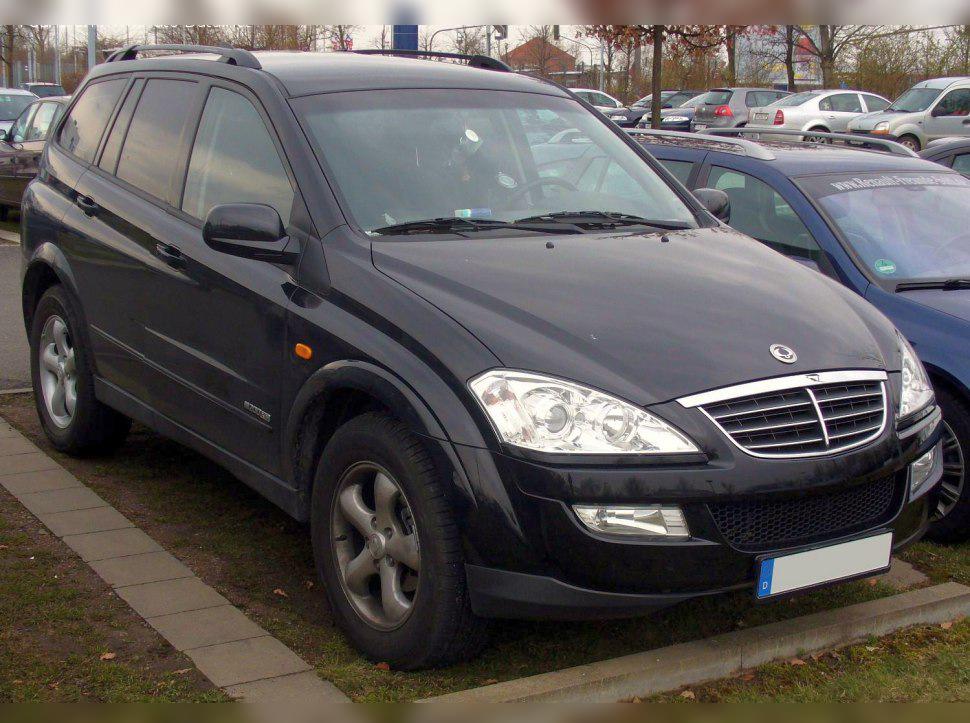
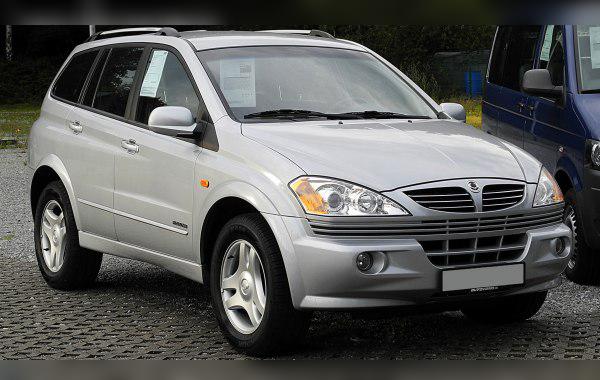
The D20DT engine with the 664.950 code and an output of 104 kW (141 HP) is the heart of many SsangYong models, and is best known for being fitted in the SsangYong Kyron (both before and after the 2007 facelift). This two‑liter turbo diesel engine uses *Common Rail* injection technology. Although many sellers like to emphasize that this is a “pure Mercedes engine”, the truth is a bit different. Structurally it relies on older Mercedes blocks, but the cylinder head, injection system and peripherals are SsangYong’s own. This powerplant is important because it offers solid torque necessary to move massive body‑on‑frame SUVs, making it a working machine rather than a racer.
Technical specifications
| Parameter | Data |
|---|---|
| Displacement | 1998 cc |
| Power | 104 kW (141 HP) |
| Torque | 310 Nm |
| Engine codes | D20DT / 664.950 |
| Injection type | Common Rail (Delphi) |
| Charging | Turbocharger (VGT), Intercooler |
Reliability and Maintenance
Timing belt or chain?
This engine uses a chain for timing. This is good news for owners, as it eliminates the need for a conventional timing belt replacement every few years. The chain is generally very durable, but around 200,000 to 250,000 km it is recommended to check the chain tensioner and guides, especially if you hear metallic rattling on cold start.
Most common failures
Although the engine block itself is almost indestructible, the peripherals can cause headaches. The most common issues include:
- Vacuum modulators (valves): They control the turbocharger and the EGR valve. When they fail (often due to moisture or dirt ingress), the engine goes into limp mode (protection mode), loses power and the “Check Engine” light comes on.
- EGR valve: Prone to rapid fouling and sticking.
- Seized injectors: This is the most notorious problem of the D20DT engine, which we will cover in more detail in the injection system section.
Service intervals and engine oil
Since the engine has a chain, a major service in the classic sense (belt replacement) is not performed, but every 80,000 to 100,000 km it is necessary to replace the auxiliary (serpentine) belt, idler pulleys, belt tensioner and water pump. Chain replacement is done only if needed (most often above 250,000 km).
The engine takes about 7.5 liters of oil. The recommended viscosity is usually 5W-30 or 5W-40 (preferably with a specification that meets Mercedes standards 229.3, or 229.31/229.51 if the vehicle has a DPF filter). As for oil consumption, the engine is quite tight. Consumption of 0.5 to 1 liter per 10,000 km is considered normal, mainly due to evaporation and minimal “drinking” through the rings and turbo. If it consumes more than that, it is a sign that the valve stem seals are worn or that the turbo is leaking oil into the intake.
Injector lifespan and issues
Being a diesel, it uses an injection system whose injectors typically last around 150,000 to 200,000 km. When they start to fail, symptoms include rough idle (engine shaking), black smoke from the exhaust under acceleration, and harder cold starts in the morning. Due to the Delphi system, they are very sensitive to poor fuel quality, so regular replacement of the fuel filter with high‑quality parts is strongly recommended.
Specific Parts and Costs
Dual-mass flywheel
Yes, if the engine is paired with a manual gearbox, it has a dual‑mass flywheel. Its job is to dampen the strong vibrations of the heavy drivetrain. Failure symptoms include knocking when starting and stopping the engine, as well as vibrations in the clutch pedal. Replacing the clutch kit together with the dual‑mass flywheel is very expensive (varies by market).
Injection system
The injection system is made by Delphi. The injectors on this engine have a serious factory flaw – they retain moisture and soot around the injector body, which literally “welds” them to the cylinder head. When the time comes to remove and overhaul them, ordinary tools often do not help. Mechanics have to use special hydraulic pullers. In the worst case, the injector breaks in half, which requires removing the cylinder head and machining, and that is extremely expensive (varies by market).
Turbocharger
The engine uses a single variable‑geometry turbocharger (VGT). The turbo itself is very robust and can last over 250,000 km with regular oil changes. However, as mentioned, the variable geometry can seize up due to soot from city driving, or the vacuum modulator that controls it can fail. Turbocharger overhauls are not very expensive (varies by market), but diagnosing the real cause of power loss can take time.
DPF, EGR and AdBlue
Depending on the market and year of production (from the switch to Euro 4 standards around 2007/2008), many models equipped with this engine have a DPF filter. The DPF often clogs if the vehicle is used mainly for short city trips.
The EGR valve is standard equipment on all versions and is quite problematic. Soot and oil vapors quickly form deposits, blocking it in the open position, which results in smoke and power loss. EGR cleaning should be included in regular maintenance.
This is an older‑generation engine and does not have an AdBlue system, which is a big relief in terms of maintenance.
Fuel Consumption and Performance
Real-world fuel consumption
The SsangYong Kyron is a heavy vehicle (often close to 2 tons) with a traditional ladder frame, brick‑like aerodynamics and rear‑wheel or four‑wheel drive. Real‑world city fuel consumption ranges between 10.5 and 12.5 l/100 km. On the open road, consumption drops to about 7.5–8.5 l/100 km.
Is the engine “lazy”?
In short: yes. With its 141 HP and 310 Nm of torque, the D20DT is designed for pulling power, not for acceleration. Starts from traffic lights are sluggish, and overtaking on country roads requires planning and a firm push on the accelerator pedal. The engine shows its strengths only when it needs to pull a heavy trailer (it can tow over 2 tons), where the torque really comes into play.
Highway driving
On the highway the engine is reliable, but engine and wind noise become more noticeable. At 130 km/h in top gear (either 5th gear on the manual or the automatic), the engine cruises at about 2,600 to 2,800 rpm (depending on the differential ratio). This means it is not overly stressed, but the relatively high revs mean that highway consumption rarely drops below 9 l/100 km.
Additional Options and Modifications
Remapping (Stage 1)
Software optimization (Stage 1) is quite popular on this engine precisely because of its “laziness”. The engine can be safely remapped to around 165 to 175 HP, with torque increased to 360–380 Nm. This significantly improves throttle response and makes overtaking easier. However, you must be careful: before any power increase, always check the condition of the turbocharger and (if the model is manual) the dual‑mass flywheel, because higher torque can drastically shorten their lifespan.
Transmission and Drivetrain
Types of gearboxes
The following gearboxes were offered with the D20DT engine:
- Manual: 5‑speed manual gearbox.
- Automatic (T-Tronic): 5‑speed automatic (Mercedes 722.6 code). This is one of the most reliable gearboxes Mercedes has ever made.
- Note: On some later versions or in combination with other engines, SsangYong used the Australian 6‑speed DSI BTR gearbox (which is very failure‑prone), but the Kyron 2.0Xdi most often comes with the proven 5‑speed T‑Tronic. Always check by VIN to be 100% sure.
Gearbox failures and maintenance
Manual gearbox: The gear set itself is robust and rarely fails. The main problem and biggest expense is the aforementioned dual‑mass flywheel and clutch kit. It is recommended to change the oil in the manual gearbox every 80,000 to 100,000 km.
Automatic gearbox (T-Tronic 722.6): This gearbox can withstand huge loads without issues. The most common failures are related to the conductor plate (electronic board) inside the gearbox or oil leaks at the wiring connector. Symptoms include the gearbox getting stuck in one gear and harsh engagement (jerking) when shifting from P to R or D. For this gearbox to last virtually forever, changing the oil, filter and pan gasket every 60,000 km is absolutely mandatory.
Buying Used and Conclusion
What to look out for when buying?
- Cold start: Listen to the engine when it is completely cold. Rattling indicates a timing chain issue, while uneven running, shaking and a cloud of white smoke from the exhaust clearly signal faulty injectors or glow plugs.
- Condition of injectors and wiring around them: Lift the plastic engine cover and look around the injectors. If you see “black tar” (baked soot) around them, walk away from that car. This means that the sealing washers are leaking compression and the injector is probably irreversibly welded to the cylinder head.
- 4x4 system (if fitted): Check whether the four‑wheel drive engages without grinding or knocking. The vacuum hubs on the front wheels often fail.
- Automatic transmission service history: If you are buying a T‑Tronic, pull out the transmission dipstick (if accessible). The oil must be reddish/pinkish, not black, and must not smell burnt.
Conclusion
The SsangYong D20DT 664.950 engine is not for everyone. If you are looking for an economical city SUV for everyday school runs, this engine (and the vehicle it comes in) will disappoint you with its sluggishness, heavy steering, size and high fuel consumption.
So who is this engine for? It is aimed at hunters, foresters, farmers and people who need an indestructible frame, a good 4x4 system and the ability to pull a trailer full of firewood or a boat out of the mud. It is a raw, traditional diesel that offers plenty of low‑end torque. If you find a car in which the injectors have been regularly checked and re‑sealed, and in which the automatic transmission has been serviced on time, you will get a “work mule” that will serve you for many years with entirely acceptable running costs for its class of off‑road work machines.