Toyota 2TR-FE 2.7 (159 hp): Ownership impressions, issues, fuel consumption and used-buying tips
Key points in short (TL;DR)
- Exceptional reliability: This is true Toyota “old school”. It can cover huge mileages without serious failures.
- Timing chain drive: The engine doesn’t use a timing belt, but a massive timing chain that rarely needs replacement before 300,000 km.
- Naturally aspirated petrol: No turbocharger, no DPF, no AdBlue, no dual-mass flywheel. Fewer parts – fewer headaches.
- High fuel consumption: Due to the vehicle’s weight (such as the Tacoma) and the engine’s old design, city consumption easily exceeds 13–15 l/100 km.
- Lack of power: With only 244 Nm of torque, it’s quite “lazy” for towing heavy loads or dynamic highway driving.
- Excellent for LPG conversion: It handles autogas very well, provided valve clearances are checked regularly.
Contents
- Key points in short (TL;DR)
- Introduction: Old school for hard work
- Technical specifications
- Reliability and maintenance
- Specific components (costs)
- Fuel consumption and performance
- Additional options and modifications
- Transmission and drivetrain
- Buying used and conclusion
Introduction: Old school for hard work
Toyota’s 2TR-FE 2.7‑liter engine is a legendary workhorse. First introduced in the early 2000s as a replacement for the older 3RZ-FE series, this four‑cylinder petrol engine was designed with a single goal in mind: to survive the harshest working conditions. Although it was technically updated with VVT-i (Variable Valve Timing) technology, at its core it has remained a simple, robust and rather rough engine.
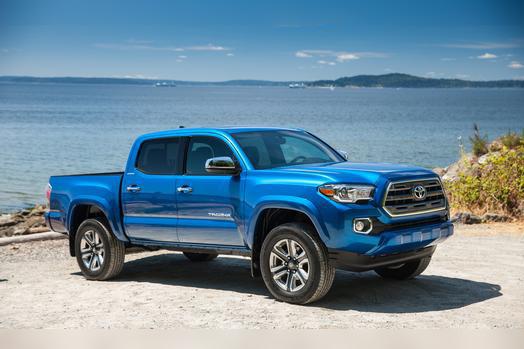
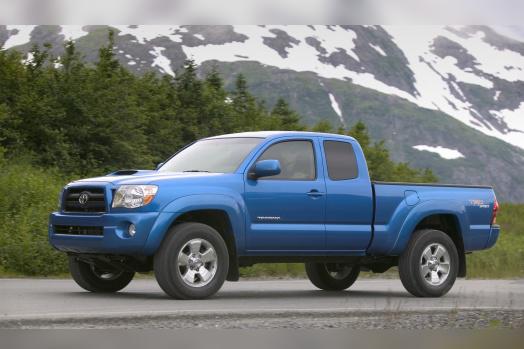
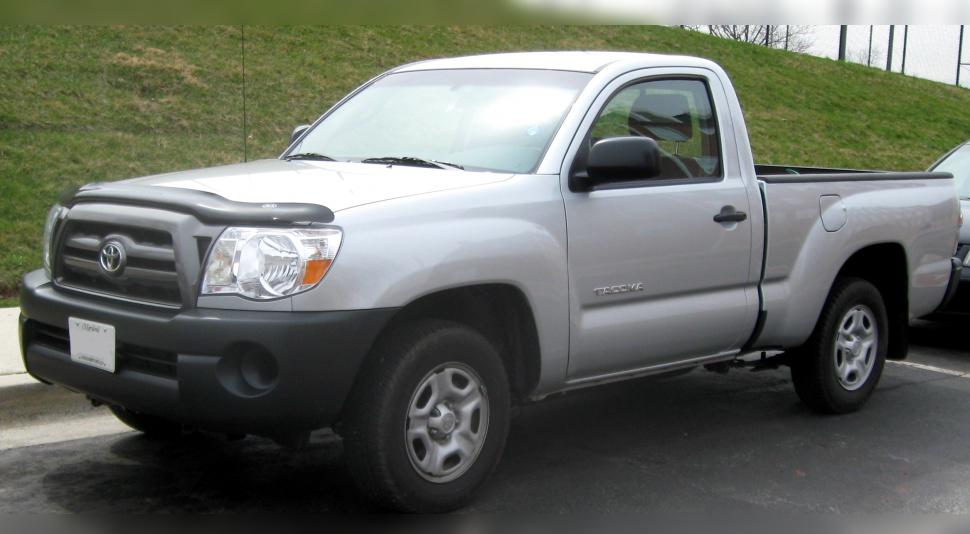
It is best known for being fitted to heavy commercial and off‑road vehicles. The most prominent applications are various versions of the Toyota Tacoma pickup of the second and third generations (Double Cab, Access Cab, Single Cab), with rear‑wheel drive (2WD) or four‑wheel drive (4WD). Regardless of whether it is paired with a manual or automatic transmission, the 2TR-FE is recognized for its indestructibility – and for the fact that it is anything but gentle at the fuel pump.
Technical specifications
| Engine displacement | 2694 cc (2.7 L) |
| Power output | 117 kW (159 hp) |
| Torque | 244 Nm |
| Engine code | 2TR-FE |
| Injection type | Multi-Point Injection (EFI) – Port fuel injection |
| Induction type | Naturally aspirated engine |
| Camshaft drive | Chain |
Reliability and maintenance
Chain or belt?
This engine uses a massive timing chain, not a timing belt. This is a huge advantage in terms of cost and reliability. A “major service” in the classic sense (where the whole timing set is replaced every 80,000 km) simply isn’t done. The chain is designed to last as long as the engine itself. Inspection is usually recommended only around 250,000 to 300,000 km. Symptoms of a stretched chain include rattling at cold start and, in extreme cases, a Check Engine light due to camshaft–crankshaft synchronization errors.
Most common issues
This is one of the most reliable engines Toyota has ever built, but it’s not completely immune to age. The most common problems include:
- Water pump leaks: It’s not unusual for the water pump to start leaking around 100,000–150,000 km. The driver will notice a drop in coolant level in the expansion tank and characteristic pink/red antifreeze traces around the front of the engine. Replacement is not complicated and the part is not expensive (depends on the market).
- Front crankshaft seal: After 150,000 km, light oil “sweating” may appear at the front crank seal. If it’s only damp, it’s not urgent, but if it leaves drops, replacement is needed.
- Cracked exhaust manifold: On older models under heavy load, micro‑cracks can develop in the exhaust manifold, which show up as a tick‑tick sound while the engine is cold.
Engine oil and service intervals
The 2TR-FE takes approximately 5.8 liters of oil (with filter). The recommended viscosity depends on climate, but Toyota globally recommends 0W-20 for better cold starts and a slight fuel‑economy benefit, while 5W-30 is an excellent and safer option for regions with higher summer temperatures and harsher operating conditions (towing). Change the oil strictly every 10,000 to 15,000 km.
Oil consumption: From the factory, this engine does not consume much oil. Up to 0.2 liters per 1,000 km on high‑mileage engines is considered completely normal. If the engine uses more than that, the most likely culprits are hardened valve stem seals due to past overheating, or stuck oil control rings caused by skipped oil changes.
Spark plugs
Since this is a petrol engine with a fairly modern ignition system (one coil per cylinder), it uses iridium spark plugs. They should be replaced every 90,000 to 100,000 km. If the engine starts to hesitate under acceleration or runs unevenly at idle, check the condition of the plugs and coils first.
Specific components (costs)
Fuel injection and emissions equipment
The 2TR-FE uses classic port fuel injection (EFI – Electronic Fuel Injection) into the intake manifold. This is fantastic news. There are no issues with carbon buildup on the intake valves, which is a major weak point of modern direct‑injection engines. The petrol injectors are extremely reliable; clogging is very rare and occurs almost exclusively due to dirty fuel from poor‑quality gas stations. Ultrasonic cleaning is usually all that’s needed, and even that is done as preventive maintenance rather than due to outright failure.
Since this is an old‑school petrol unit, it has no DPF filter, no AdBlue system, and no complex EGR valve in most markets, which drastically reduces maintenance costs. You won’t be dealing with NOx sensors or regeneration cycles.
Turbocharger and flywheel
The engine is naturally aspirated – there is no turbocharger or intercooler. The absence of a turbo means one major potential failure less.
As for the flywheel on manual versions, a reliable solid (single‑mass) flywheel is used. In other words, there are no expensive dual‑mass flywheel failures to worry about.
Fuel consumption and performance
Fuel consumption: Get your wallet ready
Let’s be honest: this is not an engine for saving fuel. Installed in heavy Tacoma bodies with the aerodynamics of a brick, the 2TR-FE needs a lot of fuel to get all that mass moving. Real‑world city consumption ranges from 13 to as much as 16 l/100 km, depending on how heavy your right foot is and whether you’re driving a 2WD or 4WD version. On open roads and highways, it can drop to 9–10 l/100 km with a very gentle driving style.
Performance: Reliable, but “lazy”
With 159 hp and only 244 Nm of torque at a relatively high 3,800 rpm, this engine is definitely “lazy” by today’s standards. It lacks that low‑end torque punch you get from modern turbo‑diesels or turbo‑petrols. For overtaking on short stretches you’ll have to really step on the gas and rev the engine high, which brings a lot of noise into the cabin.
On the highway: At 130 km/h the engine cruises at a fairly high 2,600–3,000 rpm (depending on whether it’s paired with a 4‑speed, 5‑speed or 6‑speed gearbox). On gentle inclines at highway speeds, the automatic transmission will often have to downshift to maintain pace, which hurts long‑distance comfort.
Additional options and modifications
LPG (autogas) conversion
Given the port injection and simple construction, this engine is an excellent candidate for an LPG system. It’s also the best way to offset the high fuel consumption. However, it’s important to note that the engine does not have hydraulic lifters. If you run it on LPG, it’s recommended to check and, if necessary, adjust valve clearances every 60,000 to 80,000 km to prevent exhaust valves from burning due to the dry and hot combustion of gas.
ECU remap (Stage 1)
Naturally aspirated petrol engines don’t have much potential for software‑only power gains. A so‑called “Stage 1” remap on this engine will yield at most 10–12 hp and about 15 Nm of torque. In practice, you won’t feel this difference in a vehicle weighing 1.8 to 2 tons. Investing in remapping a 2TR-FE is basically throwing money away. Its design is not meant for speed, but for hauling loads over bad roads.
Transmission and drivetrain
Over its very long production run, this engine has been paired with several types of transmissions. On older Tacomas (second generation pre‑facelift), you’ll often find the archaic but indestructible 4‑speed automatic (A340 series) and a 5‑speed manual. Newer versions and the third generation use a more modern 6‑speed electronically controlled automatic (ECT‑i).
Transmission issues and maintenance
- Manual gearbox: Failures are practically non‑existent. The only important thing is to change the gearbox oil every 60,000 km. As mentioned, it uses a simple solid flywheel. Replacing the full clutch kit (disc, pressure plate, release bearing) is not expensive (depends on the market) and is considered normal wear‑and‑tear; with sensible driving it can last well over 150,000 km on this vehicle.
- Automatic gearbox: The automatics are robust but require regular fluid changes. If the ATF is not replaced every 60,000–80,000 km, the solenoids can clog and cause harsh shifts (especially between 1st and 2nd gear when cold). If the fluid is changed regularly, these transmissions will easily outlast the vehicle’s chassis.
Buying used and conclusion
What to check before buying?
When you’re looking at a used Tacoma or another work pickup with this engine, the engine is often the least of your worries – the chassis and rust are what you should really be concerned about. As for the 2TR-FE itself:
- Listen to a cold start: Ask the seller not to start the vehicle before you arrive. Listen to the engine during the first 5–10 seconds of running. Metallic rattling means the timing chain is due for replacement.
- Check for leaks around the water pump and valve cover: Bring a flashlight and inspect the front of the engine block around the water pump and the lower crank pulley.
- Test‑drive the automatic transmission: Pull away gently and see if the gearbox shifts smoothly. Harsh clunks when shifting from ‘P’ to ‘D’ or ‘R’ can indicate worn engine/gearbox mounts or neglected transmission fluid.
- Exhaust smoke: Bluish smoke when you blip the throttle after idling for a while points to worn valve stem seals. This is more common on examples with over 350,000 km.
Final verdict: Who is it for?
The Toyota 2TR-FE 2.7 petrol is aimed at users whose priority is absolute reliability and low engine repair costs, and who are willing to pay for that peace of mind with more frequent visits to the fuel station. This is not a vehicle you buy for traffic‑light races, aggressive highway overtakes or fuel savings. You buy it to take you to the construction site, into the mountains or out to the farm, with tools and equipment, every single day, for years on end – regardless of how far below or above zero the temperature is outside.