Volkswagen 2.4 D AAB (78 HP) – Experiences, problems, fuel consumption and used-buying tips
Most important in short (TL;DR):
- Engine known for the extreme longevity of the mechanical bottom-end components (often exceeds 500,000 km without opening the engine block).
- No dual-mass flywheel, turbocharger, DPF filter or complicated electronics.
- The biggest weakness is its tendency to overheat and crack the cylinder head if the cooling system is not in good condition.
- Extremely “lazy” and slow, especially when the van is loaded; overtaking requires serious planning.
- Injection system maintenance is very cheap compared to modern diesels (classic rotary Bosch pump and mechanical injectors).
- Versions with automatic transmission should be avoided due to frequent failures and high repair costs.
Contents
- Introduction
- Technical specifications
- Reliability and maintenance
- Specific parts (costs)
- Fuel consumption and performance
- Additional options and modifications
- Gearbox
- Buying used and conclusion
Introduction
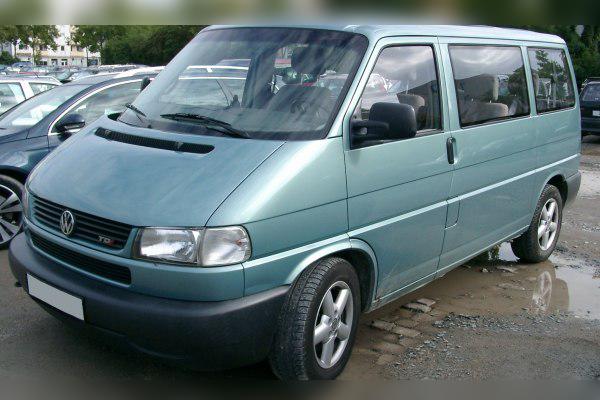
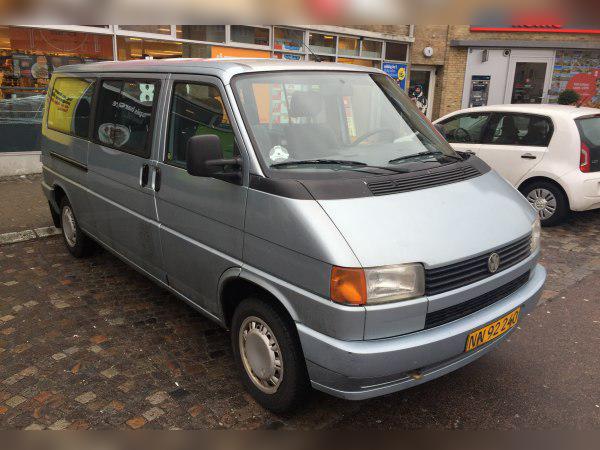
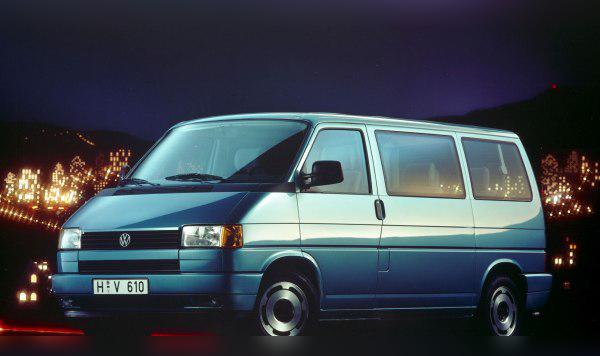
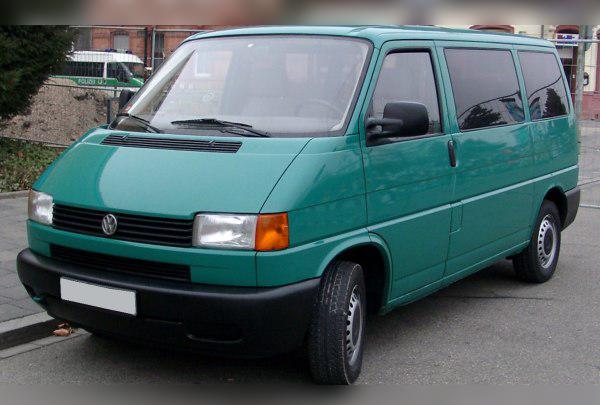
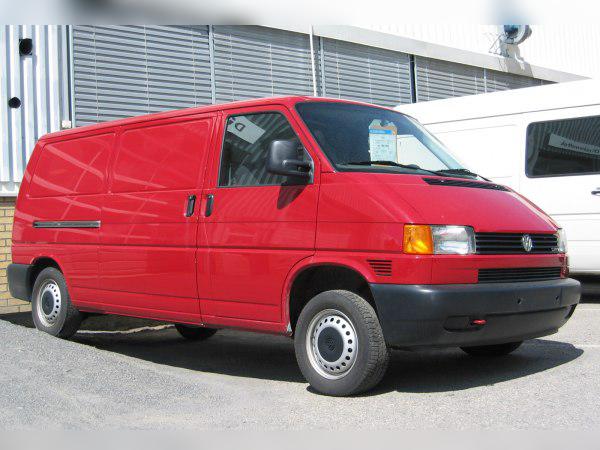
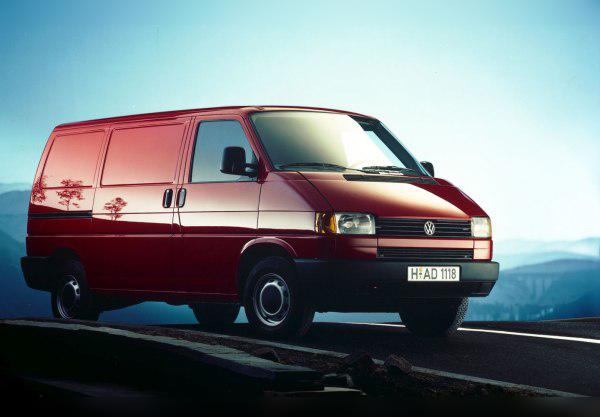
Volkswagen’s power unit designated AAB is a 2.4‑liter, five‑cylinder naturally aspirated diesel engine (with indirect injection into prechambers) that marked an entire era of commercial vehicles. It was installed primarily in the legendary Volkswagen T4 (Transporter, Caravelle, Multivan) during the 1990s. Although on paper it offers a modest 78 HP (57 kW), this engine has achieved cult status thanks to its robustness and simplicity. It was purpose‑built to haul heavy loads over short distances and to tolerate neglect, but with the arrival of more modern and faster vehicles, its shortcomings in terms of lack of power and noise have become more apparent.
Technical specifications
| Characteristic | Data |
|---|---|
| Displacement | 2370 cc (2.4 L) |
| Power | 57 kW (78 HP) |
| Torque | 164 Nm at 1800–2200 rpm |
| Engine code | AAB |
| Injection type | Indirect injection (prechamber / mechanical pump) |
| Turbo / Naturally aspirated | Naturally aspirated engine |
Reliability and maintenance
Timing belt or chain and major service
The AAB engine uses a timing belt for valve timing. More precisely, this five‑cylinder engine has a specific design with two timing belts. One is located at the front of the engine and drives the camshaft and water pump, while the other is at the rear (gearbox side) and serves exclusively to drive the high‑pressure pump (Bosch pump). The major service is usually done at intervals of 60,000 to 90,000 km or every 5 years. It is extremely important that the major service is performed by a mechanic who has the special tools for timing the engine (dial gauge for setting the injection timing on the pump), because an incorrectly timed engine starts poorly, smokes and overheats.
Most common failures and symptoms
The bottom‑end mechanics (crankshaft, pistons) are virtually indestructible, but the cylinder head is the weak point. The most common serious failure is cracking of the cylinder head between the valves due to overheating. This problem occurs as a result of a clogged radiator, faulty thermostat or coolant leaks. Symptoms include “rock‑hard” coolant hoses, loss of antifreeze without visible leakage and white smoke from the exhaust. In addition, oil leaks at the crankshaft and camshaft seals are also common. Due to the age of these engines, deterioration of vacuum and fuel hoses is an everyday occurrence, which can cause air to be drawn into the system and problems with the first cold start in the morning.
Oil, capacity and consumption
The engine takes about 5.5 liters of engine oil, and it is always advisable to use a quality semi‑synthetic oil of grade 10W‑40, although in warmer climates and on higher‑mileage engines mineral 15W‑40 (according to the old VW 505.00 specification) also works very well. Oil consumption between services is a completely normal occurrence. The driver should understand and accept that consumption of about 0.5 to 1 liter per 2,000–3,000 km is not alarming, as oil evaporates and passes through worn piston rings and valve stem seals. Nevertheless, regularly checking the dipstick level is mandatory.
Injector longevity
Since this is an old‑generation diesel, it uses classic mechanical injectors with nozzles (no Piezo or Common‑Rail system). The injectors on the AAB engine are extremely reliable and often last over 300,000 km. When they wear out, the symptoms are black smoke when accelerating, increased fuel consumption, “knocking” (a sharp metallic engine sound) and difficult starting. Overhaul is simple: only the injector nozzle is replaced, and the cost is very low compared to modern engines (not expensive, depends on the market).
Specific parts (costs)
Clutch system and flywheel
One of the biggest advantages of this engine compared to newer TDI units is that it does not have a dual‑mass flywheel. It is equipped with a classic, solid (single‑mass) flywheel. Thanks to this, replacing the clutch kit (pressure plate, disc and release bearing) is a routine and inexpensive job. The maintenance costs of this part of the drivetrain are really minimal (not expensive, depends on the market).
Injection, turbo, DPF and AdBlue
As already mentioned, the injection system consists of a rotary pump (Bosch VE) which is extremely resistant, even to poorer‑quality diesel fuel. Problems can occur due to leaks at the pump seals, but resealing the pump is a routine procedure.
The AAB engine does not have a turbocharger; it draws air naturally (naturally aspirated). This means you will not face expensive repairs of turbochargers, intercoolers and associated hoses, which drastically reduces running costs.
The emissions technology of this engine is at the level of the 1980s and 1990s. The engine has no DPF filter and does not require AdBlue fluid. Therefore, there are no problems related to DPF regeneration in city driving or failures of urea sensors and pumps. Some later series (this applies more to the AJA engine that succeeded it) had an early, rudimentary EGR valve, but most AAB engines do not have a complex EGR system that causes issues.
Fuel consumption and performance
Fuel consumption
Due to the engine’s mass (heavy cast‑iron block) and the fact that it has to move a heavy van full of passengers or cargo, this engine is not particularly economical. Real‑world consumption in city driving is between 9 and 11 l/100 km. On the open road it can drop to 7–8 l/100 km if driven carefully, but if it is a “Syncro” version (all‑wheel drive), count on at least 1 liter more in all driving conditions.
Performance and “laziness”
Is this engine lazy? Absolutely yes. With 78 HP in a body that weighs around 1.7 tons (and over 2.5 tons when loaded), the 0–100 km/h acceleration is measured in tens of seconds (often over 20 seconds). On climbs you need to shift down frequently and keep the engine at higher revs. It was not built for dynamics, but for pulling power from a standstill and unstoppable torque under load.
Behavior on the motorway
Driving an AAB engine on the motorway requires patience and an understanding of its limitations. This engine is not intended for cruising at 130 km/h. Due to the very short gear ratios in the gearbox and the lack of power, if you try to drive at 130 km/h, the engine will be revving very high, cabin noise will be deafening, and fuel consumption will increase drastically. The optimal and comfortable cruising speed for this engine on the open road is around 90 to 100 km/h. Anything above that is unnecessary torture for the engine.
Additional options and modifications
Chip tuning and power modifications
Increasing power electronically, known as “chipping” (Stage 1), is absolutely not possible on the AAB engine. Why? Because this engine has no engine control unit (ECU) that controls injection and turbo pressure (which it also does not have). Injection is purely mechanical. Enthusiasts sometimes resort to mechanically enriching the mixture (turning the fuel screw on the pump and modifying the LDA system if a turbo from another engine is installed), but on a stock AAB the only result of simply “adding more fuel” will be thick black smoke and potentially melted pistons. Recommendation: Leave it as it is.
Gearbox
Types of gearboxes and common failures
Most models are paired with a 5‑speed manual gearbox. The manual gearbox is generally durable, but it has two known weaknesses. The first is the linkage system (gear selector), which over time develops a lot of play, making the shift feel imprecise (replacing the plastic bushings solves the problem). The second, more serious issue is failure of the fifth gear. Drivers often lug the engine by driving very heavy loads in 5th gear at extremely low revs. This causes insufficient lubrication and damage to the fifth‑gear synchronizer and gear teeth.
The automatic gearbox (4‑speed), which was also installed, is known as one of the weakest points of Volkswagen T4 models. It is not sized for such weight and overheats very easily. The most common failures are related to the torque converter and burning of the internal clutch packs due to irregular oil changes. Repair is very expensive.
Gearbox servicing
For the manual gearbox, oil changes are recommended every 60,000 to 80,000 km. Although manufacturers sometimes state that the oil is “lifetime”, in practice changing it significantly extends the life of fifth gear. If you are looking at a vehicle with an automatic gearbox, oil and filter changes must be carried out at a maximum of 40,000 to 50,000 km, otherwise failure is guaranteed.
Buying used and conclusion
What to check before buying?
When buying a used van with an AAB engine, the following items are the most important (OBD cable diagnostics is of no use because there is no engine electronics):
- Cold start: The engine should start “on half a turn” with properly working glow plugs. If it has to crank for a long time and first shakes the whole body with a huge cloud of smoke, the problem may be loss of compression, bad glow plugs or air being drawn into the fuel system.
- Smoke color: Black smoke under load is tolerable (as mechanics say, “it’s just burning a bit of diesel”), but white/sweetish smoke or blue smoke on startup indicates serious and expensive problems (cylinder head on its last legs or worn piston rings).
- Coolant hoses: Let the engine warm up and feel the thick hoses going to the radiator. If they are hard as a rock, the head gasket or the head itself is cracked and is pushing compression into the cooling system.
- Knocking sound: The vacuum pump on these engines often knocks and creates a metallic sound similar to a damaged valve. The sound changes or disappears when you press the brake pedal several times. (If the sound does not disappear, the problem is more serious).
Conclusion
Volkswagen’s 2.4 D AAB engine is not for those who seek performance, cabin quietness or easy left‑lane motorway driving. Its biggest enemy is time, that is, years of use by various owners and mechanics who have not spared it. Nevertheless, it is a perfect workhorse: robust, simple to maintain and capable of carrying almost any load from point A to point B. It is intended for people who need a vehicle that relies purely on raw mechanics and for those who value cheap repairs over speed and comfort. If you manage to find an example whose cylinder head has not failed, with minimal and regular investment this engine will serve you for years.