Legendary 1.9 TDI AFN and AVG (110 hp): Experiences, issues, fuel consumption and used-car buying tips
- The holy grail of reliability: One of the most durable diesel engines ever made, capable of covering over 500,000 km without opening the block.
- No DPF, no AdBlue, no PD system: Uses a classic Bosch rotary pump (VP37), which is cheap to maintain.
- Fuel efficiency: Consumption is around 5 to 7 l/100 km, which is excellent considering the power and age of the engine.
- The biggest downside is age: Most of these engines have astronomical mileage. Failures are mostly related to worn-out peripheral components (hoses, sensors, gaskets).
- The turbocharger needs to be "stretched": Due to the variable geometry turbo (VNT), frequent city driving leads to soot build-up and the engine going into "Safe mode".
- Dual-mass flywheel: It is present, but its service life is long. Replacement cost is no longer a big deal nowadays.
Contents
- Introduction: An icon of the diesel era
- Technical specifications
- Reliability and maintenance
- Specific components and costs
- Fuel consumption and performance
- Gearbox and drivetrain
- Additional options and modifications
- Buying used and conclusion
Introduction: An icon of the diesel era
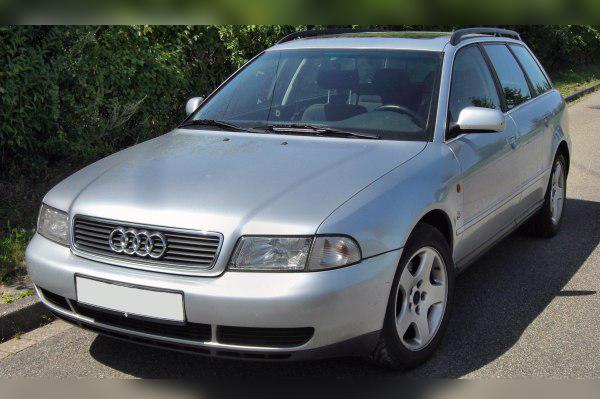
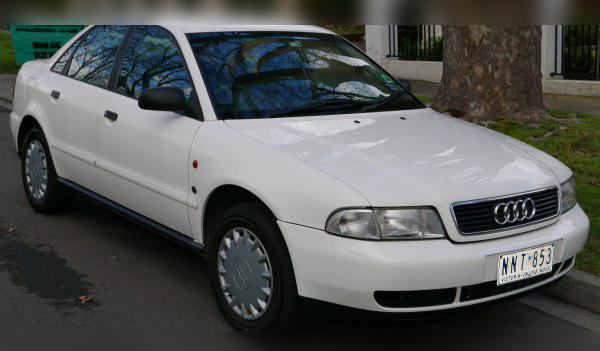
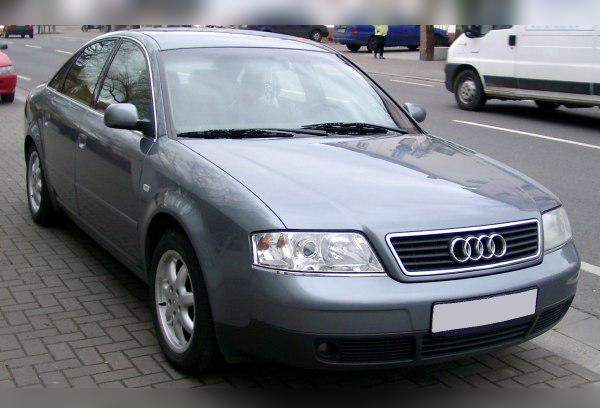
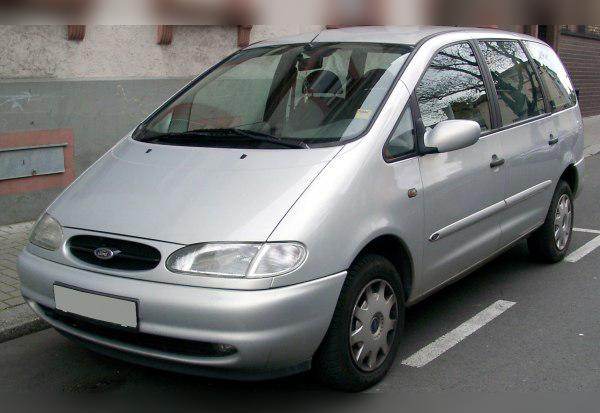
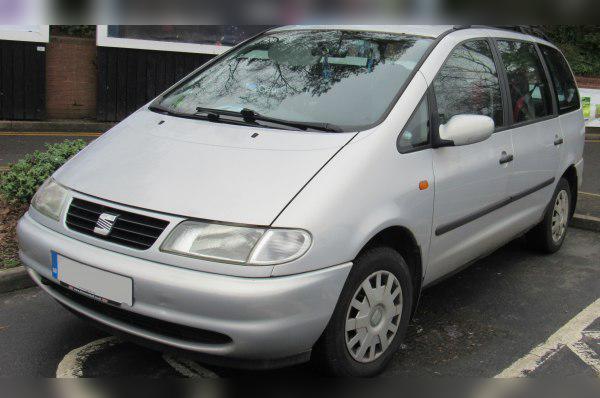
When people in car circles mention an "indestructible diesel", the AFN and AVG codes are among the first that come to mind for experienced mechanics. This 1.9 TDI engine with 81 kW (110 hp) represents the peak of technology before the switch to more complex (and more problematic) Pumpe-Düse (PD) and later Common-Rail systems. It was installed in the late nineties and early 2000s in heavyweights such as the Audi A6 (C5) and Ford Galaxy, but also in the popular Audi A4 (B5). Thanks to the ideal balance between power (235 Nm), fuel consumption and robustness, even today, decades after production, it is considered an engine that is bought "by the kilo of kilometers". Still, time takes its toll, so it is important to know what is hiding under the hood.
Technical specifications
| Specification | Data |
|---|---|
| Engine displacement | 1896 cc |
| Power | 81 kW (110 hp) at 4150 rpm |
| Torque | 235 Nm at 1900 rpm |
| Engine codes | AFN, AVG |
| Injection type | Direct, Bosch VP37 rotary pump |
| Charging | Turbocharger with variable geometry (VNT), intercooler |
Reliability and maintenance
Timing belt or chain?
This engine uses a timing belt to drive the camshaft and the Bosch pump. The timing system is extremely reliable, but does not tolerate improvisation.
Major service and maintenance
According to factory specifications, the major service is done every 90,000 km or every 5 years. However, experienced mechanics recommend shortening this interval to 60,000 to 70,000 km, especially when using aftermarket parts. A snapped belt leads to serious damage – contact between valves and pistons, which means mandatory valve replacement, cylinder head machining, and often damage to the crankshaft itself.
Engine oil and oil consumption
The oil sump of this engine holds about 3.8 to 4.3 liters of oil (depending on whether the filter is changed and how much old oil is drained). The recommended grade is 10W-40 or 5W-40 (it must meet the VW 505.00 specification).
As for oil consumption, AFN/AVG engines are known for not "drinking" oil. For such an old engine, up to 0.5 liters per 10,000 km is considered normal consumption. If the engine uses more than 1 liter per 10,000 km, the problem is usually not in the piston rings themselves (which are extremely durable), but in a worn turbocharger that lets oil into the intake, or in hardened valve stem seals.
Injector lifespan
The injection system uses fully mechanical injectors (two-stage pressure), with the exception of the third injector which has a sensor (wire) for determining the injection timing. The injectors are virtually indestructible compared to modern piezo injectors. Their service life often exceeds 350,000 km. Symptoms of worn injector nozzles are bluish or black smoke at full throttle, a harder ("tractor-like") idle, and slightly increased fuel consumption. Fortunately, refurbishing the nozzles is very affordable.
Most common failures and "childhood diseases"
- MAF sensor: The most common cause of sudden power loss. The car accelerates like a naturally aspirated diesel.
- Vacuum hoses: Due to age, the small cloth-covered vacuum hoses rot and crack. As a result, the turbo does not get the vacuum needed for regulation, which leads to power loss. It is solved by buying 2 meters of hose and simply replacing them.
- N75 valve: The valve that controls turbo pressure. When it fails, boost pressure goes wild and the engine enters limp mode (safety mode).
- Bosch pump seals: Due to age and changes in diesel fuel composition (less sulfur today), the rubber seals inside the Bosch VP37 pump harden and the pump starts leaking. You can recognize it by the smell of diesel in the cabin and a damp engine block under the pump. Interruptions in fuel delivery due to air in the system cause hard cold starts.
Specific components and costs
Injection system
As mentioned, there are no Pumpe-Düse (PD) or Common Rail (CR) components. The Bosch VP37 rotary pump controls the engine operation. It is not as sensitive to poor-quality fuel as modern systems. Its overhaul and resealing are considered regular maintenance after 20 years of use and cost around 150 to 300 euros (depending on the market).
Turbocharger and "limp mode"
This engine uses a turbocharger with variable vane geometry (VNT). The factory Garrett VNT-15 is excellent and reduces turbo lag at low revs. Its service life is often over 250,000 km with regular oil changes.
The main issue: City driving and "lugging" at low revs create soot that blocks the variable geometry mechanism. Symptom: When accelerating at around 2500–3000 rpm (on an uphill or when overtaking), the engine suddenly loses power. This is called limp mode (protection mode against overboost). Turning the car off and on resets the problem until the next heavy load. Cleaning the turbo’s variable geometry usually solves the problem permanently.
DPF, EGR and AdBlue
Good news for your wallet: This engine does NOT have a DPF filter, nor does it use AdBlue!
It only has a classic, vacuum-operated EGR valve. Its job is to return part of the exhaust gases into the intake manifold for emission control. Because of this, the intake manifold gradually narrows due to tar deposits (a mixture of soot from the EGR and oil vapors from the crankcase breather). The EGR can be easily cleaned or, as mechanics often do, physically blocked off (with a plate) without triggering warning lights on the instrument cluster in most older models.
Fuel consumption and performance
Real-world fuel consumption
In cars like the Audi A4, real city consumption is around 6.5 to 7.5 l/100 km. On open roads (single carriageway), with smooth driving, consumption can drop to an incredible 4.5 to 5.0 l/100 km. Heavier models such as the Ford Galaxy or Seat Alhambra easily use over 8.0 l/100 km in the city due to high aerodynamic drag and a weight of over 1.6 tons.
Is the engine "lazy"?
In the Audi A4, this 110 hp engine is very lively thanks to its quick throttle response (due to mechanical injection) and 235 Nm of torque available already below 2000 rpm. However, in MPVs (Alhambra, Galaxy) and the large Audi A6 Avant, the lack of power is noticeable when overtaking under full load. There, the engine is not a sprinter, but a steady workhorse.
Motorway and cruising
At 130 km/h in fifth gear (manual gearbox), the engine spins at around 2700 to 2900 rpm, depending on the final drive ratio in the specific car model. At these speeds, cabin noise becomes noticeable, because early TDI engines have a characteristic, rougher sound, and the sound insulation in vehicles over two decades old is often no longer at its best.
Gearbox and drivetrain
Types of gearboxes
The AFN/AVG engine was usually paired with a 5-speed manual gearbox. Optionally (mainly in Audi), automatic gearboxes were also installed, such as the 4-speed automatic in the old Galaxy and the 5-speed Tiptronic in the Audi A6.
Dual-mass flywheel and clutch
Although it is from an older generation, this 110 hp engine does have a dual-mass flywheel (DMF). Symptoms of failure are metallic rattling at idle, vibrations when switching the engine off, and juddering when moving off in first gear. The complete kit (dual-mass flywheel, clutch disc, pressure plate, release bearing) costs around 350 to 600 euros (depending on the market). Although it sounds expensive, it lasts more than 200,000 km if the car is driven normally.
Gearbox failures and maintenance
Manual gearbox: Practically unbreakable. Possible issues are worn synchros for 2nd and 3rd gear (grinding when shifting quickly) due to material fatigue and irregular oil changes. The oil in the manual gearbox should be changed every 80,000 to 100,000 km (it takes about 2.3 liters of 75W-90 oil).
Automatic gearbox: Requires serious caution. The old Tiptronic automatic is high-risk today. The most common problems are harsh shifts between gears or slipping (revs rise, the car does not accelerate). The cost of overhauling the automatic often exceeds the value of the entire vehicle. If you are buying an automatic, the oil must have been changed at least every 60,000 km.
Additional options and modifications
Chiptuning
The AFN is probably one of the most frequently "chipped" diesel engines in history. Its mechanicals can handle far more than the factory 110 hp. A basic Stage 1 remap safely raises power to about 135 to 140 hp and torque to nearly 300 Nm. If the clutch and turbocharger are in good condition, the engine will handle this power for years without any issues, with a noticeable reduction in "laziness" when overtaking and even slightly lower fuel consumption when cruising.
Buying used and conclusion
What must you check before buying?
Given that cars with this engine are now very old, do not look at the number on the odometer, as the mileage has most likely been rolled back several times. Focus on:
- Cold start: The engine should fire up "on half a turn". Long cranking when cold indicates bad glow plugs, loss of compression or an issue with the fuel system sealing (air entering the fuel lines).
- Hot start: If the car is hard to start when hot, this is a classic symptom of a worn starter, weak battery or pressure loss in the Bosch pump. It is often solved by a software correction of the "hot start map" in the ECU.
- Smoke color: Black smoke at full throttle is normal in moderate amounts (there is no DPF). Blue smoke indicates oil burning (turbo or valve stem seals), while thick white smoke (that is not steam) smells of unburnt diesel and points to a combustion issue.
- Test drive: Be sure to drive the car uphill, put it in third gear at 1500 rpm and floor the throttle up to 3500 rpm. If the car suddenly "cuts power" in that range, the turbo geometry is sticking (limp mode).
- Visual inspection: Look around the Bosch pump and under it on the engine block. If it is washed and spotless, the seller may have tried to hide a diesel leak.
Final verdict: Who is it for?
The 1.9 TDI 110 hp (AFN/AVG) engine is intended for rational buyers who want cheap motoring and do not mind older design and the lack of modern technologies for reducing noise and vibration. If you buy one, count on investing a certain amount of money upfront to sort out the small things (hoses, sensors, pump seals). Once you "tighten it up", this engine will faithfully take you from point A to point B at minimal maintenance cost. It is a true workhorse of the automotive industry.