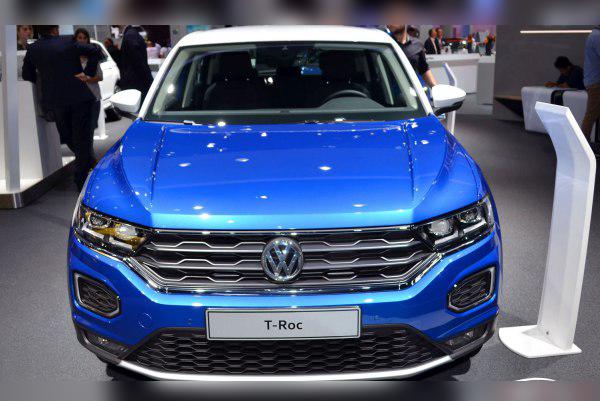
Volkswagen 1.0 TSI (DKRA) in the T-Roc: Real-world experience, issues, fuel consumption and buying used
Key points (TL;DR)
If you don’t have time to read the whole article, here’s what you need to know about the DKRA 1.0 TSI engine:
- Not too small: Although it has only 3 cylinders and 999 cc, with 116 hp and 200 Nm it carries the T-Roc body quite respectably.
- Belt, not chain: This engine uses a timing belt, which solved the chain-stretch problems that plagued older TSI engines.
- Dual-mass flywheel: Unlike the weaker 95 hp versions, this 116 hp version does have a dual-mass flywheel, which makes maintenance more expensive.
- Oil-sensitive: It requires specific low-viscosity oil because of the GPF (gasoline particulate filter).
- Fuel consumption: Very economical if driven moderately, but consumption rises sharply if you push it hard on the motorway.
- Recommendation: Ideal for city and country roads, decent for occasional long trips, but it’s not a mountain-climbing workhorse with a fully loaded car.
Contents
- Technical specifications
- Reliability and maintenance
- Specific parts and costs
- Fuel consumption and performance
- Additional options and modifications
- Gearbox and drivetrain
- Buying used and conclusion
Technical specifications
| Parameter | Value |
|---|---|
| Engine code | DKRA (EA211 series) |
| Displacement | 999 cc (1.0 L) |
| Configuration | Inline, 3 cylinders |
| Power | 85 kW (116 hp) @ 5000-5500 rpm |
| Torque | 200 Nm @ 2000-3500 rpm |
| Injection system | Direct injection (TSI) |
| Induction | Turbocharger + intercooler |
| Emissions standard | Euro 6d-TEMP / Euro 6d (equipped with OPF/GPF) |
Reliability and maintenance
The DKRA engine belongs to the updated EA211 engine family. This matters because these engines are structurally much more mature and reliable than the notorious EA111 predecessors. Still, like every modern downsized unit, it requires meticulous maintenance.
Timing system: belt or chain?
This engine uses a timing belt that runs in oil or dry (depending on the specific revision, but in DKRA it is mostly a classic dry timing belt reinforced with glass fibers). VW states that the belt is designed to last a very long time (you’ll often see “lifetime” or 210,000 km quoted in Western service books). However, real-world experience and common sense say otherwise.
Recommendation: Do the major service (belt, tensioner and water pump replacement) at a maximum of 150,000 km or 10 years, whichever comes first. A visual inspection of the belt is mandatory at every service after 100,000 km.
Oil and service intervals
The DKRA engine is equipped with an OPF (Gasoline Particulate Filter), which makes oil choice critical. The engine takes about 4.0 liters of oil.
- Viscosity: Mandatory 0W-20 with VW 508.00 / 509.00 specification. This oil is “thin as water” to reduce friction and protect the filter. Using thicker oil can permanently damage the OPF.
- Oil consumption: These engines are quite “tight”. Consumption up to 0.5 liters per 10,000 km is normal. If it uses more than that, it usually means the engine was driven hard while cold or that the turbocharger is starting to fail.
Most common issues
- Water pump and thermostat housing: This is a weak point of EA211 engines. The housing is plastic and over time it cracks or deforms due to heat cycles, which leads to coolant leaks. Symptoms are a dropping coolant level in the expansion tank or the smell of coolant under the bonnet.
- Carbon buildup: As a direct-injection engine, the valves are not “washed” by fuel. Over time, carbon deposits build up on the intake valves, which can cause rough running and power loss (usually after 100,000+ km).
- Spark plugs: On this three-cylinder they are under heavy load. They should be replaced every 60,000 km (or 4 years). Don’t cheap out here – use only iridium plugs to factory spec.
Specific parts and costs
Dual-mass flywheel and clutch
Yes, the 116 hp (DKRA) version in the T-Roc does have a dual-mass flywheel. Due to the nature of a three-cylinder engine (which is inherently unbalanced), a dual-mass flywheel is necessary to kill vibrations and protect the gearbox. This significantly increases the cost of a clutch kit replacement compared to the weaker versions.
Turbocharger and injection
The engine uses a small turbocharger with an electronic actuator. Its lifespan is long (often over 200,000 km) if you respect cool-down after fast driving and change the oil regularly. Actuator (turbo electronics) failures are more common than mechanical failures of the turbo itself.
Injectors: It’s a high-pressure direct-injection system. Injectors are generally reliable but sensitive to poor fuel quality. A failing injector shows up as engine misfire, increased fuel consumption and a lit “Check Engine” light. Replacement is expensive (depends on market).
Emissions: OPF (GPF) and EGR
The DKRA engine has an OPF filter (the petrol equivalent of a diesel DPF). It rarely clogs because exhaust gas temperatures in petrol engines are much higher, so passive regeneration happens all the time. Still, if you drive only short trips in winter, a warning light is possible. The cure is a 20-minute drive on an open road.
AdBlue: This engine does not have AdBlue. That’s reserved for diesel engines only.
Fuel consumption and performance
Real-world fuel consumption
The T-Roc is not particularly heavy, but it has worse aerodynamics than a Golf (because it’s an SUV).
- City driving: Expect between 6.5 and 8.0 l/100 km. The start-stop system helps in traffic jams, but if you have a heavy right foot and like to “launch” from traffic lights, consumption can go up to 9 liters.
- Country roads: At 80–100 km/h the engine is extremely frugal, using about 5.0–5.5 l/100 km.
- Motorway (130 km/h): Here the small engine has to work harder. Expect 6.5 to 7.5 l/100 km, depending on wind and load.
Is the engine “lazy”?
With 200 Nm of torque available from just 2000 rpm, the T-Roc 1.0 TSI is surprisingly lively in town. It reaches 100 km/h in about 10–11 seconds, which is perfectly acceptable. A feeling of “laziness” appears only in two situations:
- When the car is fully loaded with passengers and luggage on an uphill road.
- When trying to accelerate from 140 km/h upwards (the small displacement simply runs out of breath).
At 130 km/h in sixth gear, the engine spins at about 2,800–3,000 rpm, which is acceptable for noise comfort.
Additional options and modifications
LPG conversion
Because of direct fuel injection, converting this engine to LPG is complicated and expensive. It requires “Direct Liquid Max” systems or systems that also inject petrol (up to 20%) to cool the petrol injectors. Given the engine’s low fuel consumption, the cost-effectiveness of LPG (with its high installation price) is questionable unless you drive more than 30,000 km per year.
Remapping (Stage 1)
The engine can be tuned via software (remap). A safe Stage 1 maximum is usually around 130–140 hp and 240 Nm. However, be careful: the clutch and dual-mass flywheel will be under higher load and will wear out faster. Since this is a 1.0 engine, the recommendation is to leave it at factory settings for longevity.
Gearbox and drivetrain
Types of gearboxes
With the DKRA engine in the T-Roc you most commonly get a 6-speed manual gearbox (MQ200 or a reinforced variant). There is also an option with a 7-speed DSG automatic (DQ200 dry clutch), but the manual is more common with this engine.
Maintenance and issues
- Manual gearbox: Very precise and reliable. No specific systemic failures. The gearbox oil is “lifetime” from the factory, but it’s strongly recommended to change it at 150,000 km.
- Clutch cost: As mentioned, due to the dual-mass flywheel, replacing the clutch kit is not cheap (it falls into the mid-to-high repair cost category). Symptoms of a failing flywheel are rattling at idle that disappears when you press the clutch, or strong vibrations when switching the engine off.
- DSG (if fitted): The DQ200 is known for a more delicate mechatronics unit and clutch pack. You should check clutch condition before buying (does it judder when setting off?).
Buying used and conclusion
What to check before buying?
- Cold start: Listen to the engine when it’s cold. There should be no metallic rattling (flywheel) or rough running (injectors/spark plugs).
- Coolant leaks: Look around the thermostat housing (on the right side of the engine when viewed from the front) for white/pink traces of dried coolant.
- Service history: Check whether 0W-20 oil was used. If the wrong oil has been used for a long period, the OPF may become a problem in the future.
- Sound when switching off: If you hear a metallic knock (“clack-clack”) when switching the engine off, the dual-mass flywheel is near the end of its life.
Verdict
The Volkswagen T-Roc 1.0 TSI (DKRA) is an excellent choice for drivers who spend 80% of their time in city and suburban driving. The engine is more refined than you might think and offers enough power for safe driving.
It’s not intended for those who tow trailers or constantly drive a fully loaded car on long motorway journeys (that’s where the 2.0 TDI is still king). Maintenance is more expensive than on old naturally aspirated petrol engines (because of the turbo, dual-mass flywheel and OPF), but still more affordable than on complex diesels.