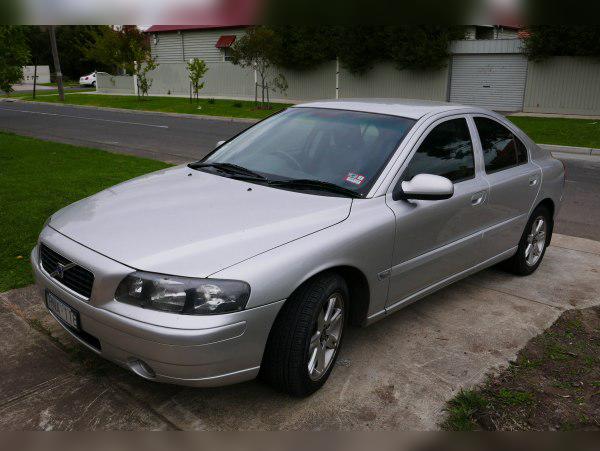
Volvo B5254T2 2.5T (210 hp): Ownership impressions, issues, fuel consumption and used-buying tips
- Reliability is questionable only if regular maintenance is neglected; otherwise capable of extremely high mileage.
- The crankcase ventilation system (PCV) is a weak point and requires preventive replacement.
- Requires regular timing belt kit replacement; engine failure is inevitable if the belt snaps.
- Works exceptionally well with LPG systems, which drastically reduces running costs.
- Fuel consumption in city driving is high (especially in heavy models like the XC90).
- Aisin automatic transmissions require fluid flushing every 60,000 km, otherwise serious valve body failures follow.
Contents
- Introduction: The legendary five‑cylinder
- Technical specifications
- Reliability and maintenance
- Specific components and costs
- Fuel consumption and performance
- Additional options and modifications
- Transmission and drivetrain
- Buying used and conclusion
Introduction: The legendary five‑cylinder
When talking about Volvo engines from the early 2000s, the designation B5254T2 commands respect. It is the famous 2.5‑liter five‑cylinder petrol engine (from the so‑called Whiteblock family) that produces 154 kW (210 hp). Thanks to its low‑pressure turbocharger (LPT - Low Pressure Turbo), this engine was designed to deliver diesel‑like pulling power with the refined and distinctive sound of a petrol five‑cylinder.
It was installed in almost the entire range of that era, including the S60 and S80 sedans, V70 estate, raised XC70, and even the heavy XC90 SUV. This engine is important because it represents the golden middle ground: it offers incomparably more power than the naturally aspirated 2.4 versions, while being more robust and friendlier in everyday use than the high‑revving T5 variants (such as the B5234T3).
Technical specifications
| Specification | Data |
|---|---|
| Displacement | 2521 cc |
| Power | 154 kW (210 hp) |
| Torque | 320 Nm |
| Engine code | B5254T2 |
| Injection type | Indirect (Multipoint EFI) |
| Induction | Low‑pressure turbocharger with intercooler |
| Fuel type | Petrol (Gasoline) |
Reliability and maintenance
Timing system and servicing
This engine uses a timing belt, not a chain. The timing system is reliable if service intervals are respected. The recommendation is to perform a major service (replacement of belt, idlers, tensioner and water pump) at around 150,000 to 160,000 km, or every 10 years. However, many experienced mechanics advise replacement as early as 120,000 km as a precaution, because if the belt snaps, pistons and valves will meet, resulting in catastrophic damage (complete engine failure).
Lubrication system and oil consumption
The sump capacity is around 5.5 to 5.8 liters of engine oil. A viscosity grade of 5W-30 or 5W-40 is recommended, with mandatory ACEA A3/B4 approval to ensure proper cooling and lubrication of the turbocharger. Oil consumption is normal for this engine; consumption of about 0.2 to 0.5 liters per 1000 km is tolerated on higher‑mileage units. If consumption is drastically higher, the cause usually lies in hardened valve stem seals or, more often, in a problem with the PCV system.
Most common issues: PCV system and VVT pulleys
The best‑known weakness of this engine is a clogged PCV system (crankcase ventilation). Due to age and oil vapors, the oil separator (the so‑called "flame trap") and hoses become clogged. Symptoms include excessive crankcase pressure, oil being pushed out through the crankshaft and camshaft seals, and a specific sound (howling or whistling) at idle that disappears when the dipstick is pulled out. Ignoring this problem leads to blown seals, and oil leaking from the crankshaft seal directly onto the timing belt can cause it to jump teeth and destroy the engine.
Another common issue is VVT pulleys (variable valve timing). Over time they develop play, which manifests as a diesel‑like rattle at idle and oil leakage under the plastic timing cover. They are replaced only during a major timing service, and the price of these parts is moderately high (depends on the market).
Spark plugs and ignition
Since this is a petrol engine (without diesel‑type injectors), regular spark plug replacement is mandatory. The interval must be strictly observed – they are replaced every 60,000 km. Delaying this can overload the ignition coils (the engine has 5 individual coils), which will eventually fail, causing loss of power, running on four cylinders and a "Check Engine" light.
Specific components and costs
Injection and intake
The injection system is classic multipoint indirect injection. The injectors are very reliable and rarely cause problems. Occasional ultrasonic cleaning can restore smooth operation and optimize fuel consumption. Since this is a petrol engine, it does not have a DPF filter or AdBlue system. It also does not use a typical electronic EGR valve that plagues diesels; instead, exhaust gas recirculation and combustion optimization are handled via the aforementioned PCV system and VVT control.
Turbocharger
The engine is equipped with a single Mitsubishi turbocharger (usually the TD04HL-13T model). Its service life is impressive and, with regular oil changes, it can easily exceed 250,000 km. If it does start consuming oil, a turbo rebuild is relatively affordable and is considered a normal maintenance expense in the later years of the car’s life (market‑dependent).
Fuel consumption and performance
City driving and “sluggishness”
The main question buyers ask is whether this engine is powerful enough for heavy chassis and how much fuel it uses. LPT technology means the turbo does not wait for high revs – the maximum 320 Nm of torque is available from just 1500 rpm. Because of this, the engine is absolutely not sluggish. In S60 and V70 models it offers almost sporty acceleration, while it handles the massive XC90 (over 2 tons) without breaking a sweat.
However, the laws of physics cannot be cheated, and this shows in fuel consumption. In city driving, realistic consumption for the S60/V70 is between 12 and 14 l/100 km. If you choose an XC90 or XC70 with automatic transmission and AWD, be prepared for figures of 15 to 17 l/100 km in stop‑and‑go traffic.
Behavior on the motorway
The natural habitat of the B5254T2 is the motorway. Thanks to its strong torque and long gearing, at 130 km/h the engine cruises at a very relaxed 2500 to 2800 rpm (depending on transmission type). In these conditions it is extremely quiet, and fuel consumption drops to a much more acceptable 8 to 10 l/100 km.
Additional options and modifications
LPG conversion
Since it does not have direct injection, this engine handles LPG conversion exceptionally well. However, due to the turbocharger, a stronger and faster vaporizer (rated for turbo engines of at least 250 hp) and quality gas injectors must be installed. The biggest risk lies in poor software mapping of the LPG system: if the mixture is too lean at high revs, exhaust gas temperatures rise dramatically and exhaust valves can burn. A well‑tuned LPG system makes this engine extremely cost‑effective to run.
Chip tuning (Stage 1)
Thanks to its robustness, the B5254T2 is very suitable for a Stage 1 remap. It can safely be taken to around 240–250 hp and about 380–400 Nm of torque. Going beyond these figures is not recommended without more serious mechanical upgrades. The B5254T2 has a bore of 83 mm, which makes the cylinder walls thinner than on older generations (such as the 2.3‑liter B5234T3), so excessive turbo pressure can lead to block cracking. It is also essential to consider the condition of the automatic transmission before increasing power.
Transmission and drivetrain
Transmission variants
This engine was paired with manual gearboxes (5‑ and 6‑speed, types M56/M66) and automatic transmissions (Aisin AW55-50/51SN 5‑speed, and in some later AWD versions the 6‑speed TF-80SC).
Most common transmission issues and maintenance
Manual gearboxes are almost indestructible. All models with this engine and a manual gearbox have a dual‑mass flywheel. When the time comes for replacement, the complete clutch kit with dual‑mass flywheel is a very expensive item (market‑dependent).
Automatic transmissions are a weak point, especially the 5‑speed Aisin. Although Volvo advertised the fluid as "filled for life", in practice this is absolutely not true. Due to aging and overheating of the fluid (particularly in the XC90 under heavy load), the valve body and its solenoids fail.
Symptoms of a damaged valve body include harsh jolts when shifting from 'P' into 'R' or 'D', as well as rough delays or jerks when shifting from 2nd to 3rd gear. To avoid this, a full machine flush and fluid replacement must be performed every 60,000 km. The cost of replacing or rebuilding the valve body is very high.
Buying used and conclusion
What to check before buying?
When buying a used Volvo with the 2.5T engine, the following steps are mandatory:
- Glove test: With the engine hot and idling, remove the oil filler cap and stretch a latex glove (or a piece of regular plastic film) over the opening. If the glove is gently sucked inward, the PCV system is in great condition. If it inflates, the system is clogged and you should expect to replace its components.
- Inspection around the timing area: Remove the front plastic timing belt cover. If you see black oil deposits and traces of leakage behind the pulleys, it is a sign that the VVT pulleys or seals are leaking.
- Hot automatic transmission test: Never buy an automatic before the transmission fluid is fully warmed up (at least 30 minutes of city driving). Many failing transmissions shift perfectly while the fluid is cold and thick, and only start banging and slipping once it reaches 90 °C.
- AWD system: On XC70, XC90 or S60/V70 AWD models, check the Haldex system. If, under sudden throttle on a slippery surface, the front wheels keep spinning without the rears engaging, the Haldex pump has most likely failed.
Conclusion: Who is this engine for?
The Volvo B5254T2 is a gem for those who want maximum overtaking safety, outstanding comfort, a unique sound and the ability to haul a large body shell. It is intended for drivers who know how and are willing to maintain such a system. Compared with diesels from the same era (the famous D5), the 2.5T petrol has no expensive injectors or EGR clogging issues, and its refinement is unquestionable. Its biggest drawback is fuel consumption in city driving, which can be effectively addressed by installing a proper LPG system. With a bit of care for the transmission and regular belt and oil changes, this is an engine that can easily surpass 500,000 kilometers.